The Ultimate Geometry Course
The Ultimate Geometry Course: this Effortless Math guide explains the topic in plain language, shows how it works through solved examples, and gives you free practice to try immediately, so the idea sticks instead of staying abstract.
Geometry Study Course
The Ultimate Geometry Course brings the key topics into one organized review page, with lessons, worksheets, and practice links in one place.
TL;DR: A free Geometry course covering points, lines, angles, triangles, quadrilaterals, circles, similarity, congruence, transformations, surface area, volume, and coordinate geometry. Self-paced lessons with worked examples and free worksheets for every section.
Key takeaways:
- Covers all of high-school Geometry: shapes, proofs, similarity, transformations, circles, 3D solids, coordinate geometry.
- Each topic has a lesson plus a free worksheet with answer key.
- Designed for Geometry students in grades 9-10 and adult self-learners.
- Self-paced, one topic per day finishes the course in a school year; faster for reviewers.
- Free, no signup required.
If you want to take a completely free course that includes all you need to do well on the Geometry test, then this course is the one that will teach you every needed concept before the test date. It’s ideal for your needs and covers every Geometry concept. For education statistics and research, visit the National Center for Education Statistics.
This Geometry program as well as additional Effortless Math Education products gets utilized by multiple people taking the Geometry exam annually. It helps them review basic math info, as well as find out if they need to study more in certain math concepts. With it, you’ll get your best possible score on a Geometry examination. For education statistics and research, visit the National Center for Education Statistics.
Learn it all at your own speed, since there’s no required schedule! The lessons all include examples, special activities, notes, and practice sessions so you’ll totally understand it and learn all you need to know.
The Absolute Best Book to Ace Geometry
Geometry Complete Course
Geometric Tools and Concepts
- Points, Lines, and Planes
- Line Segments and Measurements
- Midpoint and distance
- Parallel Lines and Transversals
- Perpendicular Lines
- Lines, Rays, and Angles
- Types of Angles
- Complementary and Supplementary angles
- Bisecting an Angle
- Constructing a Triangle Given Its Sides
- The Circumscribed Circle
- The Inscribed Circle of a Triangle
- Inscribing Regular Polygons
Reasoning and Proofs
- Conjectures and Counterexamples
- Inductive Reasoning from Patterns
- Conditional Statements
- Logic and Truth Tables
- Converse, Inverse, and Contrapositive
- Biconditionals and Definitions
- Deductive Reasoning
- Properties of Equality and Congruence
- Two Column Proofs
- Proving Angles Congruent
Coordinate Geometry
- Finding Slope
- Writing Linear Equations
- Finding Midpoint
- Finding Distance of Two Points
- Finding a Graph’s Slope
- Graphing Lines Using Slope, Intercept Form
- Writing Linear Equations from Graphs
- Converting Between Standard and Slope-Intercept Forms
- Slope-intercept Form and Point-slope Form
- Write a Point-slope Form Equation from a Graph
- Writing Linear Equations From Y-Intercept and A Slope
- Comparison of Linear Functions: Equations and Graphs
- Equations of Horizontal and Vertical lines
- Graph a Horizontal or Vertical line
- Equation of Parallel and Perpendicular Lines
Transformations, Rigid Motions, and Congruence
- Transformations on the Coordinate Plane
- Transformations-rotations, reflections and translations
- Rotation on the Coordinate Plane
- Reflection on the Coordinate Plane
- Dilation on the Coordinate Plane
- Dilations: Finding the Scale Factor
- Dilations: Finding a Coordinate
- Translations on the Coordinate Plane
- Congruence and Rigid Motions
- Symmetries of a Figure
Quadrilaterals and Polygons
- Classifying Polygons
- Angles in Quadrilaterals
- Properties of Trapezoids
- Properties of Parallelograms
- Properties of Rectangles
- Properties of The Rhombus
- Properties of Squares
- Areas of Triangles and Quadrilaterals
- Perimeter of Polygons
- Polygons and Angles
Triangles
- Triangles
- Classifying Triangles
- Triangle Angle Sum
- Triangle Midsegment
- Angle Bisectors of Triangles
- Isosceles and Equilateral Triangles
- Right Triangles
- Special Right Triangles
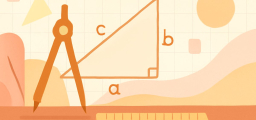
- The Pythagorean Theorem
- Pythagorean Theorem Converse: Is This a Right Triangle?
- Geometric Mean in Triangles
- Exterior Angle Theorem
- Medians
- Centroid
- The Triangle Inequality Theorem
- SSS and SAS Congruence
- ASA and AAS Congruence
- HL Congruences
Dilation and Similarity
- Dilations
- Dilations and Angles
- Similarity
- Similarity Criteria
- Congruent and Similar Figures
- Area and Perimeter: Scale Changes
- The Side Splitter Theorem
- Similarity Transformations
- Partitioning a Line Segment
- Similar Polygons
- Right Triangles and Similarity
- Similar Solids
Trigonometry
- Pythagorean Identities
- Special Right Triangles
- Trigonometric Ratios
- Trig Ratios of General Angles
- Right-Triangle Trigonometry
- Trigonometry and the Calculator
- Inverse Trigonometric Ratios
- Solving Right Triangles
- Trigonometry and Area of Triangles
- Law of Sines
- Law Cosines
- Trigonometric Applications
Circle Geometry
- The Unit Circle
- Arc length and Sector Area
- Arcs and Central Angles
- Arcs and Chords
- Inscribed Polygons
- Inscribed Angles
- Tangents to Circles
- Secant Angles
- Secant-tangent and Tangent-tangent Angles
- Segment Lengths in Circle
- Segment Measures
- Standard Form of a Circle
- Finding the Center and the Radius of Circles
- Radian Angle Measurement
Surface Area and Volume
- Circumference and Area of a Circle
- Area of a Trapezoids
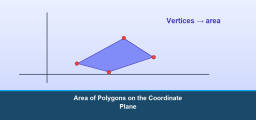
- Area of Polygons
- Nets of 3-D Figures
- Cubes
- Rectangular Prisms
- Cylinder
- Surface Area of Prisms and Cylinders
- Volume of Cones and Pyramids
- Surface Area of Pyramids and Cones
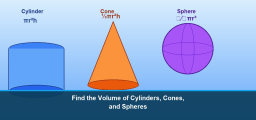
- Volume of Spheres
- Sphere Surface Area
- Solids and Their Cross Sections
- Volume of a Truncated Cone
Looking for the best resource to help you succeed on the Geometry test?
The Absolute Best Book to Ace the Geometry
Recommended EffortlessMath Books
For a workbook that pairs with this course, the Geometry for Beginners walks through every topic with worked examples and unit reviews. For complete prep with practice tests, see the Geometry Test Prep Bundle (resource currently unavailable).
Frequently Asked Questions
What is Geometry?
Geometry is the math of shapes, space, and their properties. It covers two-dimensional figures (triangles, quadrilaterals, circles), three-dimensional solids (prisms, pyramids, cylinders, cones, spheres), transformations (translations, rotations, reflections, dilations), and coordinate geometry (working with figures on the x-y plane).
What topics are in this Geometry course?
Points/lines/planes, angles and angle relationships, triangle properties and congruence, similarity, the Pythagorean theorem, right-triangle trig, quadrilaterals, polygons, circles (chords/arcs/sectors), surface area and volume of 3D solids, transformations and symmetry, and coordinate geometry (distance/midpoint/slope/equations of lines and circles).
What math do I need before Geometry?
Algebra 1, especially: solving equations, working with the coordinate plane, the Pythagorean theorem, and basic operations with radicals. Most students take Geometry in grade 10 right after Algebra 1, but the order can vary by state. If your algebra is shaky, review one-step and two-step equations before starting.
How long does it take to finish the Geometry course?
If you do one lesson per school day, the full course takes about 9 months, a standard school year. If you’re reviewing topics you already partly know, 3-4 months at 45 minutes per day works. Use the worksheets as diagnostics to skip the topics you’ve already mastered.
What’s the Pythagorean theorem?
(a^2 + b^2 = c^2), where (a) and (b) are the two legs of a right triangle and (c) is the hypotenuse. Use it any time you need a missing side of a right triangle. Common Pythagorean triples to memorize: 3-4-5, 5-12-13, 8-15-17, 7-24-25. They appear constantly on Geometry tests.
What’s the difference between similarity and congruence?
Congruent figures have the same shape AND the same size, all corresponding sides and angles are equal. Similar figures have the same shape but possibly different sizes, corresponding angles are equal and corresponding sides are proportional. All congruent figures are similar, but not all similar figures are congruent.
What’s the area of a circle formula?
(A = pi r^2), where (r) is the radius. Circumference is (C = 2pi r) (or (pi d), where (d) is the diameter). For arc length, use (s = rtheta) when (theta) is in radians. For sector area, use (frac{1}{2}r^2theta) in radians.
What’s the volume of a sphere?
(V = frac{4}{3}pi r^3). Surface area is (SA = 4pi r^2). Notice the surface area is 4 times the area of a great circle (a circle cutting through the sphere’s center). Memorize both. They show up on every Geometry test and the SAT/ACT.
Do Geometry courses still teach proofs?
Yes, most do. Two-column proofs are standard in US high school Geometry, even though they’re not on most standardized tests. Proofs build the logical reasoning skills you’ll use in higher math, computer science, and law. The course has lessons on the major proof types: triangle congruence (SSS, SAS, ASA, AAS), parallel lines, and circle theorems.
Where can I find a Geometry workbook?
EffortlessMath has the Geometry for Beginners workbook covering every topic in this course with worked examples. For complete prep with practice tests and detailed answer explanations, see the Geometry Test Prep Bundle.
Related EffortlessMath Lessons
If a topic on this page feels rusty, these short lessons go deeper:

Related to This Article
More math articles
- Translate areas into dollars
- Government Power and Individual Rights
- Grade 3 Math: Comparing and Ordering Numbers
- The Best Grade 5 Math Book for Illinois Students
- NREMT EMR Primary vs Secondary Assessment: Identify the Task in a Question (2027 Prep)
- Tennessee TCAP Algebra 1 Free Worksheets: Free Printable TCAP-Ready Algebra 1 Practice with Answers
- How to Solve Function Notation? (+FREE Worksheet!)
- Free Grade 5 English Worksheets for Texas Students
- 4th Grade English Worksheets for Utah (RISE): 57 Free Printable PDFs
- Fibonacci Betting: Pretty Sequence, Same House Edge









What people say about "The Ultimate Geometry Course"?
No one replied yet.