LEARN · PRACTICE · EXPLORE
Wyoming Grade 3 English
Connect two stanzas in an original Grade 3 poem, explain how a later part develops a problem, and follow selected Wyoming English references for further practice.
Focused lessons · Useful practice · Clear next steps
What do Wyoming 3rd graders learn in ELA?
In 3rd grade, Wyoming English language arts centers on main idea and details, vocabulary from context, and writing organized paragraphs. Students take the WY-TOPP grade 3 ELA test in the spring. This page explains each Wyoming grade 3 ELA standard and pairs it with short lessons, printable worksheets and a full-length practice test.
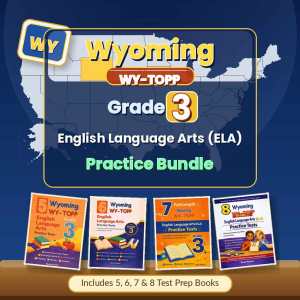
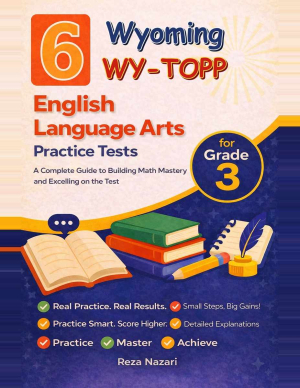
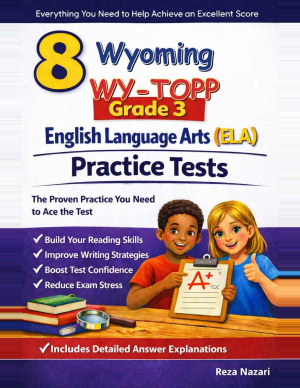
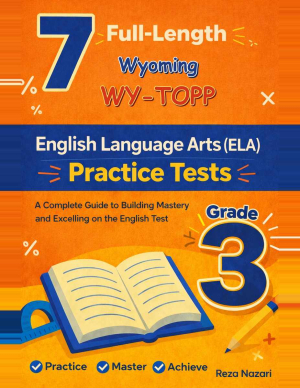
Printable Wyoming grade 3 ELA books:
Standards source: Wyoming English policy and resources.
How One Stanza Builds on Another
Read these two original Grade 3 stanzas and explain how the later part responds to a problem introduced earlier. Point to the lines that connect them before reading the worked explanation. Then try a changed ending and compare the structure with a longer classroom poem.
Curriculum reference: Wyoming-linked 2012 English language arts standards, from the Wyoming content-area standards directory.
Wyoming Grade 3 references for this activity
Wyoming’s current content-area directory links the 2012 English language arts standards. The linked PDF includes Wyoming’s earlier 2011 explanatory material and the Common Core grade-specific standards; the directory’s edition label and the introductory historical label should not be confused with a new adoption. Standards state learning expectations, while schools and teachers choose a curriculum, texts, and instructional approaches. The selected Grade 3 reference identifies the focus of this original reading activity. Read the complete document and ask the teacher how the school sequences reading, writing, language, speaking, listening, and foundational skills where applicable. One short response does not establish complete curriculum coverage or grade-level proficiency.
| Selected Wyoming reading reference | Activity focus | State-linked standards document |
|---|---|---|
| RL.3.5 | Describe how successive parts of a poem build on earlier parts | Read the state-linked document (PDF page 22) |
These selected reference labels identify an activity focus, with the correct grade and PDF page linked separately. Read the complete standards selected by the school and its learning sequence, including reading, writing, language, speaking, and listening. This short original example does not fulfill the entire curriculum or establish a student’s grade-level proficiency.
A later stanza answers an earlier problem
This original classroom example is separate from official assessment questions.
Stanza 1
The paper bridge fell flat again;
its middle bent beneath my pen.
I set the folded strips aside
with no clear path from side to side.
Stanza 2
I tucked a folded strip below,
then watched the middle hold its bow.
The pen stayed up; I drew the way
my small support had saved the day.
Try the activity
Explain how the second stanza builds on the first. Use “stanza” and a detail from each part in your answer.
Follow the reasoning
The first stanza introduces a paper bridge whose middle cannot support a pen. Setting the strips aside leaves the speaker without a solution. The second stanza returns to those strips and describes placing one beneath the bridge. The pen staying up answers the earlier problem, and drawing the support records the change. The later stanza therefore develops a problem already introduced instead of presenting an unrelated success. A reader can connect “middle bent” with “pen stayed up” and explain how the support links the two moments. The separate stanza marks a change from difficulty to a tested response.
Notice what needs more practice
The poem describes a fictional small paper model. It does not provide engineering directions or prove how a real bridge should be built. “Saved the day” is a figurative description of solving this classroom problem. The speaker’s drawing records one result, not evidence that every support would work.
Grade 3 English worksheets
Choose printable practice that matches the skill being taught. Check the task, reading difficulty, and directions before assigning it; the collection is independently published.
Use the next session to build independence
- Read the passage and restate the question in your own words.
- Connect the answer to a particular sentence, line, or detail.
- Try the changed detail, then choose a longer classroom text that calls for the same kind of reading.
Change the second stanza so the speaker only draws a possible support and does not test it. Explain why the ending would now show a plan rather than a demonstrated solution. Compare the job of each stanza with the parts of a longer class poem.
For more general reading and writing resources, visit the Grade 3 English Online Center.
Wyoming Grade 3 English: useful planning questions
Why should a student explain the connection between stanzas?
A stanza number tells where a part appears, but not what it contributes. Here the second stanza reuses the folded strips and tests a support for the earlier problem. Linking those details explains the poem’s development more clearly than saying that the second stanza comes later.
Which standards does the school use?
Wyoming’s current content-area directory links the 2012 English language arts standards. The linked PDF includes Wyoming’s earlier 2011 explanatory material and the Common Core grade-specific standards; the directory’s edition label and the introductory historical label should not be confused with a new adoption. Standards state learning expectations, while schools and teachers choose a curriculum, texts, and instructional approaches. The selected Grade 3 reference identifies the focus of this original reading activity. Read the complete document and ask the teacher how the school sequences reading, writing, language, speaking, listening, and foundational skills where applicable. One short response does not establish complete curriculum coverage or grade-level proficiency. The school’s sequence also includes reading, writing, speaking, listening, and language work beyond this example.
Sources checked October 6, 2026. The official Wyoming English assessment blueprint lists ELA in Grades 3–10. Grade 3 is within that listed range; follow current school directions and accommodations. The document reports a Grade 3 blueprint update operational in 2024–25. The listed range does not establish a duration, item count, or format for independent practice. Read the official Wyoming English assessment blueprint, content-area standards guidance, and complete subject directory. Independently published practice has its own directions and scoring. Its result does not predict a state performance level, and this original activity is not an official assessment item.
Grade 3 English in other states
When moving between school systems, compare the official curriculum and the school’s learning sequence. Use the national Online Center’s map to find another state’s resources.
Recommended Wyoming Grade 3 resources
Choose Wyoming Grade 3 English practice resources
These independently published resources have their own coverage and editions. Check the contents alongside Wyoming’s current content-area standards directory before choosing assessment preparation.
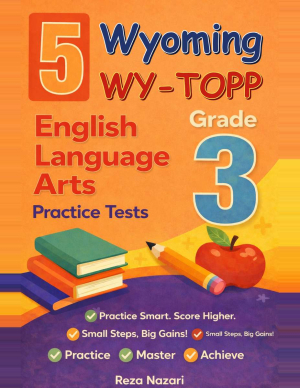
Use these Wyoming Grade 3 resources for reading comprehension, language, writing, and full-length practice where available. Click any cover to open the resource page.
More Grade 3 resources
A USEFUL NEXT STEP
Wyoming Grade 3 English: study questions
Why should a student explain the connection between stanzas?
A stanza number tells where a part appears, but not what it contributes. Here the second stanza reuses the folded strips and tests a support for the earlier problem. Linking those details explains the poem’s development more clearly than saying that the second stanza comes later.
Where are the complete Wyoming Grade 3 requirements?
Wyoming’s current content-area directory links the 2012 English language arts standards. The linked PDF includes Wyoming’s earlier 2011 explanatory material and the Common Core grade-specific standards; the directory’s edition label and the introductory historical label should not be confused with a new adoption. Standards state learning expectations, while schools and teachers choose a curriculum, texts, and instructional approaches. The selected Grade 3 reference identifies the focus of this original reading activity. Read the complete document and ask the teacher how the school sequences reading, writing, language, speaking, listening, and foundational skills where applicable. One short response does not establish complete curriculum coverage or grade-level proficiency.
Official source ↗Resources from Effortless Math · Editorial standards