LEARN · PRACTICE · EXPLORE
Michigan Grade 3 English
Compare a narrator’s view of a rainy outing with a reader’s opinion, use text evidence, and find Michigan Grade 3 English worksheets and learning resources.
Focused lessons · Useful practice · Clear next steps
What do Michigan 3rd graders learn in ELA?
In 3rd grade, Michigan English language arts centers on main idea and details, vocabulary from context, and writing organized paragraphs. Students take the M-STEP grade 3 ELA test in the spring. This page explains each Michigan grade 3 ELA standard and pairs it with short lessons and printable worksheets.
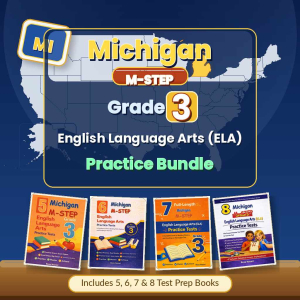
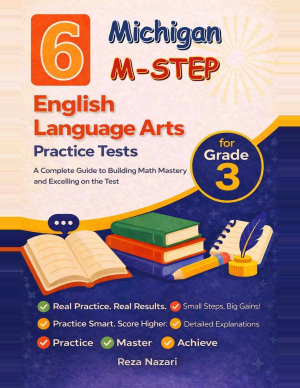
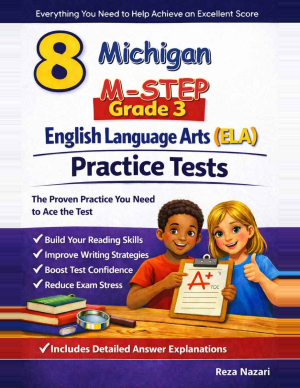
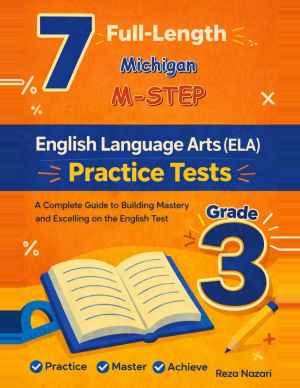
Printable Michigan grade 3 ELA books:
Standards source: Michigan English Language Arts, Michigan Department of Education.
Separate your opinion from a narrator’s point of view
Readers can disagree with a narrator without changing what the narrator says. Keep the two perspectives clear when explaining a story.
Curriculum reference: Michigan K–12 English Language Arts Standards, from the Michigan Department of Education academic standards directory.
Michigan Grade 3 references for this activity
The state’s academic standards directory links the Michigan K–12 English Language Arts Standards, adopted by the State Board of Education in 2010. Read the individual Grade 3 requirements and the school’s sequence. These selected references support this activity; they do not cover the whole English curriculum.
| Grade-level expectation | Activity focus | Official requirement |
|---|---|---|
| RL.3.6 | Distinguish reader perspective from narrator or character perspective | Read the state framework (PDF page 12) |
| RL.3.1 | Use the text as the basis for answers | Read the state framework (PDF page 12) |
These are selected grade-level expectations from the currently linked Michigan English standards adopted in 2010. Activity labels describe a teaching focus rather than reproduce complete requirements. Read the linked state document’s complete grade-level expectations, including its grade-specific details, alongside the school’s curriculum sequence.
A worked Grade 3 reading and writing activity
This original classroom example is separate from official assessment questions.
I had waited all week for our walk by the lake. When rain began tapping on the windows, I grinned. A rainy walk meant puddles, and puddles meant a chance to wear my new boots. My brother sighed and reached for his raincoat. I held the boots up like trophies. To me, the gray morning looked full of possibilities.
Try the activity
Describe the narrator’s view of the rainy morning and support it with details. Then state your own response to the idea of a rainy walk. Explain how your opinion may differ without claiming that the narrator shares it.
Follow the reasoning
The narrator welcomes the rain. The grin, the link between puddles and new boots, and the phrase full of possibilities all support that interpretation. The boots are compared with trophies, which adds to the enthusiastic account. A reader might prefer sunshine or enjoy puddles too; either response belongs to the reader unless the text provides it for a character. The brother sighs, but that single action does not explain every reason he might have. Keep the narrator’s clear enthusiasm separate from your own view and from less certain inferences about the brother.
Notice what needs more practice
A response such as rain ruins the outing may describe a reader’s preference, but it does not match the narrator’s words. Ask which details support the claim about the narrator. Naming I as the storytelling voice helps identify whose view is being described, though this task is about distinguishing perspectives rather than merely identifying first person. Do not turn an opinion into a fact about all rainy walks. The passage is invented and does not supply conditions for an actual outdoor trip.
Grade 3 English worksheets
Choose printable practice that matches the skill being taught. Check the task, reading difficulty, and directions before assigning it; the collection is independently published.
Use the next session to build independence
- Find two details revealing the narrator’s response.
- State your own opinion and label it as yours.
- Compare the perspectives without replacing the text’s evidence.
Rewrite one sentence from a narrator who dislikes the same weather and explain which wording changes the perspective. Label the rewrite as a new version. Then read a classroom story in which a narrator or character makes a choice you would not make. Explain their view through details before describing your own response. A disagreement can lead to thoughtful discussion when each speaker keeps evidence and personal opinion distinct. Use the full Michigan reading expectations and the school’s wider text sequence for further practice.
For more general reading and writing resources, visit the Grade 3 English Online Center.
Michigan Grade 3 English: useful planning questions
If I disagree with a narrator, should I describe the narrator using my own opinion?
No. Explain the narrator’s perspective with text details, then state your own opinion separately. A reader’s disagreement does not change the account’s words.
Where are the complete state requirements?
The state’s academic standards directory links the Michigan K–12 English Language Arts Standards, adopted by the State Board of Education in 2010. Read the individual Grade 3 requirements and the school’s sequence. These selected references support this activity; they do not cover the whole English curriculum. The school’s sequence also includes reading, writing, speaking, listening, and language work beyond this example.
Sources checked October 6, 2026. The currently linked 2025–26 state guide identifies M-STEP English language arts and mathematics in Grades 3–7, including Grade 3. Follow the school’s current assigned assessment pathway and directions. Read the state assessment guide, PDF page 24, and MDE assessment updates for later guidance. Independently published practice may use its own timer, question count, and scoring; those features are not official administration specifications or a prediction of a state performance level. Use the complete standards and the school’s learning sequence to choose further reading, writing, speaking, listening, and language work. This original classroom activity is not an official assessment item.
Grade 3 English in other states
When moving between school systems, compare the official curriculum and the school’s learning sequence. Use the national Online Center’s map to find another state’s resources.
Recommended Michigan Grade 3 resources
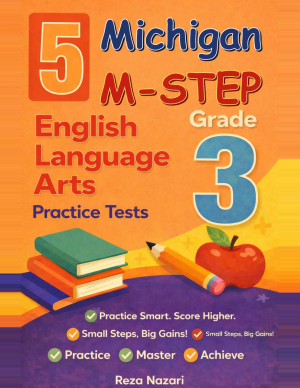
Build a Strong Michigan Grade 3 M-STEP English Practice Library
These independently published resources have their own coverage and editions. Check the contents alongside Michigan’s current English standards before choosing assessment preparation.
Use these Michigan Grade 3 resources for reading comprehension, language, writing, and full-length practice where available. Click any cover to open the resource page.
More Grade 3 resources
A USEFUL NEXT STEP
Michigan Grade 3 English: study questions
If I disagree with a narrator, should I describe the narrator using my own opinion?
No. Explain the narrator’s perspective with text details, then state your own opinion separately. A reader’s disagreement does not change the account’s words.
Where are the complete Michigan Grade 3 requirements?
The state’s academic standards directory links the Michigan K–12 English Language Arts Standards, adopted by the State Board of Education in 2010. Read the individual Grade 3 requirements and the school’s sequence. These selected references support this activity; they do not cover the whole English curriculum.
Official source ↗Resources from Effortless Math · Editorial standards