LEARN · PRACTICE · EXPLORE
North Carolina Grade 3 English
Explain why steps follow a particular order in an original Grade 3 information text, with North Carolina English references and printable practice.
Focused lessons · Useful practice · Clear next steps
What do North Carolina 3rd graders learn in ELA?
In 3rd grade, North Carolina English language arts centers on main idea and details, vocabulary from context, and writing organized paragraphs. Students take the EOG grade 3 ELA test in the spring. This page explains each North Carolina grade 3 ELA standard and pairs it with short lessons, printable worksheets and a full-length practice test.
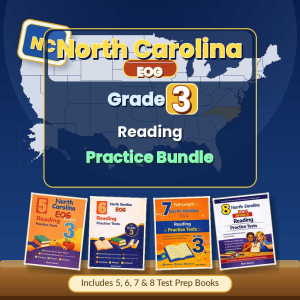
Printable North Carolina grade 3 ELA books:
Standards source: North Carolina adopted content standards.
Sequence and Cause
Explain why steps follow a particular order in an original Grade 3 information text, with North Carolina English references and printable practice. Use this focused activity alongside the school’s wider reading, writing, speaking, listening, and language sequence.
Curriculum reference: 2017 North Carolina English Language Arts Standard Course of Study, from the North Carolina English Language Arts standards page.
North Carolina Grade 3 references for this activity
NCDPI identifies the 2017 English Language Arts Standard Course of Study as the current instructional reference for 2026–2027. Its newly adopted 2026 standards begin implementation in 2027–2028. The selected references here use the current 2017 document; consult the school’s wider reading, writing, speaking, listening, and language sequence and check the state resources page when planning for the transition.
| Selected North Carolina reading reference | Activity focus | State-linked standards document |
|---|---|---|
| RI.3.3 | Describe procedural relationships using sequence and cause/effect | Read the state-linked document (PDF page 20) |
These selected reference labels identify an activity focus, with the correct grade and PDF page linked separately. Read the complete standards selected by the school and its learning sequence, including reading, writing, language, speaking, and listening. This short original example does not fulfill the entire curriculum or establish a student’s grade-level proficiency.
Why the label is written before it stands
This original classroom example is separate from official assessment questions.
To make a standing name card, first place a sheet flat on the desk. Write the name on the lower half while the paper lies flat. A flat surface supports the pencil as you write. Next, fold the sheet across the middle so the blank half becomes the back. Finally, open the fold a little and stand the card on the desk. Check that the name faces the reader.
Try the activity
Retell the steps using sequence words. Why does the guide place writing before standing the card? Which sentence explains that choice? Does the guide say that no one can ever write on a standing card?
Follow the reasoning
The guide orders placing the sheet flat, writing on the lower half, folding, opening the fold, and checking the displayed name. “First,” “Next,” and “Finally” mark stages, while the supporting-flat-surface sentence explains the early writing step. The sequence helps a reader prepare a readable card before changing the paper’s position. Explain the reason for the order, not just a list of actions. The guide recommends a supported writing surface; it does not prove that writing on a standing card is impossible. Checking the name’s orientation is a final verification rather than another reason for the earlier writing step.
Notice what needs more practice
This invented guide is for reading and explaining procedural relationships. Paper size and pencil pressure are not measured. A sequence word indicates order, while the explicit explanation connects that order with a reason. Avoid adding unrelated steps or treating the recommendation as a universal rule about every material.
Grade 3 English worksheets
Choose printable practice that matches the skill being taught. Check the task, reading difficulty, and directions before assigning it; the collection is independently published.
Use the next session to build independence
- Identify the actions and their sequence signals.
- Find a sentence that explains a step’s position.
- Retell the procedure and qualify the explanation.
Compare another teacher-approved procedure with a step that depends on an earlier one. Explain whether changing the order alters the result, makes the work harder, or has no stated effect. Use the text rather than invent a reason.
For more general reading and writing resources, visit the Grade 3 English Online Center.
North Carolina Grade 3 English: useful planning questions
Does “next” explain why a step comes later?
It marks sequence. Look for additional information explaining the relationship or reason for the order.
Which standards does the school use?
NCDPI identifies the 2017 English Language Arts Standard Course of Study as the current instructional reference for 2026–2027. Its newly adopted 2026 standards begin implementation in 2027–2028. The selected references here use the current 2017 document; consult the school’s wider reading, writing, speaking, listening, and language sequence and check the state resources page when planning for the transition. The school’s sequence also includes reading, writing, speaking, listening, and language work beyond this example.
Sources checked October 6, 2026. NCDPI’s March 2026 assessment brief describes reading EOG tests in Grades 3–8, including Grade 3. This is a scope reference, not a claim about every 2026–2027 administration detail. Confirm current school directions, the learner’s assigned assessment pathway, and accommodations. Read the March 2026 EOG assessment brief (PDF), NCDPI assessment briefs page, and current and upcoming ELA standards resources. Independently published practice has its own directions and scoring. Its result does not predict a state performance level, and this original activity is not an official assessment item.
Grade 3 English in other states
When moving between school systems, compare the official curriculum and the school’s learning sequence. Use the national Online Center’s map to find another state’s resources.
Recommended North Carolina Grade 3 resources
Build a Strong North Carolina Grade 3 EOG English Practice Library
These independently published resources have their own coverage and editions. Check the contents alongside North Carolina’s current English standards before choosing assessment preparation.
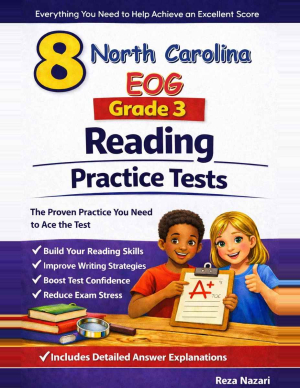
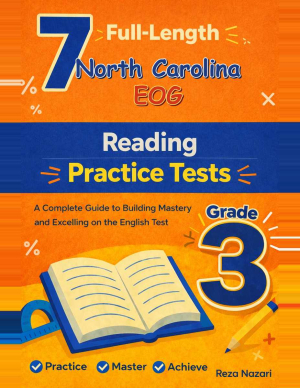
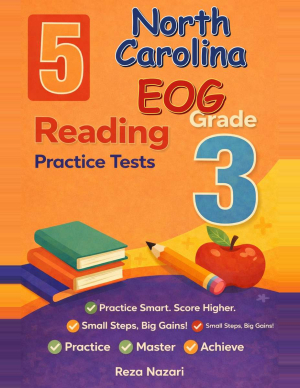
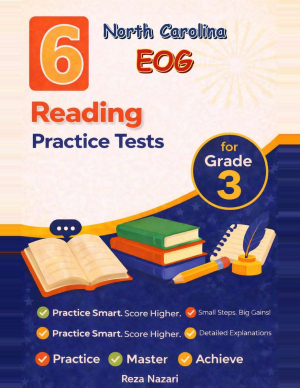
Use these North Carolina Grade 3 resources for reading comprehension, language, writing, and full-length practice where available. Click any cover to open the resource page.
More Grade 3 resources
A USEFUL NEXT STEP
North Carolina Grade 3 English: study questions
Does “next” explain why a step comes later?
It marks sequence. Look for additional information explaining the relationship or reason for the order.
Where are the complete North Carolina Grade 3 requirements?
NCDPI identifies the 2017 English Language Arts Standard Course of Study as the current instructional reference for 2026–2027. Its newly adopted 2026 standards begin implementation in 2027–2028. The selected references here use the current 2017 document; consult the school’s wider reading, writing, speaking, listening, and language sequence and check the state resources page when planning for the transition.
Official source ↗Resources from Effortless Math · Editorial standards