LEARN · PRACTICE · EXPLORE
Maryland Grade 3 English
Explain how steps connect in a Grade 3 reading activity, with worked answers, learning resources, and selected Maryland 2025 English standards references.
Focused lessons · Useful practice · Clear next steps
What do Maryland 3rd graders learn in ELA?
In 3rd grade, Maryland English language arts centers on main idea and details, vocabulary from context, and writing organized paragraphs. Students take the MCAP grade 3 ELA test in the spring. This page explains each Maryland grade 3 ELA standard and pairs it with short lessons, printable worksheets and a full-length practice test.
Printable Maryland grade 3 ELA books:
Standards source: Maryland English Language Arts, Maryland State Department of Education (archived backup).
Explain the relationship between steps in a procedure
A procedure needs more than an ordered list. Grade 3 readers explain how one step prepares for another, using the reasons actually supplied in the text.
Curriculum reference: 2025 Maryland English standards: selected grade-level strand (archived PDF), from the Maryland State Department of Education standards directory (archived backup).
Maryland Grade 3 references for this activity
The state’s standards directory identifies revised 2025 Maryland College and Career Ready Standards for English Language Arts. Use the Grade 3 column of the selected strand document; neighboring columns show prerequisite and later expectations. These selected references support the activity and do not cover the whole English curriculum.
| Grade-level expectation | Activity focus | Official requirement |
|---|---|---|
| RI.3.3 | Relationships using sequence and cause/effect language | Read the archived state document (PDF page 8) |
| RI.3.1 | Explicit details supporting an explanation | Read the archived state document (PDF page 2) |
These are selected grade-level expectations from the revised 2025 Maryland English standards. Activity labels describe a teaching focus rather than reproduce complete requirements. Read the linked state document’s complete grade-level expectations, including its grade-specific details, alongside the school’s curriculum sequence.
A worked Grade 3 reading and writing activity
This original classroom example is separate from official assessment questions.
Making a class exhibit label
First, read the object’s information card. It gives the object’s name and the date it was made. Next, draft a label using those two details. Keep the draft separate from the exhibit. Then ask a partner to compare your draft with the information card. If a detail is wrong, correct it before copying the label neatly. Finally, place the approved label beside the object so visitors can connect the words with the exhibit.
Try the activity
Describe the relationship between reading the information card and drafting the label. Explain why checking happens before the final copy. Use time or sequence words, but also show the connection between the steps. What should a writer do if the partner finds a wrong date?
Follow the reasoning
Reading the card comes first because it supplies the name and date used in the draft. Drafting then turns that information into a label. The partner compares the draft with the same source before the writer makes the neat copy; this gives the writer a chance to correct a wrong detail. A response can say, “After reading the card, the writer drafts the label with its information. Before making the final copy, the writer checks the draft so an error can be corrected.” If the date is wrong, the writer corrects it before copying. The passage explicitly gives that condition. Placing the finished label beside the object helps visitors connect the words to the correct exhibit.
Notice what needs more practice
First, next, and finally identify order, but listing those words alone does not explain why the steps are connected. Ask what each step provides or checks. Do not infer that partner review guarantees every detail is correct; the passage describes a checking process, not a promise that mistakes are impossible. The card is the source for this exercise, and the passage does not explain how its historical information was established. Keep the reading task focused on the stated procedure. If a child confuses the draft and finished label, draw two boxes and describe what changes between them.
Grade 3 English worksheets
Choose printable practice that matches the skill being taught. Check the task, reading difficulty, and directions before assigning it; the collection is independently published.
Use the next session to build independence
- Locate the source information used by the procedure.
- Explain what one step makes possible in the next.
- Check a conditional direction before describing the result.
Choose another short procedure from class. Have the student explain the role of a step rather than merely number the steps. Ask which instruction must be followed before another and cite the wording that establishes the relationship. A later writing task can ask the student to draft clear directions for a familiar classroom process and revise an unclear connection.
For more general reading and writing resources, visit the Grade 3 English Online Center.
Maryland Grade 3 English: useful planning questions
Is retelling the order enough to explain a procedure?
Order is a starting point. Explain how the steps connect, such as how reading a source supplies details for a draft or how checking allows correction before copying.
Where are the complete state requirements?
The state’s standards directory identifies revised 2025 Maryland College and Career Ready Standards for English Language Arts. Use the Grade 3 column of the selected strand document; neighboring columns show prerequisite and later expectations. These selected references support the activity and do not cover the whole English curriculum. The school’s sequence also includes reading, writing, speaking, listening, and language work beyond this example.
Sources checked October 6, 2026. Grade 3 is in the statewide English assessment grade range. Maryland announced a transition from MCAP to MSTAR beginning in 2026–27. Follow the school’s current assignment and administration directions, including an alternate pathway if assigned. The May 2026 state board report (PDF page 12, archived copy) describes the MSTAR transition. Older MCAP-named books and practice linked here retain their published names and should be checked against current school guidance; they are independent supplements. Their question counts, timers, and scoring are not official MSTAR specifications or predictions of a state performance level. The MSDE website displayed a maintenance notice during review and linked an archived backup. The standards links here use working archived copies of the state’s revised documents, not a claim that the live site was available. Check the MSDE website and school guidance for later updates. This original classroom activity is not an official assessment item.
Grade 3 English in other states
When moving between school systems, compare the official curriculum and the school’s learning sequence. Use the national Online Center’s map to find another state’s resources.
Recommended Maryland Grade 3 resources
Build a Strong Maryland Grade 3 MCAP English Practice Library
These independently published resources have their own coverage and editions. Check the contents alongside Maryland’s current English standards before choosing assessment preparation.
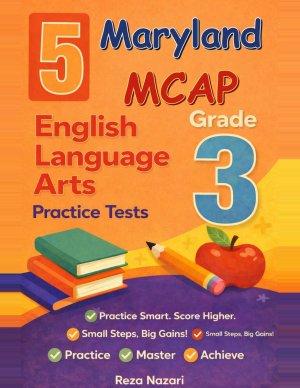
Use these Maryland Grade 3 resources for reading comprehension, language, writing, and full-length practice where available. Click any cover to open the resource page.
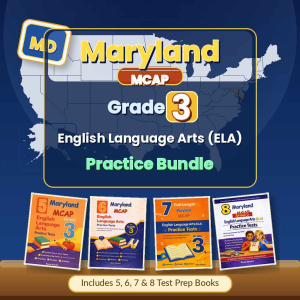
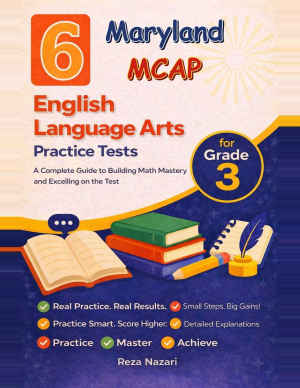
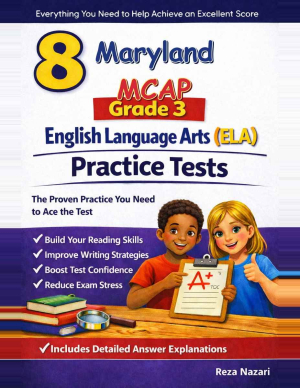
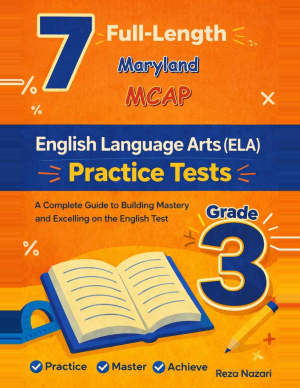
More Grade 3 resources
A USEFUL NEXT STEP
Maryland Grade 3 English: study questions
Is retelling the order enough to explain a procedure?
Order is a starting point. Explain how the steps connect, such as how reading a source supplies details for a draft or how checking allows correction before copying.
Where are the complete Maryland Grade 3 requirements?
The state’s standards directory identifies revised 2025 Maryland College and Career Ready Standards for English Language Arts. Use the Grade 3 column of the selected strand document; neighboring columns show prerequisite and later expectations. These selected references support the activity and do not cover the whole English curriculum.
Official source ↗Resources from Effortless Math · Editorial standards