LEARN · PRACTICE · EXPLORE
Colorado Grade 3 English
Analyze an original first-person scene, distinguish a narrator’s perspective from a reader’s, and revise a narrative using Colorado Grade 3 references.
Focused lessons · Useful practice · Clear next steps
What do Colorado 3rd graders learn in ELA?
In 3rd grade, Colorado English language arts centers on main idea and details, vocabulary from context, and writing organized paragraphs. Students take the CMAS grade 3 ELA test in the spring. This page explains each Colorado grade 3 ELA standard and pairs it with short lessons, printable worksheets and a full-length practice test.
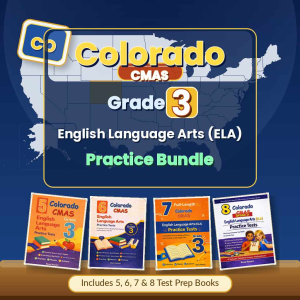
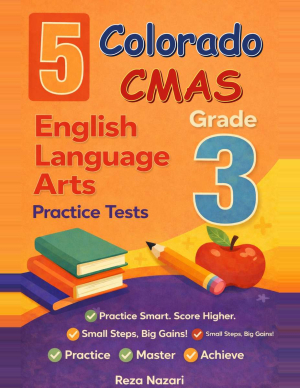
Printable Colorado grade 3 ELA books:
Standards source: Standards and Instructional Support, Colorado Department of Education.
Separate what a narrator knows from what a reader guesses
Readers can disagree with a narrator or know less about another character than they expect. This short scene makes those limits visible, then uses a writing revision to check them.
Curriculum source: 2020 Colorado Academic Standards: Reading, Writing, and Communicating (adopted 2018), from the Colorado Department of Education resource directory.
Colorado Grade 3 references for this activity
Colorado’s official English language arts document contains the Grade 3 expectations across its subject strands. These are two selected references for the activity on this page; use the full document for curriculum planning.
| Colorado reference | Activity focus | Official requirement |
|---|---|---|
| RW.3.2.1 RL.3.6 | Reader and narrator perspectives | Read the state document, page 14 |
| RW.3.3.3 W.3.3b | Dialogue and descriptions in a narrative | Read the state document, page 22 |
The RW code identifies Colorado’s grade-level expectation; the smaller code is the CCSS reference attached to the selected evidence outcome in the document. Read the full expectation, its other outcomes, and the Colorado context. These activity labels do not reproduce every requirement.
A worked Grade 3 reading and writing activity
This original classroom example is separate from official assessment questions.
I held my folded notes as the bus arrived. Mira waved from the front seat. I bent down and pretended to check my shoelace. “I cannot remember the first line of my speech,” I whispered when she reached me. Mira pointed to the notes. We practiced the opening quietly before climbing aboard.
Try the activity
Identify the narrator and explain what the narrator directly tells you about the problem. Distinguish those details from what you infer about Mira. Then rewrite two sentences in third person without inventing thoughts the passage does not reveal.
Follow the reasoning
The narrator is the speaker using “I.” The passage directly reports the forgotten first line and the narrator’s decision to pretend to check a shoelace. A reader may infer nervousness from those details, but the word nervous is not stated. Mira points to the notes and practices with the narrator; these actions support an interpretation that she is helping. They do not reveal every thought she has. A third-person revision could say: “The student bent down and pretended to check a shoelace. When Mira approached, the student whispered that the opening line of the speech had been forgotten.”
Notice what needs more practice
If a student says Mira also forgot a speech, ask which sentence supports that claim. The original scene gives no such information. If a revision states that Mira felt delighted or annoyed, discuss whether that feeling is new fiction or a fact from the passage. Changing pronouns does not grant access to a character’s unreported thoughts. A reader’s own view may differ from the narrator’s: the reader might think checking the notes would help immediately, while the narrator initially avoids the situation.
Grade 3 English worksheets
Choose printable practice that matches the skill being taught. Check the task, reading difficulty, and directions before assigning it; the collection is independently published.
Use the next session to build independence
- Underline first-person words and identify who is speaking.
- Sort directly reported details from interpretations.
- Explain one inference using an action or line of dialogue.
- Revise two sentences and check that any new information is identified as invented.
Write a brief continuation in which the narrator begins the speech. Include one action and one line of dialogue that reveal the response to the challenge. The continuation may introduce new details because it is a new piece of fiction. Ask the student to explain that difference from the earlier faithful revision. For a later reading session, compare a narrator’s response with the student’s own preferred response and support each view with the relevant details.
For more general reading and writing resources, visit the Grade 3 English Online Center.
Colorado Grade 3 English: useful planning questions
Can a reader make an inference that the narrator does not state?
Yes, if the inference is supported by details. Identify it as an interpretation and explain its evidence rather than presenting an unreported feeling as an explicit fact.
Where are the complete state requirements?
Colorado’s official English language arts document contains the Grade 3 expectations across its subject strands. These are two selected references for the activity on this page; use the full document for curriculum planning. The school’s sequence also includes reading, writing, speaking, listening, and language work beyond this example.
State sources checked October 5, 2026. Grade 3 is within the CMAS English language arts testing range. This original lesson is independent practice. Read the official assessment overview and use the school’s guidance for preparation.
Grade 3 English in other states
When moving between school systems, compare the official curriculum and the school’s learning sequence. Use the national Online Center’s map to find another state’s resources.
Recommended Colorado Grade 3 resources
Build a Strong Colorado Grade 3 CMAS English Practice Library
Use these Colorado Grade 3 resources for reading comprehension, language, writing, and full-length practice where available. Click any cover to open the resource page.
A USEFUL NEXT STEP
Colorado Grade 3 English: study questions
Can a reader make an inference that the narrator does not state?
Yes, if the inference is supported by details. Identify it as an interpretation and explain its evidence rather than presenting an unreported feeling as an explicit fact.
Where are the complete Colorado Grade 3 requirements?
Colorado’s official English language arts document contains the Grade 3 expectations across its subject strands. These are two selected references for the activity on this page; use the full document for curriculum planning.
Official source ↗Resources from Effortless Math · Editorial standards