LEARN · PRACTICE · EXPLORE
Minnesota Grade 3 English
Read an original rain poem, explain a figurative comparison with text evidence, and find Minnesota Grade 3 English references and resources.
Focused lessons · Useful practice · Clear next steps
What do Minnesota 3rd graders learn in ELA?
In 3rd grade, Minnesota English language arts centers on main idea and details, vocabulary from context, and writing organized paragraphs. Students take the Minnesota MCA grade 3 ELA test in the spring. This page explains each Minnesota grade 3 ELA standard and pairs it with short lessons and printable worksheets.
Standards source: Minnesota English Language Arts, Minnesota Department of Education.
Explain a comparison in an original poem
A poet can describe an ordinary sound with a surprising comparison. Read this original poem aloud and decide which words should be understood figuratively.
Curriculum reference: 2020 Minnesota K–12 English Language Arts Standards, February 2024 corrected edition, from the Minnesota Department of Education academic standards directory.
Minnesota Grade 3 references for this activity
Use Minnesota’s 2020 English Language Arts standards, February 2024 corrected edition. The state implementation page identifies full implementation in 2025–26. These selected benchmarks support one activity; use the complete framework and the school’s sequence for curriculum planning.
| Grade-level expectation | Activity focus | Official requirement |
|---|---|---|
| 3.1.8.1 | Figurative language | Read the state framework (PDF page 36) |
These selected benchmark labels describe an activity focus. Read the complete state requirements and the school’s sequence, including the framework’s reading, writing, discussion, media-literacy, and Dakota and Anishinaabe perspectives requirements. This original example does not represent those communities or fulfill the entire curriculum.
A worked Grade 3 reading and writing activity
This original classroom example is separate from official assessment questions.
Rain on the Roof
Rain taps the roof with tiny feet,
A hundred drummers keep the beat.
I watch the drops race down the glass,
Then hear the quiet when they pass.
Try the activity
Are there really drummers on the roof? Explain what the comparison helps you imagine. Choose another phrase that gives the rain a human action, and explain it in ordinary language.
Follow the reasoning
The poem compares the sound of rain with drummers keeping a beat. Its title, the drops on the glass, and the quieter ending show that the subject is rain, not a group of musicians. Tiny feet also suggests a light tapping sound. Drops race describes their movement as though they were taking part in a race. A reader can explain that water runs down the window without believing the drops chose to compete. The comparisons make the sound and movement easier to imagine. The poem does not measure a hundred separate drops or musicians; a hundred drummers creates an impression of many repeated sounds. An explanation should connect that impression with the words on the page.
Notice what needs more practice
The comparison is not an instruction to count drummers. If a student explains only that it is figurative, ask what quality of rain the phrase suggests. If they say the poem proves that rain always sounds loud, return to the particular moment and the word taps. Different readers might hear a gentle or busy rhythm when reading the lines aloud. They can explain that response with wording rather than declare one imagined sound an established weather measurement.
Grade 3 English worksheets
Choose printable practice that matches the skill being taught. Check the task, reading difficulty, and directions before assigning it; the collection is independently published.
Use the next session to build independence
- Read the poem aloud and identify its actual subject.
- Translate one figurative phrase into an ordinary description.
- Explain what the original phrase adds to the imagined moment.
Rewrite a hundred drummers keep the beat as the rain makes repeated sounds. Compare how the two lines feel when read aloud; the plain version keeps an idea but loses the musical comparison. Write a clearly labeled new line comparing a familiar sound with something else. Explain the shared quality rather than choose two unrelated objects. In a teacher-selected poem or story, find another figurative phrase and use its surrounding details to interpret it. This short text introduces a selected language skill; longer literary and informational reading remains part of the school’s sequence.
For more general reading and writing resources, visit the Grade 3 English Online Center.
Minnesota Grade 3 English: useful planning questions
Is calling a phrase figurative enough to explain it?
No. Explain its meaning in context and what the comparison helps the reader imagine. Use nearby details to support that interpretation.
Where are the complete state requirements?
Use Minnesota’s 2020 English Language Arts standards, February 2024 corrected edition. The state implementation page identifies full implementation in 2025–26. These selected benchmarks support one activity; use the complete framework and the school’s sequence for curriculum planning. The school’s sequence also includes reading, writing, speaking, listening, and language work beyond this example.
Sources checked October 6, 2026. The state assessment-design page identifies Reading MCA-IV beginning in spring 2026 for Grades 3–8 and 10, including Grade 3. Follow the school’s assigned assessment pathway and current directions. Read the Minnesota assessment-design page, and MDE English implementation guidance for later guidance. Independently published practice may use its own timer, question count, and scoring; those features are not official administration specifications or a prediction of a state performance level. Use the complete standards and the school’s learning sequence to choose further reading, writing, speaking, listening, and language work. This original classroom activity is not an official assessment item.
Grade 3 English in other states
When moving between school systems, compare the official curriculum and the school’s learning sequence. Use the national Online Center’s map to find another state’s resources.
Recommended Minnesota Grade 3 resources
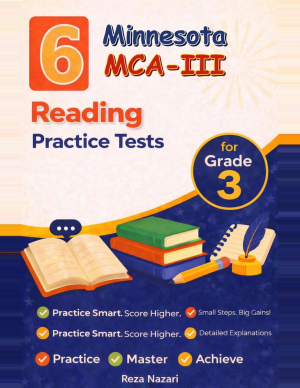
Build a Strong Minnesota Grade 3 MCA English Practice Library
These independently published resources have their own coverage and editions. Check the contents alongside Minnesota’s current English standards before choosing assessment preparation.
Use these Minnesota Grade 3 resources for reading comprehension, language, writing, and full-length practice where available. Click any cover to open the resource page.
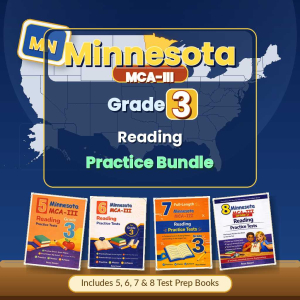
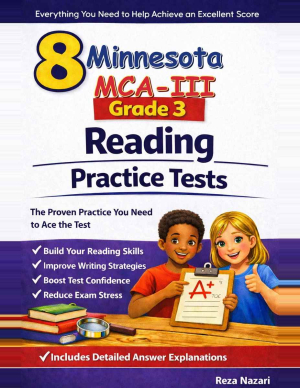
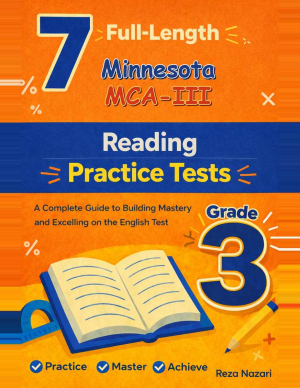
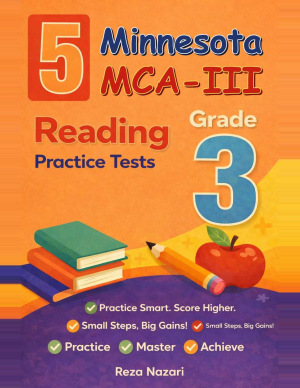
More Grade 3 resources
A USEFUL NEXT STEP
Minnesota Grade 3 English: study questions
Is calling a phrase figurative enough to explain it?
No. Explain its meaning in context and what the comparison helps the reader imagine. Use nearby details to support that interpretation.
Where are the complete Minnesota Grade 3 requirements?
Use Minnesota’s 2020 English Language Arts standards, February 2024 corrected edition. The state implementation page identifies full implementation in 2025–26. These selected benchmarks support one activity; use the complete framework and the school’s sequence for curriculum planning.
Official source ↗Resources from Effortless Math · Editorial standards