LEARN · PRACTICE · EXPLORE
Illinois Grade 3 English
Compare literal and nonliteral expressions in an original classroom passage and practice a selected Illinois Grade 3 literature expectation.
Focused lessons · Useful practice · Clear next steps
What do Illinois 3rd graders learn in ELA?
In 3rd grade, Illinois English language arts centers on main idea and details, vocabulary from context, and writing organized paragraphs. Students take the IAR grade 3 ELA test in the spring. This page explains each Illinois grade 3 ELA standard and pairs it with short lessons and printable worksheets.
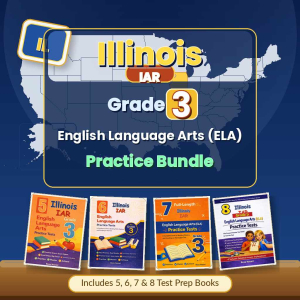
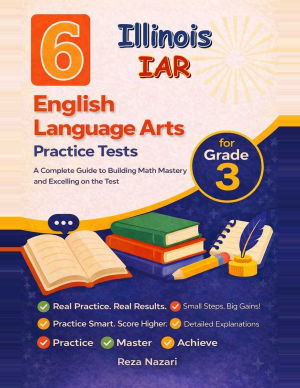
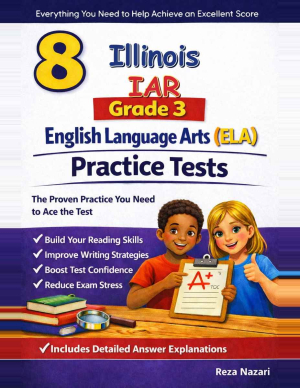
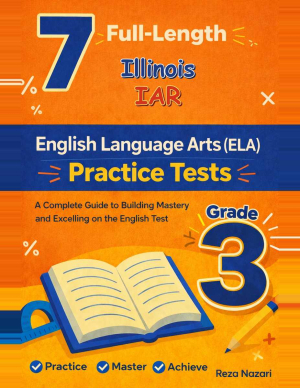
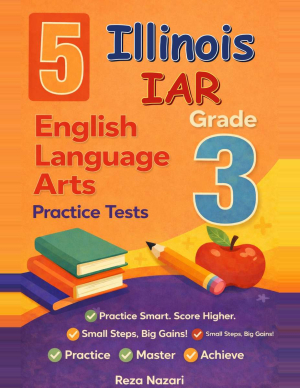
Printable Illinois grade 3 ELA books:
Standards source: Illinois English Language Arts, Illinois State Board of Education.
Use the scene to interpret “a mountain of papers”
The same word can be used in a direct description or as an imaginative comparison. Readers need the surrounding scene to decide how it works. This activity asks students to explain a nonliteral expression in ordinary language and connect that explanation with the text.
Curriculum reference: Illinois Learning Standards incorporating Common Core English Language Arts/Literacy, from the Illinois State Board of Education standards directory.
Illinois Grade 3 references for this activity
Illinois’s current English document includes Grade 3 expectations across reading, writing, language, speaking, and listening. The expectations selected here support this activity; use the whole document and the school’s sequence for wider coverage.
| Grade-level expectation | Activity focus | Official requirement |
|---|---|---|
| RL.3.4 | Distinguish literal from nonliteral meaning in a text | Read the state document (PDF page 12) |
These are selected grade-level expectations from Illinois’s current English standards. Activity labels describe a teaching focus rather than reproduce complete requirements. Read the linked state document, including the reading, writing, language, speaking, and listening sections and grade-level progression, alongside the school’s curriculum sequence.
A worked Grade 3 reading and writing activity
This original classroom example is separate from official assessment questions.
Omar placed the class maps in a tall stack on his desk. “I have a mountain of papers to sort,” he said. Then he took a small group of maps from the top and began checking the names. In the first map, a mountain stood west of the river.
| Expression | Context | Meaning |
|---|---|---|
| mountain of papers | Maps stacked on a desk | Nonliteral description of a large amount |
| mountain west of the river | A landform in a map | Literal geographic feature |
Try the activity
Compare the two uses of mountain. Explain which refers to a landform and which describes the papers nonliterally. Use details from the passage to support both decisions. Then replace the nonliteral expression with a literal description and explain what changes in the writing.
Follow the reasoning
In the final sentence, mountain refers to a landform shown in the map, located west of a river. In Omar’s spoken sentence, the object on his desk is a stack of maps. “A mountain of papers” emphasizes how large the stack seems; it does not mean a rocky landform has appeared on the desk. A literal replacement such as “many papers in a tall stack” preserves the practical idea while losing some of the expression’s exaggeration and imagery.
Notice what needs more practice
Nonliteral language is not automatically a mistake or a false report. Its meaning depends on how it is used. The phrase suggests a large amount, but it supplies no exact paper count and does not prove Omar cannot finish. The next sentence shows him beginning the work. Avoid deciding that every use of mountain is figurative: the map sentence supplies a geographic setting in which the ordinary landform meaning fits.
Grade 3 English worksheets
Choose printable practice that matches the skill being taught. Check the task, reading difficulty, and directions before assigning it; the collection is independently published.
Use the next session to build independence
- Read the sentence and the surrounding events.
- Identify what the expression refers to in that scene.
- Restate its meaning and explain whether the words are literal.
Create two sentences using river: one about a landform and another about “a river of people” moving through a doorway. Explain the second sentence without claiming that the people are made of water. Then search a complete grade-level story for a nonliteral expression and test the interpretation against its context. A dictionary can help with an unfamiliar word, but the reader still needs to decide which meaning fits this use. This comparison supports one language-in-literature focus rather than certify that the short passage represents all Grade 3 text demands.
For more general reading and writing resources, visit the Grade 3 English Online Center.
Illinois Grade 3 English: useful planning questions
Does a nonliteral expression give an exact quantity?
Not here. A mountain of papers suggests a large stack, but it does not state the number of papers. Use the passage for the meaning and avoid inventing a count.
Where are the complete state requirements?
Illinois’s current English document includes Grade 3 expectations across reading, writing, language, speaking, and listening. The expectations selected here support this activity; use the whole document and the school’s sequence for wider coverage. The school’s sequence also includes reading, writing, speaking, listening, and language work beyond this example.
Official sources checked October 6, 2026. Grade 3 is within the IAR English language arts testing range. This original lesson is independent practice. Read the Illinois assessment overview and use the school’s guidance for preparation. IAR measures English language arts and mathematics in Grades 3–8. Follow the school’s current assessment assignment, accommodations, and guidance; this classroom activity is independent practice and does not predict a state performance level. This site’s practice and books are independently published. Check their editions and contents against current standards and assessment guidance.
Grade 3 English in other states
When moving between school systems, compare the official curriculum and the school’s learning sequence. Use the national Online Center’s map to find another state’s resources.
Recommended Illinois Grade 3 resources
Build a Strong Illinois Grade 3 IAR English Practice Library
These independently published resources have their own coverage and editions. Check the contents alongside Illinois’s current English standards before choosing assessment preparation.
Use these Illinois Grade 3 resources for reading comprehension, language, writing, and full-length practice where available. Click any cover to open the resource page.
More Grade 3 resources
A USEFUL NEXT STEP
Illinois Grade 3 English: study questions
Does a nonliteral expression give an exact quantity?
Not here. A mountain of papers suggests a large stack, but it does not state the number of papers. Use the passage for the meaning and avoid inventing a count.
Where are the complete Illinois Grade 3 requirements?
Illinois’s current English document includes Grade 3 expectations across reading, writing, language, speaking, and listening. The expectations selected here support this activity; use the whole document and the school’s sequence for wider coverage.
Official source ↗Resources from Effortless Math · Editorial standards