LEARN · PRACTICE · EXPLORE
Vermont Grade 3 English
Distinguish a reader’s view from the narrator’s. Read an original Grade 3 activity, follow its explanation, and find the selected Vermont reading reference.
Focused lessons · Useful practice · Clear next steps
What do Vermont 3rd graders learn in ELA?
In 3rd grade, Vermont English language arts centers on main idea and details, vocabulary from context, and writing organized paragraphs. Students take the VTCAP grade 3 ELA test in the spring. This page explains each Vermont grade 3 ELA standard and pairs it with short lessons, printable worksheets and a full-length practice test.
Printable Vermont grade 3 ELA books:
Standards source: Vermont adopted content standards.
Separate Your View from the Narrator’s View
Distinguish a reader’s view from the narrator’s. Use the original reading below to discuss a particular skill, then apply that reasoning to a fuller classroom text.
Curriculum reference: Common Core State Standards for English Language Arts & Literacy, June 2010 edition, from the Vermont English language arts standards page.
Vermont Grade 3 references for this activity
The Vermont Agency of Education identifies the Common Core State Standards for K–12 English language arts. The linked CCSS edition lists separate grade reading requirements, including Grade 3. The agency also identifies Vermont Early Learning Standards for prekindergarten through Grade 3. Read the complete standards and the school’s curriculum sequence. This original example selects one reading focus; it does not fulfill the complete curriculum.
| Selected Vermont reading reference | Activity focus | State-linked standards document |
|---|---|---|
| RL.3.6 | Distinguish a reader’s view from the narrator’s | Read the state-linked document (PDF page 12) |
These selected reference labels identify an activity focus, with the correct grade and PDF page linked separately. Read the complete standards selected by the school and its learning sequence, including reading, writing, language, speaking, and listening. This short original example does not fulfill the entire curriculum or establish a student’s grade-level proficiency.
An empty page
This original classroom example is separate from official assessment questions.
I stared at the blank page while my partner arranged her pencils. To me, starting a new story was the worst part of writing. I wanted the teacher to give us an opening sentence. My partner grinned at her page. “We can invent anything,” she said. I picked up my pencil but had not written a word yet.
Try the activity
Explain the narrator’s view of beginning a story with a detail. Then state your own view and distinguish it from that narrator’s view. Does the partner’s sentence prove that the narrator now agrees?
Follow the reasoning
The first-person narrator sees beginning a story as difficult and undesirable, calling it “the worst part” and wishing for an opening sentence. A reader might instead enjoy choosing an opening, or might share the narrator’s difficulty; either view needs to be identified as the reader’s own. The partner’s comment presents enthusiasm for the freedom to invent. Picking up the pencil shows a new action, but the passage does not say the narrator has changed an opinion or begun writing. A useful response names whose view is being described and keeps an imagined later change separate from the supplied ending.
Notice what needs more practice
The invented narrator is not automatically the author. A personal preference does not replace the narrator’s stated attitude, and disagreement with the narrator does not make a reading inaccurate. Use the text to explain the narrator and your own words to identify your response.
Grade 3 English worksheets
Choose printable practice that matches the skill being taught. Check the task, reading difficulty, and directions before assigning it; the collection is independently published.
Use the next session to build independence
- Identify the narrator’s attitude through a particular phrase.
- State your own view separately.
- Explain a similarity or difference without changing the narrator’s words.
Read a classroom story with a clear narrator. Distinguish your own view from the narrator’s and from any character’s spoken view. Discuss how later details might support a change, rather than assuming every new action changes an opinion.
For more general reading and writing resources, visit the Grade 3 English Online Center.
Vermont Grade 3 English: useful planning questions
Does the reader have to agree with the narrator?
No. A reader can disagree while accurately explaining the narrator’s view through details from the story.
Which standards does the school use?
The Vermont Agency of Education identifies the Common Core State Standards for K–12 English language arts. The linked CCSS edition lists separate grade reading requirements, including Grade 3. The agency also identifies Vermont Early Learning Standards for prekindergarten through Grade 3. Read the complete standards and the school’s curriculum sequence. This original example selects one reading focus; it does not fulfill the complete curriculum. The school’s sequence also includes reading, writing, speaking, listening, and language work beyond this example.
Sources checked October 6, 2026. The agency’s current Academic Proficiency overview lists general VTCAP English and mathematics assessment in Grades 3–9. Grade 3 is included in that English range. Follow the school’s current assessment and accommodation directions. This original classroom activity is not an official state item. Read the Vermont English assessment overview and English standards guidance. Independently published practice has its own directions and scoring. Its result does not predict a state performance level, and this original activity is not an official assessment item.
Grade 3 English in other states
When moving between school systems, compare the official curriculum and the school’s learning sequence. Use the national Online Center’s map to find another state’s resources.
Recommended Vermont Grade 3 resources
Choose Vermont Grade 3 English practice resources
These independently published resources have their own coverage and editions. Check the contents alongside Vermont’s current English standards before choosing assessment preparation.
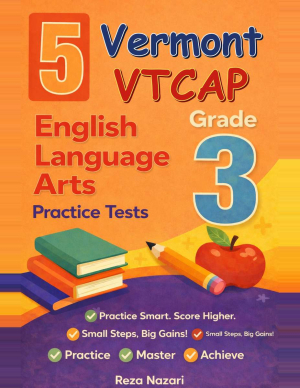
Use these Vermont Grade 3 resources for reading comprehension, language, writing, and full-length practice where available. Click any cover to open the resource page.
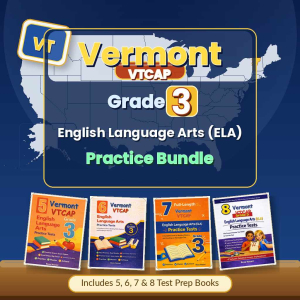
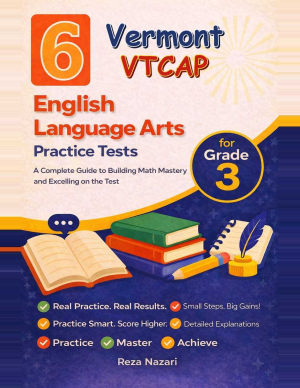
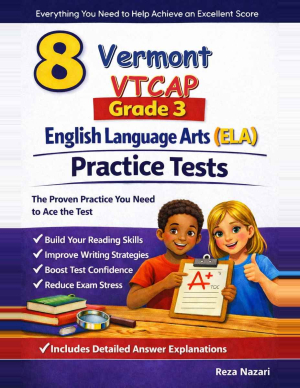
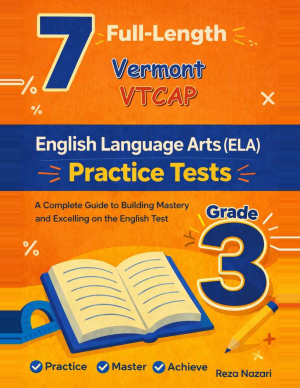
More Grade 3 resources
A USEFUL NEXT STEP
Vermont Grade 3 English: study questions
Does the reader have to agree with the narrator?
No. A reader can disagree while accurately explaining the narrator’s view through details from the story.
Where are the complete Vermont Grade 3 requirements?
The Vermont Agency of Education identifies the Common Core State Standards for K–12 English language arts. The linked CCSS edition lists separate grade reading requirements, including Grade 3. The agency also identifies Vermont Early Learning Standards for prekindergarten through Grade 3. Read the complete standards and the school’s curriculum sequence. This original example selects one reading focus; it does not fulfill the complete curriculum.
Official source ↗Resources from Effortless Math · Editorial standards