LEARN · PRACTICE · EXPLORE
New Mexico Grade 7 English
Analyze an original Grade 7 promotional claim, compare its evidence with a trial record, and practice critical reading using New Mexico English references.
Focused lessons · Useful practice · Clear next steps
What do New Mexico 7th graders learn in ELA?
In 7th grade, New Mexico English language arts centers on how ideas and characters develop, comparing texts, and arguments with claims and counterclaims. Students take the NM-MSSA grade 7 ELA test in the spring. This page explains each New Mexico grade 7 ELA standard and pairs it with short lessons, printable worksheets and a full-length practice test.
Printable New Mexico grade 7 ELA books:
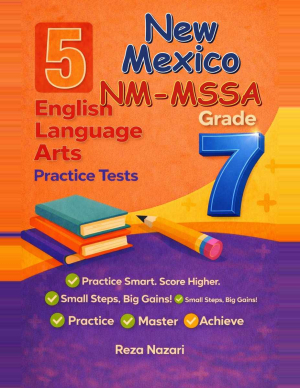
- 5 New Mexico NM-MSSA Grade 7 English Language Arts (ELA) Practice Tests
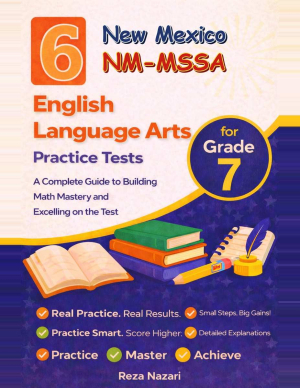
- 6 New Mexico NM-MSSA Grade 7 English Language Arts (ELA) Practice Tests
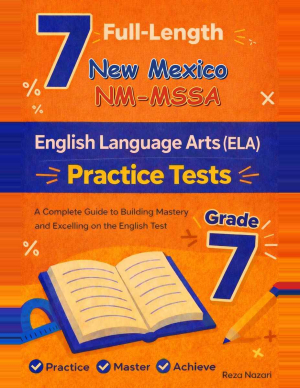
- 7 New Mexico NM-MSSA Grade 7 English Language Arts (ELA) Practice Tests
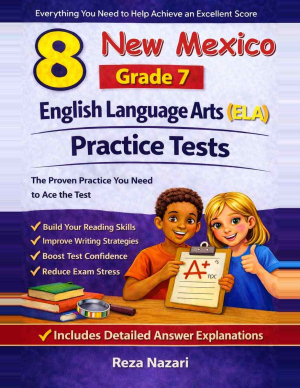
- 8 New Mexico NM-MSSA Grade 7 English Language Arts (ELA) Practice Tests
- New Mexico Grade 7 ELA Preparation Bundle
Standards source: New Mexico adopted content standards.
Recognize persuasion without discarding relevant evidence
Analyze an original Grade 7 promotional claim, compare its evidence with a trial record, and practice critical reading using New Mexico English references. New Mexico uses Common Core English expectations together with state additions. This activity addresses selected skills; use the full requirements and the school’s sequence for broader planning.
Curriculum reference: 2010 Common Core ELA/literacy standards, current New Mexico state-hosted copy, from the New Mexico adopted content standards directory.
New Mexico Grade 7 references for this activity
New Mexico uses the Common Core English language arts standards together with additional state expectations in NMAC 6.29.13. The selected Common Core references below identify this activity’s focus. The linked state additions include further cultural, oral-source, writing, and discussion work appropriate to each grade; read the full requirements and the school’s sequence.
| Selected Common Core reference | Activity focus | State-hosted standards document |
|---|---|---|
| RI.7.6 | Analyze how an author presents a purpose and responds to other positions | Read the state-hosted document (PDF page 39) |
| RI.7.9 | Compare evidence and interpretation across authors | Read the state-hosted document (PDF page 39) |
NMAC 6.29.13.9(D)(2) adds analysis of media use of propaganda, bias, and stereotyping in Grades 6–8. This activity practices recognizing pressure and stereotypes alongside comparing evidence. It does not represent an actual New Mexico advertisement. Read New Mexico’s additional English requirements (NMAC 6.29.13, PDF).
These selected reference labels identify an activity focus, with the grade column and PDF page linked separately. Read the complete standards selected by the school and its learning sequence, including reading, writing, language, speaking, and listening. This short original example does not fulfill the entire curriculum or establish a student’s grade-level proficiency.
A cart worth buying?
This original classroom example is separate from official assessment questions.
Source A — Invented promotional message
Only careless classes keep supplies in ordinary trays. Our new rolling cart is the obvious choice for every classroom. In one demonstration, a helper moved six supply boxes in a single trip. A teacher who questioned the price simply does not care about saving time. Order before Friday; thoughtful teachers will not hesitate.
Source B — Invented classroom trial record
The helper moved six boxes from the cupboard to the table in one cart trip on the clear classroom floor. The class did not compare the trip time with carrying trays. The cart price was above the available equipment budget. The trial did not test the narrow storage doorway.
Try the activity
Compare the purposes and evidence in the two sources. Identify wording that pressures the audience or stereotypes people who disagree. Explain which demonstrated result is relevant, which broader claims remain unsupported, and how the message handles the price objection.
Follow the reasoning
The promotional message aims to persuade readers to buy. The trial record describes a particular demonstration and its limits. Both support the narrow fact that six boxes were moved in one cart trip on that floor. The promotion turns that result into an unrestricted recommendation for every classroom without comparison times or doorway testing. Its labels for “careless” classes and teachers who question the price stereotype dissenters instead of evaluating their reasons. The Friday deadline and praise for quick buyers add pressure, but neither supplies evidence that the cart fits this class’s budget or doorway. The price objection receives a personal attack rather than a financial response. Bias does not erase the relevant demonstration result; it changes how readers should evaluate the writer’s selection, framing, and unsupported conclusions.
Notice what needs more practice
A persuasive purpose does not make every statement false. Equally, a true small demonstration does not establish every claim attached to it. Do not infer that ordinary trays are necessarily better: the sources do not provide comparison data. Recognize the attack on a person as different from answering the objection. These messages, prices, and trials are fictional reading material, not product recommendations.
Grade 7 English worksheets
Choose printable practice that matches the skill being taught. Check the task, reading difficulty, and directions before assigning it; the collection is independently published.
Use the next session to build independence
- Identify the purpose and audience of each source.
- Separate the demonstrated result from pressure and labels.
- Explain how missing comparison evidence limits the recommendation.
Rewrite the promotion as a balanced information note. Retain the demonstrated result, state the budget and doorway concerns, and propose evidence that could address them. Compare how the rewrite treats a reasonable objection. Use teacher-selected real media for further study, checking publication context and avoiding assumptions about a person’s group or beliefs.
For more general reading and writing resources, visit the Grade 7 English Online Center.
New Mexico Grade 7 English: useful planning questions
Does recognizing bias mean rejecting the whole source?
No. Identify relevant supported information, then evaluate omissions, framing, pressure, and unsupported claims. A biased presentation can still contain useful evidence.
Which standards does the school use?
New Mexico uses the Common Core English language arts standards together with additional state expectations in NMAC 6.29.13. The selected Common Core references below identify this activity’s focus. The linked state additions include further cultural, oral-source, writing, and discussion work appropriate to each grade; read the full requirements and the school’s sequence. The school’s sequence also includes reading, writing, speaking, listening, and language work beyond this example.
Sources checked October 6, 2026. The current NM-MSSA resource page describes statewide ELA and mathematics assessment at the end of Grades 3–8, including Grade 7. Results are one measure and should be considered alongside classroom and other assessment evidence. Confirm the learner’s assigned pathway and current school directions. Read the official NM-MSSA resource page, state standards directory, and additional New Mexico English requirements. The state assessment directory is updating resources for 2026–2027; this page does not claim later-year timing, tool, or administration details from a Spring 2026 manual. Independently published practice has its own directions and scoring and does not predict a state performance level. This original activity is not an official assessment item.
Grade 7 English in other states
When moving between school systems, compare the official curriculum and the school’s learning sequence. Use the national Online Center’s map to find another state’s resources.
Recommended New Mexico Grade 7 resources
Build a Strong New Mexico Grade 7 NM-MSSA English Practice Library
These independently published resources have their own coverage and editions. Check the contents alongside New Mexico’s current English standards before choosing assessment preparation.
Use these New Mexico Grade 7 resources for reading comprehension, language, writing, and full-length practice where available. Click any cover to open the resource page.
More Grade 7 resources
A USEFUL NEXT STEP
New Mexico Grade 7 English: study questions
Does recognizing bias mean rejecting the whole source?
No. Identify relevant supported information, then evaluate omissions, framing, pressure, and unsupported claims. A biased presentation can still contain useful evidence.
Where are the complete New Mexico Grade 7 requirements?
New Mexico uses the Common Core English language arts standards together with additional state expectations in NMAC 6.29.13. The selected Common Core references below identify this activity’s focus. The linked state additions include further cultural, oral-source, writing, and discussion work appropriate to each grade; read the full requirements and the school’s sequence.
Official source ↗Resources from Effortless Math · Editorial standards