LEARN · PRACTICE · EXPLORE
Kentucky Grade 7 English
Compare two original exhibition accounts, analyze different evidence and interpretations, and practice current Kentucky Grade 7 informational reading skills.
Focused lessons · Useful practice · Clear next steps
What do Kentucky 7th graders learn in ELA?
In 7th grade, Kentucky English language arts centers on how ideas and characters develop, comparing texts, and arguments with claims and counterclaims. Students take the KSA grade 7 ELA test in the spring. This page explains each Kentucky grade 7 ELA standard and pairs it with short lessons, printable worksheets and a full-length practice test.
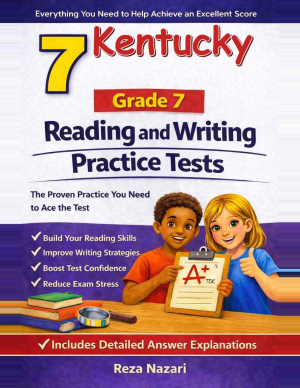
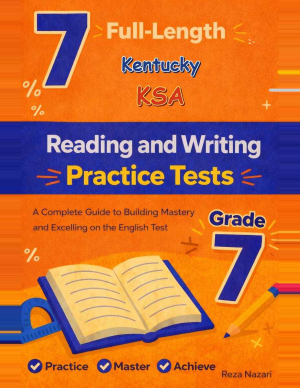
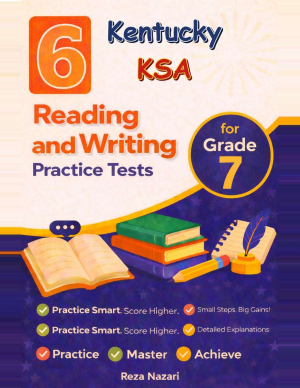
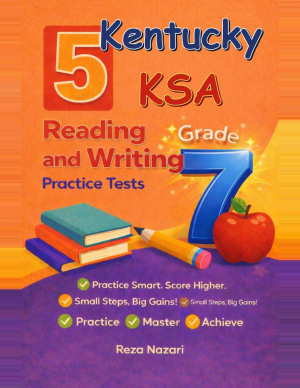
Printable Kentucky grade 7 ELA books:
Standards source: Kentucky English Language Arts, Kentucky Department of Education.
Compare how two writers emphasize different evidence about one event
Two original accounts describe the same school exhibition. Compare the facts each writer chooses and the interpretation those choices support. Different emphasis does not automatically mean that one writer is dishonest.
Curriculum reference: Kentucky Academic Standards for Reading and Writing, October 2025, from the Kentucky Department of Education standards directory.
Kentucky Grade 7 references for this activity
Kentucky’s current directory links the October 2025 Reading and Writing standards, adopted into law in May 2026. Read the Grade 7 expectations in the full state document. The selected reference supports this activity; use the school’s sequence and the remaining expectations for wider coverage.
| Grade-level expectation | Activity focus | Official requirement |
|---|---|---|
| RI.7.9 | Compare authors’ evidence and interpretations of the same topic | Read the state document (PDF page 237) |
These are selected grade-level expectations from Kentucky’s current English standards. Activity labels describe a teaching focus rather than reproduce complete requirements. Read the linked state document’s complete grade-level expectations, including its grade-specific details, alongside the school’s curriculum sequence.
A worked Grade 7 reading and writing activity
This original classroom example is separate from official assessment questions.
Writer A: The school exhibition attracted sixty visitors in one evening, twice the attendance of the earlier afternoon exhibition. The evening schedule helped more people attend. We should consider evening times for future events.
Writer B: The school exhibition attracted sixty visitors in one evening. Five student presenters left before the last visitors arrived because their rides were scheduled earlier. Before choosing another evening event, we should find a schedule that works for presenters as well as visitors.
Try the activity
Identify a shared fact, the different evidence emphasized, and each writer’s recommendation. Explain what would be needed to test Writer A’s claim about the cause of higher attendance.
Follow the reasoning
Both accounts give the same evening attendance of sixty visitors. A compares it with the earlier afternoon event and uses that comparison to recommend considering evenings. B highlights presenters’ departure times and recommends considering their schedules too. Their interpretations concern different aspects of success: attendance and participation by the presenters. The accounts can be compatible because the visitors may be more numerous while some presenters still leave early. A’s numerical comparison does not by itself isolate the schedule as the cause. The events might differ in publicity, exhibits, weather, or other conditions. A careful comparison identifies what each writer supplies, what each concludes, and what the reader still needs to investigate.
Notice what needs more practice
Do not turn “consider evening times” into “hold every event at night.” Likewise, B does not say to cancel exhibitions or that no presenter stayed. Several mistaken comparisons result from exaggerating the recommendations. The second account also does not deny the attendance figure in the first. Its concern is a different consequence of the same event. Distinguish reported details from interpretation and proposed action. An author’s choice of evidence can reveal priorities without proving a hidden motive. If a student claims one writer cares nothing about students or families, ask which actual sentence establishes that judgment.
Grade 7 English worksheets
Choose printable practice that matches the skill being taught. Check the task, reading difficulty, and directions before assigning it; the collection is independently published.
Use the next session to build independence
- Record the shared fact without treating it as the entire account.
- Identify evidence that appears in one account and the interpretation it supports.
- Compare the recommendations and name a question the combined accounts leave open.
Write a brief synthesis that retains the higher attendance and the presenters’ scheduling difficulty. Propose a next-step question that addresses both, without inventing a result. Then compare another pair of teacher-selected accounts about one event, checking who produced them, when they appeared, and which evidence they use. Different publication times or access to information may help explain different emphases. These original exhibition accounts deliberately isolate one reading task; they are not reporting a real school event. Kentucky’s selected Grade 7 standard calls for comparing authors’ treatment of a topic, including emphasized evidence and interpretations. Continue through the wider curriculum using complete sources.
For more general reading and writing resources, visit the Grade 7 English Online Center.
Kentucky Grade 7 English: useful planning questions
Must two accounts with different emphasis contradict each other?
No. These accounts agree about attendance while emphasizing different consequences. Compare their actual claims and evidence before deciding whether they conflict.
Where are the complete state requirements?
Kentucky’s current directory links the October 2025 Reading and Writing standards, adopted into law in May 2026. Read the Grade 7 expectations in the full state document. The selected reference supports this activity; use the school’s sequence and the remaining expectations for wider coverage. The school’s sequence also includes reading, writing, speaking, listening, and language work beyond this example.
Official sources checked October 6, 2026. Grade 7 is within the Kentucky Summative Assessment reading testing range. This original lesson is independent practice. Read Kentucky’s current assessment guidance and use the school’s guidance for preparation. Kentucky’s current guidance lists KSA reading and mathematics in Grades 3–8 and 10. Beginning in 2026–27, KSA no longer tests writing or editing and mechanics. Writing and language remain part of classroom instruction. The other KSA content-area tests remain; follow the school’s current assignment and directions, including any assigned alternate-assessment pathway. This original classroom activity is independently published practice, not an official KSA item or a prediction of a state performance level. The May 2026 adoption notice explains the revised reading and writing standards. Check independently published books and practice against current standards and assessment guidance.
Grade 7 English in other states
When moving between school systems, compare the official curriculum and the school’s learning sequence. Use the national Online Center’s map to find another state’s resources.
Recommended Kentucky Grade 7 resources
Build a Strong Kentucky Grade 7 KSA English Practice Library
These independently published resources have their own coverage and editions. Check the contents alongside Kentucky’s current English standards before choosing assessment preparation.
Use these Kentucky Grade 7 resources for reading comprehension, language, writing, and full-length practice where available. Click any cover to open the resource page.
More Grade 7 resources
A USEFUL NEXT STEP
Kentucky Grade 7 English: study questions
Must two accounts with different emphasis contradict each other?
No. These accounts agree about attendance while emphasizing different consequences. Compare their actual claims and evidence before deciding whether they conflict.
Where are the complete Kentucky Grade 7 requirements?
Kentucky’s current directory links the October 2025 Reading and Writing standards, adopted into law in May 2026. Read the Grade 7 expectations in the full state document. The selected reference supports this activity; use the school’s sequence and the remaining expectations for wider coverage.
Official source ↗Resources from Effortless Math · Editorial standards