LEARN · PRACTICE · EXPLORE
Arizona Grade 7 English
Evaluate arguments in Arizona Grade 7 English with a worked library proposal, evidence limits, counterargument revision, worksheets, and state references.
Focused lessons · Useful practice · Clear next steps
What do Arizona 7th graders learn in ELA?
In 7th grade, Arizona English language arts centers on how ideas and characters develop, comparing texts, and arguments with claims and counterclaims. Students take the AASA grade 7 ELA test in the spring. This page explains each Arizona grade 7 ELA standard and pairs it with short lessons, printable worksheets and a full-length practice test.
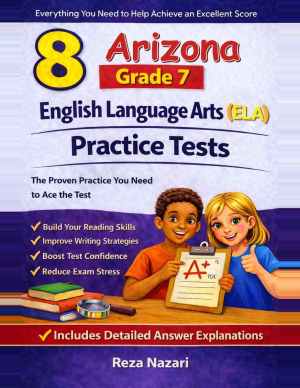
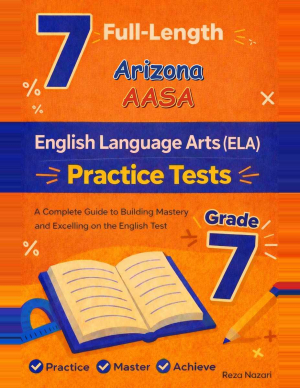
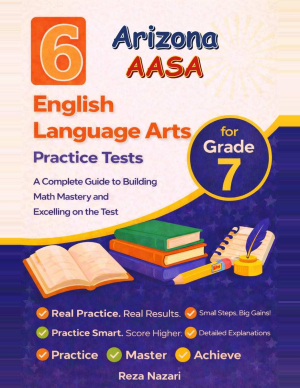
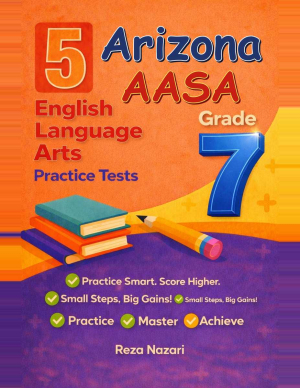
Printable Arizona grade 7 ELA books:
Standards source: Arizona Academic Standards, Arizona Department of Education.
Test whether evidence is enough for the claim
Relevant evidence can still be too limited for a broad claim. A Grade 7 reader needs to judge both the connection and the amount of support. This fictional library proposal also gives writers practice acknowledging a reasonable opposing concern before recommending a next step.
Curriculum source: Arizona’s Grade 7 ELA document, updated January 29, 2025, from the Arizona Department of Education standards directory.
Arizona Grade 7 references for this activity
Arizona’s official Grade 7 document gives the complete requirements. The references below are selected for this activity, rather than a complete course checklist.
| Arizona code | Activity focus | Official requirement |
|---|---|---|
| 7.RI.8 | Evaluate reasoning and the relevance and sufficiency of evidence | Read the state document, page 6 |
| 7.W.1 | Support a claim and acknowledge an opposing position | Read the state document, page 7 |
The state document marks Essential Standards for assessment emphasis. Those marks do not replace the rest of the grade’s curriculum. Use the complete document and the school’s pacing plan when organizing a full course.
A worked Grade 7 reading and writing activity
This original classroom example is separate from official assessment questions.
Proposal: ‘We should open the school library for a quiet study period before class. In our one-week trial, 24 students used the room across two mornings. Every student at our school needs this service, so it must become permanent immediately.’ Response: ‘A quiet place could help students who arrive early. However, we have not measured demand across the whole school, and we need to know whether an adult can supervise the room.’
Try the activity
Separate the proposal’s evidence from its conclusions. Explain which claim the attendance information supports and which claim needs more evidence. Then draft a recommendation that responds to the supervision concern.
Follow the reasoning
The trial shows some use during two mornings; it does not establish a need for every student or prove that permanent opening is workable. The response recognizes a possible benefit while identifying missing information. A supported recommendation could be: ‘Extend the trial while recording attendance on each morning and checking staff availability. The initial attendance suggests interest, but the school needs broader demand information and a supervision plan before deciding on a permanent schedule.’ This narrows the conclusion and addresses an opposing practical concern.
Notice what needs more practice
‘Twenty-four is a fact, so the argument is proved’ confuses an accurate detail with sufficient support. ‘The proposal is completely wrong’ ignores the evidence of some interest. Ask what the count can establish, whether the same people may have attended twice, and what information is needed for a school-wide conclusion. The source does not give the school’s enrollment or a count of distinct users.
Grade 7 English worksheets
Choose printable practice that matches the skill being taught. Check the task, reading difficulty, and directions before assigning it; the collection is independently published.
Use the next session to build independence
- Mark the proposed action, the attendance evidence, and the claim about every student separately.
- Explain why the attendance information is relevant but limited.
- Write one fair opposing concern without dismissing the possible benefit.
- Revise the recommendation so its scope fits the evidence and it answers the concern.
Apply the same check to an assigned argument: What exactly is claimed? Which evidence supports it? How broad is the evidence? What reasonable objection remains? A stronger paragraph can narrow a claim instead of adding unsupported certainty.
For more general reading and writing resources, visit the Grade 7 English Online Center.
Arizona Grade 7 English: useful planning questions
Can relevant evidence still be insufficient?
Yes. Evidence may relate directly to a claim while covering too few cases or leaving an important question unanswered. Explain the limit and identify the information needed for the broader conclusion.
Where are the complete state requirements?
Arizona’s official Grade 7 document gives the complete requirements. The references below are selected for this activity, rather than a complete course checklist. The school’s sequence also includes reading, writing, speaking, listening, and language work beyond this example.
State sources checked October 5, 2026. AASA covers English language arts in Grades 3–8. Read official AASA guidance.
Grade 7 English in other states
When moving between school systems, compare the official curriculum and the school’s learning sequence. Use the national Online Center’s map to find another state’s resources.
Recommended Arizona Grade 7 resources
Build a Strong Arizona Grade 7 AASA English Practice Library
Use these Arizona Grade 7 resources for reading comprehension, language, writing, and full-length practice where available. Click any cover to open the resource page.
A USEFUL NEXT STEP
Arizona Grade 7 English: study questions
Can relevant evidence still be insufficient?
Yes. Evidence may relate directly to a claim while covering too few cases or leaving an important question unanswered. Explain the limit and identify the information needed for the broader conclusion.
Where are the complete Arizona Grade 7 requirements?
Arizona’s official Grade 7 document gives the complete requirements. The references below are selected for this activity, rather than a complete course checklist.
Official source ↗Resources from Effortless Math · Editorial standards