LEARN · PRACTICE · EXPLORE
Wisconsin Grade 7 English
Practice how plot events affect one another with an original Grade 7 reading example, worked explanation, printable resources, and selected Wisconsin English references.
Focused lessons · Useful practice · Clear next steps
What do Wisconsin 7th graders learn in ELA?
In 7th grade, Wisconsin English language arts centers on how ideas and characters develop, comparing texts, and arguments with claims and counterclaims. Students take the Wisconsin Forward Exam grade 7 ELA test in the spring. This page explains each Wisconsin grade 7 ELA standard and pairs it with short lessons, printable worksheets and a full-length practice test.
Printable Wisconsin grade 7 ELA books:
- 5 Wisconsin Forward Exam Grade 7 English Language Arts (ELA) Practice Tests
- 6 Wisconsin Forward Exam Grade 7 English Language Arts (ELA) Practice Tests
- 7 Wisconsin Forward Exam Grade 7 English Language Arts (ELA) Practice Tests
- 8 Wisconsin Forward Exam Grade 7 English Language Arts (ELA) Practice Tests
- Wisconsin Grade 7 ELA Preparation Bundle
Standards source: Wisconsin English policy and resources.
How Plot Events Affect One Another
Use this original Grade 7 example to practice how plot events affect one another. Read the passage, explain the evidence, and test the explanation with a changed detail. The short example is a starting point for teacher-selected reading, rather than a complete measure of grade-level proficiency.
Curriculum reference: Wisconsin Standards for English Language Arts, 2020, updated September 2025, from the Wisconsin English language arts standards page.
Wisconsin Grade 7 references for this activity
Wisconsin’s state English standards were adopted May 27, 2020. The current DPI-linked edition was updated in September 2025 with considerations for students who use or are learning to use braille. State standards serve as a model; local school boards determine the standards and curriculum used in their communities. The selected Grade 7 reference here identifies the focus of an original reading activity. Read the complete document and ask the teacher how the school sequences reading, writing, language, speaking, listening, and foundational skills. A short example is not a complete curriculum or certification of every independent resource.
| Selected Wisconsin reading reference | Activity focus | State-linked standards document |
|---|---|---|
| R.7.3 | Analyze how plot elements relate and contribute to meaning | Read the state-linked document (PDF page 38) |
These selected reference labels identify an activity focus, with the correct grade and PDF page linked separately. Read the complete standards selected by the school and its learning sequence, including reading, writing, language, speaking, and listening. This short original example does not fulfill the entire curriculum or establish a student’s grade-level proficiency.
The note inside the borrowed case
This original classroom example is separate from official assessment questions.
Ren lent Jules an instrument case for the rehearsal. Before leaving, Ren slipped a note inside: “Please leave it at my classroom by four.” Jules took out the instrument but did not open the small pocket holding the note. At four, Ren found the classroom empty and assumed Jules had ignored the request. When Jules arrived at the usual meeting place carrying the case, Ren asked about the note. Jules opened the pocket for the first time.
Try the activity
Explain how the unnoticed note creates the later misunderstanding. Describe what the final event changes for the characters and the reader.
Follow the reasoning
The note gives Ren a reason to expect a classroom return by four, but the text also tells the reader that Jules has not seen it. Those linked events create different understandings of the same agreement. Ren interprets the empty classroom as deliberate disregard, while Jules goes to the usual meeting place without the new instruction. Finding the note at the end supplies information that can change Ren’s interpretation: Jules’s failure to follow the request need not have been deliberate. The plot turns on the note’s placement and discovery, rather than on proof that either character is generally careless or untrustworthy.
Notice what needs more practice
The final sentence shows discovery, not an apology or a complete reconciliation. Those would require later events. The reader’s earlier knowledge of the hidden note helps explain the misunderstanding, but an analysis should not invent either character’s private thoughts beyond the text.
Grade 7 English worksheets
Choose printable practice that matches the skill being taught. Check the task, reading difficulty, and directions before assigning it; the collection is independently published.
Use the next session to build independence
- Read the original passage and identify the question it can answer.
- Point to the words or features supporting the explanation.
- Try the changed detail, then choose a longer classroom text for the same reading focus.
Rewrite the earlier event so Jules reads the note and agrees to the classroom return. Explain why the same later arrival would now require a different account of the conflict. Analyze connected plot events in a longer class story.
For more general reading and writing resources, visit the Grade 7 English Online Center.
Wisconsin Grade 7 English: useful planning questions
Can I claim that the characters reconciled after finding the note?
The supplied ending shows discovery of the note. It gives a basis for revising the misunderstanding, but an apology or reconciliation would need further events in the text.
Which standards does the school use?
Wisconsin’s state English standards were adopted May 27, 2020. The current DPI-linked edition was updated in September 2025 with considerations for students who use or are learning to use braille. State standards serve as a model; local school boards determine the standards and curriculum used in their communities. The selected Grade 7 reference here identifies the focus of an original reading activity. Read the complete document and ask the teacher how the school sequences reading, writing, language, speaking, listening, and foundational skills. A short example is not a complete curriculum or certification of every independent resource. The school’s sequence also includes reading, writing, speaking, listening, and language work beyond this example.
Sources checked October 6, 2026. DPI’s Forward Exam overview lists English language arts and mathematics in Grades 3–8, science in Grades 4 and 8, and social studies in Grades 4, 8, and 10. Grade 7 is included in that listed English range; follow current school directions and accommodations. This identifies listed grade coverage, not a test duration, item count, or guaranteed result. Read the Wisconsin English assessment overview, English standards guidance, and content standards and policies. Independently published practice has its own directions and scoring. Its result does not predict a state performance level, and this original activity is not an official assessment item.
Grade 7 English in other states
When moving between school systems, compare the official curriculum and the school’s learning sequence. Use the national Online Center’s map to find another state’s resources.
Recommended Wisconsin Grade 7 resources
Choose Wisconsin Grade 7 English practice resources
These independently published resources have their own coverage and editions. Check the contents alongside Wisconsin’s current English standards before choosing assessment preparation.
Use these Wisconsin Grade 7 resources for reading comprehension, language, writing, and full-length practice where available. Click any cover to open the resource page.
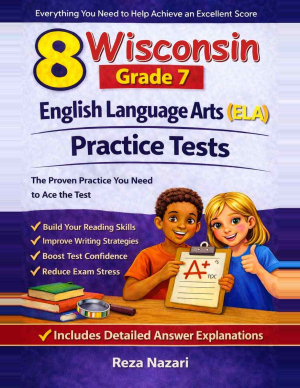 8 Wisconsin Forward Exam Grade 7 English Language Arts (ELA) Practice Tests
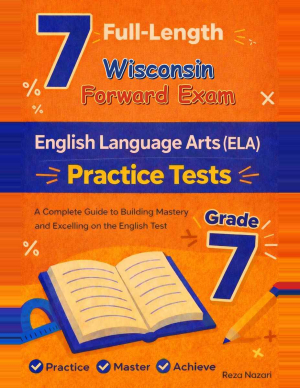 7 Wisconsin Forward Exam Grade 7 English Language Arts (ELA) Practice Tests
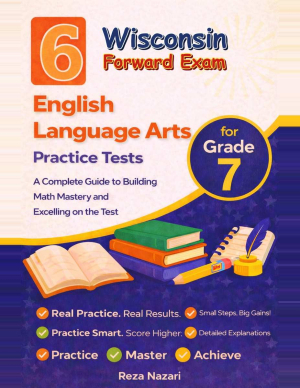 6 Wisconsin Forward Exam Grade 7 English Language Arts (ELA) Practice Tests
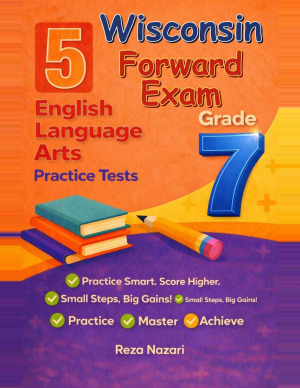 5 Wisconsin Forward Exam Grade 7 English Language Arts (ELA) Practice Tests
More Grade 7 resources
A USEFUL NEXT STEP
Wisconsin Grade 7 English: study questions
Can I claim that the characters reconciled after finding the note?
The supplied ending shows discovery of the note. It gives a basis for revising the misunderstanding, but an apology or reconciliation would need further events in the text.
Where are the complete Wisconsin Grade 7 requirements?
Wisconsin’s state English standards were adopted May 27, 2020. The current DPI-linked edition was updated in September 2025 with considerations for students who use or are learning to use braille. State standards serve as a model; local school boards determine the standards and curriculum used in their communities. The selected Grade 7 reference here identifies the focus of an original reading activity. Read the complete document and ask the teacher how the school sequences reading, writing, language, speaking, listening, and foundational skills. A short example is not a complete curriculum or certification of every independent resource.
Official source ↗Resources from Effortless Math · Editorial standards