LEARN · PRACTICE · EXPLORE
Pennsylvania Grade 7 English
Learn to contrast characters’ points of view with an original Grade 7 reading example, a worked explanation, Pennsylvania English references, and printable resources.
Focused lessons · Useful practice · Clear next steps
What do Pennsylvania 7th graders learn in ELA?
In 7th grade, Pennsylvania English language arts centers on how ideas and characters develop, comparing texts, and arguments with claims and counterclaims. Students take the PSSA grade 7 ELA test in the spring. This page explains each Pennsylvania grade 7 ELA standard and pairs it with short lessons, printable worksheets and a full-length practice test.
Printable Pennsylvania grade 7 ELA books:
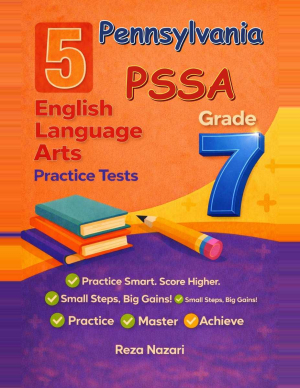
- 5 Pennsylvania PSSA Grade 7 English Language Arts (ELA) Practice Tests
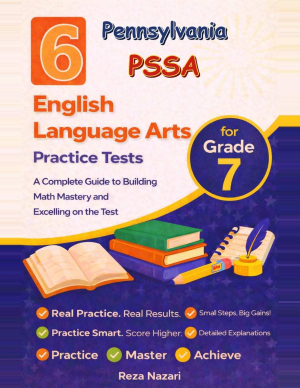
- 6 Pennsylvania PSSA Grade 7 English Language Arts (ELA) Practice Tests
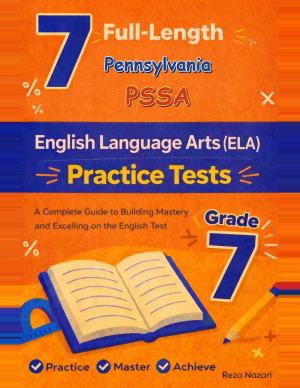
- 7 Pennsylvania PSSA Grade 7 English Language Arts (ELA) Practice Tests
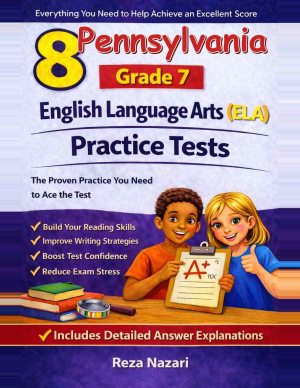
- 8 Pennsylvania PSSA Grade 7 English Language Arts (ELA) Practice Tests
- Pennsylvania Grade 7 ELA Preparation Bundle
Standards source: Pennsylvania adopted content standards.
Contrast Characters’ Points of View
Learn to contrast characters’ points of view with an original Grade 7 reading example, a worked explanation, Pennsylvania English references, and printable resources. Use the teacher’s reading and writing assignments to build this skill across longer texts.
Curriculum reference: Pennsylvania Core Standards for English Language Arts, March 1, 2014, from the Pennsylvania English language arts standards page.
Pennsylvania Grade 7 references for this activity
Pennsylvania’s education department links the March 1, 2014 PA Core English documents for Pre K–5 and Grades 6–12. The state board identifies March 1, 2014 as the effective date. The code linked here is a selected Pennsylvania reading reference, not a generic Common Core label. Standards guide locally developed curricula; check the school’s reading, writing, language, speaking, and listening sequence.
| Selected Pennsylvania reading reference | Activity focus | State-linked standards document |
|---|---|---|
| CC.1.3.7.D | Analyze how a writer develops and contrasts characters’ or narrators’ points of view | Read the state-linked document (PDF page 10) |
These selected reference labels identify an activity focus, with the correct grade and PDF page linked separately. Read the complete standards selected by the school and its learning sequence, including reading, writing, language, speaking, and listening. This short original example does not fulfill the entire curriculum or establish a student’s grade-level proficiency.
What should stay in the class archive?
This original classroom example is separate from official assessment questions.
“Keep only the final drawings,” Evan said, pushing the rough sketches into a separate pile. “Visitors should see our best work.”
Leah lifted a sketch with three crossed-out shapes. “This explains why we changed the design,” she said. She laid it beside the final drawing. “They can see the decision, not just the result.”
Evan looked from one page to the other. “Then the label needs to say what changed.”
Try the activity
Analyze how the writer develops and contrasts the two viewpoints. Connect each character’s words with an action. Explain what changes in Evan’s final statement and what the scene leaves unresolved.
Follow the reasoning
Evan initially sees the archive as a display of finished quality, expressed by “our best work” and sorting the sketches away. Leah sees it as a record of decisions, expressed by explaining the crossed-out shapes and placing a sketch beside the final drawing. Their actions make the contrasting purposes visible. Evan’s final statement shifts from excluding rough work to considering how to explain a change. It suggests a response to Leah’s perspective, but it does not explicitly approve keeping every sketch. The dialogue develops the contrast and then makes room for a possible compromise. The reader can trace that development rather than merely label the characters optimistic or pessimistic.
Notice what needs more practice
The scene does not give a final archive policy or a visitor reaction. Leah’s perspective is supported by her own example, not a narrator’s claim that it is always the best choice. Avoid turning a local change of position into a permanent character trait.
Grade 7 English worksheets
Choose printable practice that matches the skill being taught. Check the task, reading difficulty, and directions before assigning it; the collection is independently published.
Use the next session to build independence
- Identify the purpose each person gives the archive.
- Connect speech with the contrasting actions.
- Explain the final shift while preserving unresolved choices.
In a teacher-selected story or drama, trace contrasting perspectives across several exchanges. Explain the details used to develop each one and whether the contrast changes. Support a claim about a shift with actual words or actions.
For more general reading and writing resources, visit the Grade 7 English Online Center.
Pennsylvania Grade 7 English: useful planning questions
Is point of view only first person or third person?
Those terms describe narration. This activity examines how characters understand a situation differently. Analyze the purposes, priorities, and interpretations expressed in their words and actions.
Which standards does the school use?
Pennsylvania’s education department links the March 1, 2014 PA Core English documents for Pre K–5 and Grades 6–12. The state board identifies March 1, 2014 as the effective date. The code linked here is a selected Pennsylvania reading reference, not a generic Common Core label. Standards guide locally developed curricula; check the school’s reading, writing, language, speaking, and listening sequence. The school’s sequence also includes reading, writing, speaking, listening, and language work beyond this example.
Sources checked October 6, 2026. Pennsylvania’s PSSA overview includes English and mathematics in Grades 3–8, including Grade 7. Its current calendar lists April 26–30, 2027 for English and May 3–7, 2027 for mathematics, science, and make-ups, with an optional May 10–14 extension. Confirm the school’s actual assignments and dates; the combined calendar does not mean every subject is tested in every listed grade. This reading example is independently authored. Read the Pennsylvania English assessment overview and English standards guidance. Independently published practice has its own directions and scoring. Its result does not predict a state performance level, and this original activity is not an official assessment item.
Grade 7 English in other states
When moving between school systems, compare the official curriculum and the school’s learning sequence. Use the national Online Center’s map to find another state’s resources.
Recommended Pennsylvania Grade 7 resources
Build a Strong Pennsylvania Grade 7 PSSA English Practice Library
These independently published resources have their own coverage and editions. Check the contents alongside Pennsylvania’s current English standards before choosing assessment preparation.
Use these Pennsylvania Grade 7 resources for reading comprehension, language, writing, and full-length practice where available. Click any cover to open the resource page.
More Grade 7 resources
A USEFUL NEXT STEP
Pennsylvania Grade 7 English: study questions
Is point of view only first person or third person?
Those terms describe narration. This activity examines how characters understand a situation differently. Analyze the purposes, priorities, and interpretations expressed in their words and actions.
Where are the complete Pennsylvania Grade 7 requirements?
Pennsylvania’s education department links the March 1, 2014 PA Core English documents for Pre K–5 and Grades 6–12. The state board identifies March 1, 2014 as the effective date. The code linked here is a selected Pennsylvania reading reference, not a generic Common Core label. Standards guide locally developed curricula; check the school’s reading, writing, language, speaking, and listening sequence.
Official source ↗Resources from Effortless Math · Editorial standards