LEARN · PRACTICE · EXPLORE
South Carolina Grade 7 English
Trace an argument and explain its reasoning. Explore an original Grade 7 activity with a worked explanation and South Carolina references.
Focused lessons · Useful practice · Clear next steps
What do South Carolina 7th graders learn in ELA?
In 7th grade, South Carolina English language arts centers on how ideas and characters develop, comparing texts, and arguments with claims and counterclaims. Students take the SC READY grade 7 ELA test in the spring. This page explains each South Carolina grade 7 ELA standard and pairs it with short lessons, printable worksheets and a full-length practice test.
Printable South Carolina grade 7 ELA books:
- 5 South Carolina SC READY Grade 7 English Language Arts (ELA) Practice Tests
- 6 South Carolina SC READY Grade 7 English Language Arts (ELA) Practice Tests
- 7 South Carolina SC READY Grade 7 English Language Arts (ELA) Practice Tests
- 8 South Carolina SC READY Grade 7 English Language Arts (ELA) Practice Tests
- South Carolina Grade 7 ELA Preparation Bundle
Standards source: South Carolina adopted content standards.
Trace an Argument’s Reasoning
Trace an argument and explain its reasoning. This South Carolina Grade 7 reading activity pairs a short original text with a response to explain, revise, and try on a longer classroom text.
Curriculum reference: South Carolina 2024 College- and Career-Ready English Language Arts Standards, emended August 2025, from the South Carolina English language arts standards page.
South Carolina Grade 7 references for this activity
South Carolina’s department identifies the 2024 College- and Career-Ready English language arts standards as the current reference. The linked document records January 2023 approval and August 2025 emendation. This activity addresses one selected reading indicator; the complete curriculum also includes foundations of literacy, research, written and oral communication, and overarching expectations. Follow the school’s full learning sequence.
| Selected South Carolina reading reference | Activity focus | State-linked standards document |
|---|---|---|
| ELA.7.AOR.5.3 | Trace an argument and explain its reasoning | Read the state-linked document (PDF page 106) |
These selected reference labels identify an activity focus, with the correct grade and PDF page linked separately. Read the complete standards selected by the school and its learning sequence, including reading, writing, language, speaking, and listening. This short original example does not fulfill the entire curriculum or establish a student’s grade-level proficiency.
The quiet-workroom proposal
This original classroom example is separate from official assessment questions.
A fictional student council statement reads: “We should trial a quiet workroom during lunch. In a survey of 30 volunteers, 22 said they wanted a quiet place to finish projects. Because noise can interrupt concentration, a quieter room might help these students work. If you have ever lost your place while several conversations filled a room, you know how frustrating that can feel. A two-week trial with an adult supervisor would let us record use and ask users whether the room helped.”
Try the activity
Trace the proposal from claim to reasons, evidence, and trial plan. Explain one type of reasoning or rhetorical appeal used. Identify a limit of the evidence rather than treating persuasive wording as proof.
Follow the reasoning
The claim proposes a trial quiet workroom. The voluntary survey offers evidence of interest among those 30 respondents: 22 reported wanting a quiet place. The statement then uses causal reasoning by suggesting that reducing distracting noise might help concentration; this is a plausible explanation, not a measured outcome of this trial. The invitation to remember frustration appeals to emotion and personal experience. It may help an audience relate to the problem, but it cannot establish that the proposal works. The trial and feedback plan supplies a way to investigate use and perceived help. Volunteers may differ from other students, so the survey does not establish demand across the whole school or a guaranteed improvement in project quality.
Notice what needs more practice
A reason, a survey result, and an emotional appeal play different roles. Explain what each contributes instead of assigning a rhetorical label without support. The text does not report an approved room, actual attendance, or completed trial results.
Grade 7 English worksheets
Choose printable practice that matches the skill being taught. Check the task, reading difficulty, and directions before assigning it; the collection is independently published.
Use the next session to build independence
- State the proposal and trace the order of its support.
- Explain a reasoning step or appeal using the passage.
- Name evidence needed to test a broader conclusion.
Trace an argument in a teacher-selected informational text. Explain how a reasoning step or rhetorical appeal advances the claim, then assess the limits of its support. Compare the author’s proposed action with what the cited evidence actually establishes.
For more general reading and writing resources, visit the Grade 7 English Online Center.
South Carolina Grade 7 English: useful planning questions
Does an emotional appeal make an argument false?
No. It can shape an audience’s response. Examine whether the claim also has relevant support and whether the conclusion goes beyond the evidence.
Which standards does the school use?
South Carolina’s department identifies the 2024 College- and Career-Ready English language arts standards as the current reference. The linked document records January 2023 approval and August 2025 emendation. This activity addresses one selected reading indicator; the complete curriculum also includes foundations of literacy, research, written and oral communication, and overarching expectations. Follow the school’s full learning sequence. The school’s sequence also includes reading, writing, speaking, listening, and language work beyond this example.
Sources checked October 6, 2026. SCDE places the SC READY English and mathematics assessments in Grades 3–8, including Grade 7. Confirm the school’s current assignments, directions, and accommodations. This independently authored reading activity is not an official SC READY item and does not reproduce a state test. Read the South Carolina English assessment overview and English standards guidance. Independently published practice has its own directions and scoring. Its result does not predict a state performance level, and this original activity is not an official assessment item.
Grade 7 English in other states
When moving between school systems, compare the official curriculum and the school’s learning sequence. Use the national Online Center’s map to find another state’s resources.
Recommended South Carolina Grade 7 resources
Build a Strong South Carolina Grade 7 SC READY English Practice Library
These independently published resources have their own coverage and editions. Check the contents alongside South Carolina’s current English standards before choosing assessment preparation.
Use these South Carolina Grade 7 resources for reading comprehension, language, writing, and full-length practice where available. Click any cover to open the resource page.
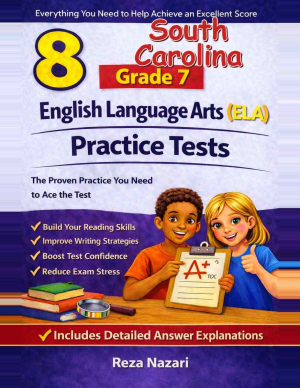 8 South Carolina SC READY Grade 7 English Language Arts (ELA) Practice Tests
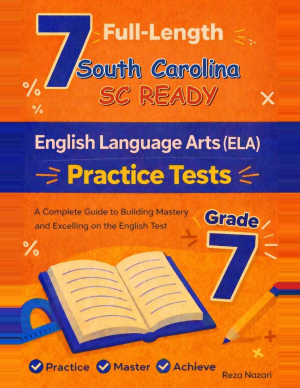 7 South Carolina SC READY Grade 7 English Language Arts (ELA) Practice Tests
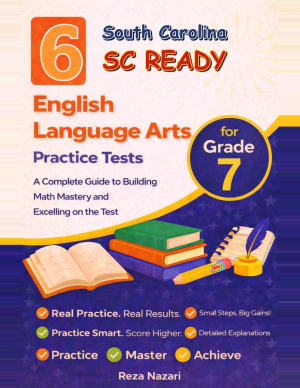 6 South Carolina SC READY Grade 7 English Language Arts (ELA) Practice Tests
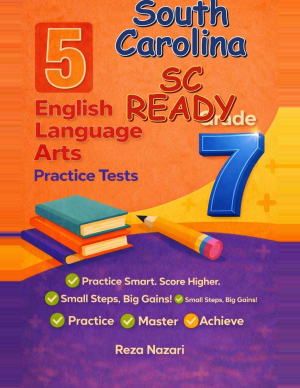 5 South Carolina SC READY Grade 7 English Language Arts (ELA) Practice Tests
More Grade 7 resources
A USEFUL NEXT STEP
South Carolina Grade 7 English: study questions
Does an emotional appeal make an argument false?
No. It can shape an audience’s response. Examine whether the claim also has relevant support and whether the conclusion goes beyond the evidence.
Where are the complete South Carolina Grade 7 requirements?
South Carolina’s department identifies the 2024 College- and Career-Ready English language arts standards as the current reference. The linked document records January 2023 approval and August 2025 emendation. This activity addresses one selected reading indicator; the complete curriculum also includes foundations of literacy, research, written and oral communication, and overarching expectations. Follow the school’s full learning sequence.
Official source ↗Resources from Effortless Math · Editorial standards