LEARN · PRACTICE · EXPLORE
Maine Grade 7 English
Analyze an audio-guide account’s chronological structure, explain the role of its final problem, and use Maine Grades 6–8 reading band references.
Focused lessons · Useful practice · Clear next steps
What do Maine 7th graders learn in ELA?
In 7th grade, Maine English language arts centers on how ideas and characters develop, comparing texts, and arguments with claims and counterclaims. Students take the Maine Through Year grade 7 ELA test in the spring. This page explains each Maine grade 7 ELA standard and pairs it with short lessons, printable worksheets and a full-length practice test.
Printable Maine grade 7 ELA books:
Standards source: Maine English Language Arts, Maine Department of Education.
Explain why a chronological account ends with a later problem
Follow an original account of a classroom audio guide from planning through revision. Explain how its sequence develops an idea instead of merely listing dates.
Curriculum reference: 2020 Maine English Language Arts/Literacy Standards (Word document), from the Maine Department of Education standards directory.
Maine Grade 7 references for this activity
Use the 2020 Maine English Language Arts/Literacy Standards linked from the state review directory. Reading expectations are organized by individual grades through Grade 5 and by a shared Grades 6–8 band. These selections describe the activity’s teaching focus. Read the complete relevant grade or band and the school’s instructional sequence.
| State reference | Activity focus | Official requirement |
|---|---|---|
| Reading Standard 8 · Grades 6–8 | Analyze how organization develops meaning | Read the complete state Word document |
| Reading Standard 4 · Grades 6–8 | Select evidence for an analysis | Read the complete state Word document |
These selected references identify an independently paraphrased teaching focus. For Grades 6–8, the requirements belong to a shared band rather than a separately prescribed year. Read the complete state document alongside the school’s sequence.
A worked Grade 7 reading and writing activity
This original classroom example is separate from official assessment questions.
First, the class chose three objects for its audio guide and drafted a short description of each. The writers concentrated on what listeners would need to understand without seeing the labels.
Next, pairs recorded the descriptions and exchanged them with another pair. Listeners marked places where they could not tell which object the speaker meant. The writers added the object’s name near the beginning of each description and recorded it again.
When the revised guide was played during a classroom visit, the teacher reported fewer questions about which object was being described. However, some listeners still missed the quieter words. The class planned another review of sound levels before treating the guide as finished.
Try the activity
Explain how the order of the three paragraphs develops the idea that a guide can improve through review. What does the final paragraph add beyond a successful result? How would starting with the final paragraph change the reader’s route through the explanation?
Follow the reasoning
The first paragraph establishes the initial purpose and draft. The second shows feedback revealing a problem and a specific revision addressing it. The third reports a later result and introduces another issue, sound level, that still needs review. The chronological order lets the reader connect the change in the script with the later reduction in questions about object identity. The ending keeps improvement from sounding complete: another kind of difficulty remains. Starting with the final result could create curiosity about how the class reached it, but the earlier drafting and revision steps would then need to be explained afterward.
Notice what needs more practice
Fewer questions about object identity does not mean every listener understood all the content. The final difficulty concerns hearing quieter words, not identifying the object’s name. Both issues can matter in the same guide. The text reports a fictional teacher’s observation without giving a numerical count; students should not invent one. A structural explanation should identify the role of each part in developing the overall idea. Saying first, next, and last names the sequence but does not explain why it helps the reader understand feedback and revision. The planned sound review has not happened in the account.
Grade 7 English worksheets
Choose printable practice that matches the skill being taught. Check the task, reading difficulty, and directions before assigning it; the collection is independently published.
Use the next session to build independence
- Identify the purpose and initial draft.
- Explain how feedback leads to a particular revision.
- Describe how the final paragraph reports progress while preserving an unresolved issue.
Write a brief outline that labels each paragraph by its contribution: initial work, feedback and change, result and further need. Then move the final paragraph to the beginning and discuss what additional transition would be needed to keep the explanation clear. For transfer, compare this sequence with a text organized around causes or competing choices. Explain what each structure helps a reader notice using details from the texts. The original account is a short practice example within Maine’s shared Grades 6–8 reading band, so continue with more complex classroom material in the school’s chosen sequence.
For more general reading and writing resources, visit the Grade 7 English Online Center.
Maine Grade 7 English: useful planning questions
Does the final paragraph show that the guide is finished?
No. It reports fewer object-identification questions but says quieter words still caused difficulty and another review was planned.
Where are the complete state requirements?
Use the 2020 Maine English Language Arts/Literacy Standards linked from the state review directory. Reading expectations are organized by individual grades through Grade 5 and by a shared Grades 6–8 band. These selections describe the activity’s teaching focus. Read the complete relevant grade or band and the school’s instructional sequence. The school’s sequence also includes reading, writing, speaking, listening, and language work beyond this example.
Official sources checked October 6, 2026. Grade 7 is within the Maine Through Year Assessment Grades 3–8 reading range. The official overview identifies Common Core as its accountability standards and states that testing is untimed. Follow the school’s assigned pathway and current directions. Read the Maine Through Year Assessment overview. This original activity supports classroom reading and writing within the Maine Learning Results; it is independently published, not an official state question, a replica of assessment timing or scoring, or a complete curriculum-alignment certification. Check supplemental books and practice against the school’s current requirements.
Grade 7 English in other states
When moving between school systems, compare the official curriculum and the school’s learning sequence. Use the national Online Center’s map to find another state’s resources.
Recommended Maine Grade 7 resources
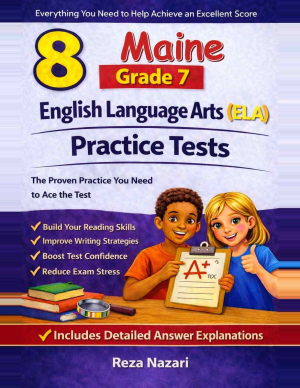
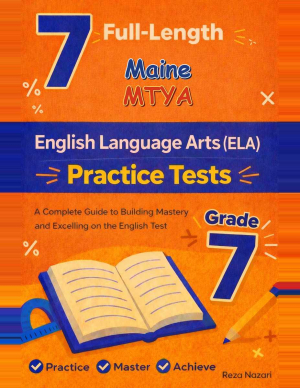
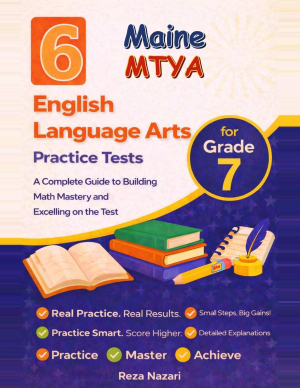
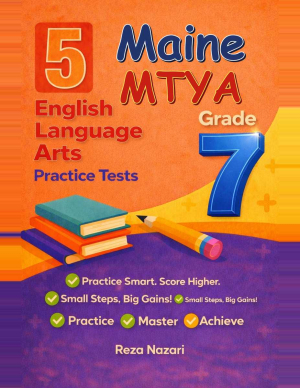
Build a Strong Maine Grade 7 Through Year Assessment English Practice Library
These independently published resources have their own coverage and editions. Check the contents alongside Maine’s current English standards before choosing assessment preparation.
Use these Maine Grade 7 resources for reading comprehension, language, writing, and full-length practice where available. Click any cover to open the resource page.
More Grade 7 resources
A USEFUL NEXT STEP
Maine Grade 7 English: study questions
Does the final paragraph show that the guide is finished?
No. It reports fewer object-identification questions but says quieter words still caused difficulty and another review was planned.
Where are the complete Maine Grade 7 requirements?
Use the 2020 Maine English Language Arts/Literacy Standards linked from the state review directory. Reading expectations are organized by individual grades through Grade 5 and by a shared Grades 6–8 band. These selections describe the activity’s teaching focus. Read the complete relevant grade or band and the school’s instructional sequence.
Official source ↗Resources from Effortless Math · Editorial standards