YOUR GED SCIENCE PREP STARTS HERE
GED Science Online Center
Prepare for GED Science with independent practice, flashcards, and connected lessons. Use the information provided to support your answer rather than choosing a familiar science fact. Choose one skill to strengthen before your next practice session.
Free study tools · Focused review · Books to compare
GED Science Practice Tests
Open the existing practice form, review explanations, and use the results to choose a skill. Results are study feedback, not official scores.
GED Science Flashcards
Recall the idea, then connect it with an example.
GED Science Study Guides
GED Science Complete Prep: 50 Full-Length GED Science Practice Tests + Comprehensive Study Guide
Science-focused study and practice. Compare the preview and contents with your needs before buying.
View book & purchase options →GED Science Quick Review
Refresh the explanation for a scientific reasoning skill.
Open this resource →MEET THE ASSESSMENT · CHOOSE YOUR NEXT SKILL
Know GED Science before you start.
The U.S. GED Science test allows 90 minutes and includes several computer-based question formats. Prepare to read scientific information, interpret experiments, and reason with data. Independent selected-response practice does not reproduce every official item format or an official GED score.
Official assessment information ↗Scientific passages and evidence
Use the information provided to support your answer rather than choosing a familiar science fact.
Explore this study route →Experiments and variables
Identify what changes, what is measured, and what is controlled before explaining a result.
Explore this study route →Graphs and quantitative reasoning
Check units, labels, and the scale before describing a trend.
Explore this study route →Official preparation
Check the current assessment guidance and use official samples alongside your independent study.
Explore this study route →GED Science Practice Center
Take a full practice test, review the explanations, then use the flashcards to repair the terms and ideas that slowed you down.
GED Science Study Blueprint
Open each area to see what to master. The bars show how this Online Center distributes its lessons, so you can plan study time without mistaking the map for an official exam weighting.
01 Reading and interpreting scienceFind central ideas, details, vocabulary, and relationships in science passages. 4lessons
- Main ideas, context, diagrams, and captions
- Claims, evidence, conclusions, and causation
02 Scientific reasoningEvaluate explanations, models, evidence, and competing conclusions. 4lessons
- Reasoning from observations and models
- Evidence quality, limitations, and valid claims
03 Experimental designIdentify variables, controls, procedures, and improvements. 3lessons
- Independent, dependent, and controlled variables
- Hypotheses, samples, replication, and sources of error
04 Tables, charts, and graphsExtract values, trends, rates, and comparisons from scientific data. 4lessons
- Axes, units, scales, and interpolation
- Proportions, percent change, trends, and anomalies
05 Life scienceConnect cells and body systems to energy, health, and homeostasis. 7lessons
- Cells, biomolecules, metabolism, and microorganisms
- Human systems, feedback, and disease
06 Genetics, evolution, and ecosystemsTrace information and change from genes to populations and environments. 7lessons
- DNA, inheritance, variation, and natural selection
- Food webs, cycles, populations, and ecological change
07 Physical scienceUse models of matter and energy to explain reactions and physical change. 4lessons
- Atoms, bonding, reactions, and conservation
- Motion, forces, energy, heat, waves, and electricity
08 Earth and space scienceInterpret Earth systems, geologic change, weather, climate, and astronomy. 11lessons
- Rocks, tectonics, water, atmosphere, and climate
- Solar system, stars, galaxies, and the universe
Study-map shares describe the learning resources on this page. They are not presented as official test percentages.
Effortless Math • GED Science Prep Center
One place to learn everything the GED Science test asks of you — from reading data and designing experiments to biology, chemistry, physics, and space science. Each topic below links to a full lesson with worked examples, a video walkthrough, and practice.
🔬 Life, Physical & Earth science
📊 Data & reasoning skills
🎥 Video for every topic
📝 Practice questions
🃏 Study flashcards
Start with curiosity.
Finish with evidence.
Explore the GED Science ideas that matter most. Read a friendly explanation, follow a clear picture, work an example, and check your understanding without leaving this page.
Start Here: What the GED Science Test Really Measures
The Science test is less about memorizing facts and more about thinking like a scientist. You read short passages, study graphs and tables, judge experiments, and do a little math. If you can find evidence and reason carefully, you can pass — even on topics you have not memorized.
Test format details reflect the official GED Science guidelines. Always confirm current specifics at your testing center.
How to Use This Online Center
Work top to bottom if you are starting fresh: the first four groups build the reading, reasoning, data, and calculation skills that show up in every science question. Then move through Life, Chemistry, Physics, and Earth & Space science. Already comfortable with the thinking skills? Jump straight to the content group you want to review.
All GED Science Topics
62 of 62 lessons live
Reading & Interpreting Science
Scientific Reasoning
Experimental Design
Reading Data: Tables, Charts & Graphs
Science Calculations
Probability & Data Reliability
Life Science
Genetics, Evolution & Ecosystems
Chemistry: Matter & Reactions
Physics: Motion, Forces & Energy
Earth & Space Science
- Earth’s Layers and Plate Tectonics
- Rocks and the Rock Cycle
- The Water Cycle and Weather
- Climate and the Greenhouse Effect
- Natural Resources
- Atmosphere, Oceans, and Earth Systems
- Natural Hazards and the Age of Earth
- The Solar System
- Earth, Moon, and Sun: Days, Seasons, Phases, Tides
- Stars, Galaxies, and the Universe
- Eclipses and Stellar Life Cycles
Study Flashcards
Flip through the key terms for the science test. Click a card to reveal the answer, use Next and Prev to move, and Shuffle to quiz yourself in random order.
A Simple 4-Week GED Science Plan
Week 1 — Thinking Skills
Reading passages, claims and evidence, experimental design, and reading graphs. These skills carry every other topic.
Week 2 — Life Science
Cells, energy, the human body, genetics, evolution, and ecosystems — the largest slice of the test.
Week 3 — Physical Science
Atoms and reactions, plus motion, forces, energy, and electricity. Practice the short formulas until they feel automatic.
Week 4 — Earth & Space + Review
Earth systems, weather, the solar system, and full practice sets to tie everything together.
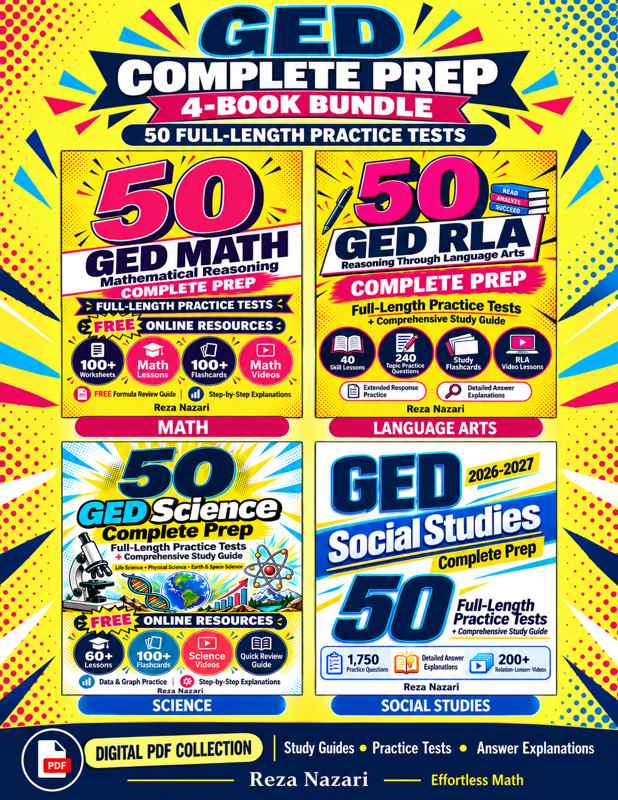
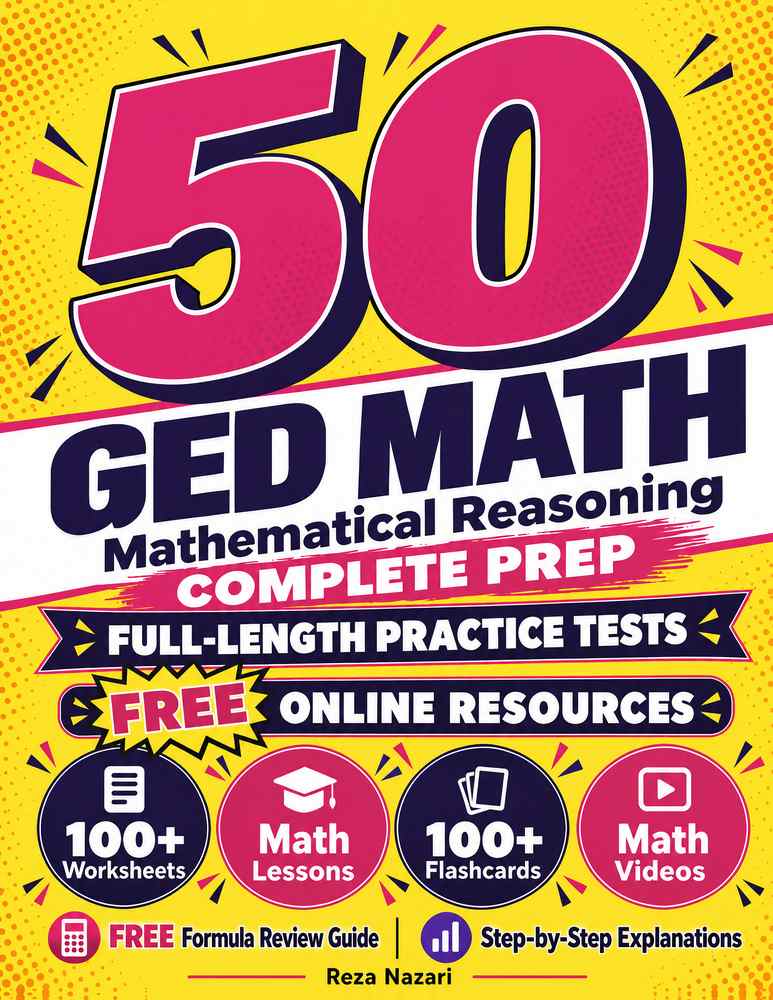
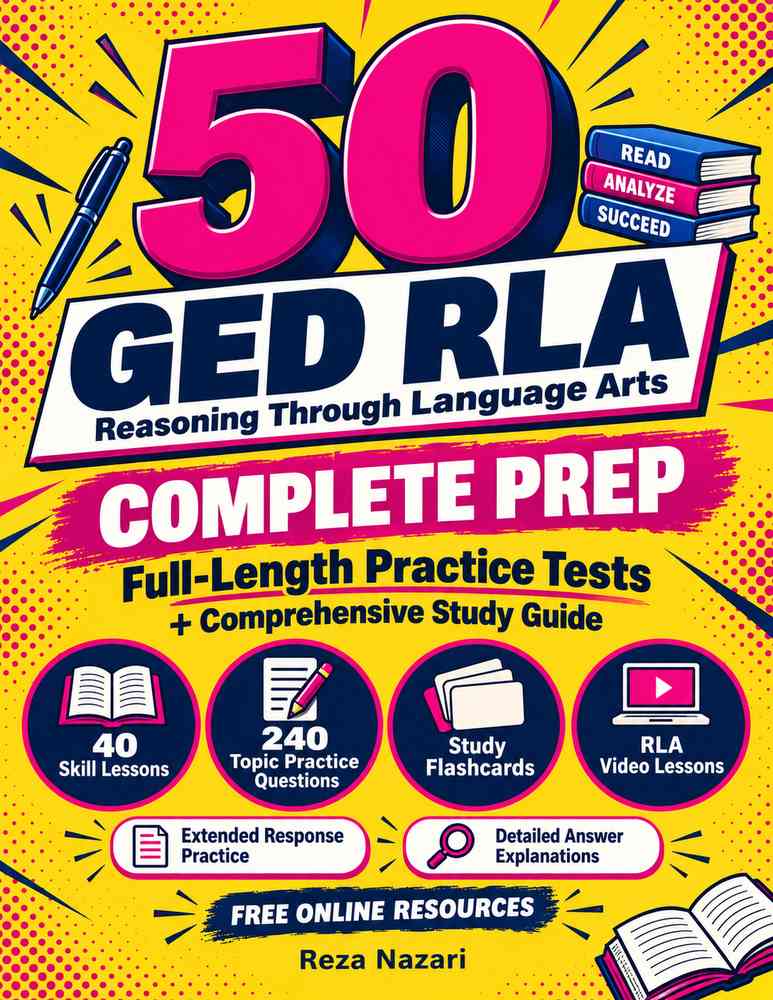
Recommended GED Prep Books
Pair these lessons with a full study guide and practice tests to stay on track.
GED Science FAQ
How long is the GED Science test?
You get about 90 minutes to answer roughly 34 questions. There is no separate break inside the section.
Do I need to memorize a lot of science facts?
Less than most people expect. Many questions give you a passage, graph, or table and ask you to read it carefully. Strong reading and reasoning skills matter more than memorized trivia.
Can I use a calculator?
An on-screen TI-30XS calculator is available for most items, and a reference sheet provides common formulas. The calculation topics in this Online Center show you how to use both.
What score do I need to pass?
A score of 145 or higher passes each GED subject, including Science.
Related Online Centers
Make This Your GED Science Starting Point
Bookmark this Online Center, pick a topic, and start building real confidence — one clear lesson at a time.
Every lesson in one place
Open a lesson in a new tab and keep this Online Center nearby as your study home.
Browse the complete lesson directory
A USEFUL NEXT STEP
GED Science: study questions
What should I know about GED Science?
The U.S. GED Science test allows 90 minutes and includes several computer-based question formats. Prepare to read scientific information, interpret experiments, and reason with data. Independent selected-response practice does not reproduce every official item format or an official GED score.
Official source ↗How should I use these independent GED Science study tools?
Start with a practice activity, review explanations for missed questions, and use quick review or flashcards for one weak topic. The practice results are study feedback, not official exam scores. Compare a book’s contents with your course or test requirements before buying.
Resources from Effortless Math · Editorial standards