Cell Division: Mitosis and Meiosis
Cells make more cells by dividing, but they do it in two very different ways depending on the goal. Mitosis makes copies for growth and repair. Meiosis makes the special cells used for reproduction. Telling these two apart — and knowing what each produces — is a reliable source of test points.
This lesson compares the two side by side so the differences stick.
Mitosis: Making Identical Copies
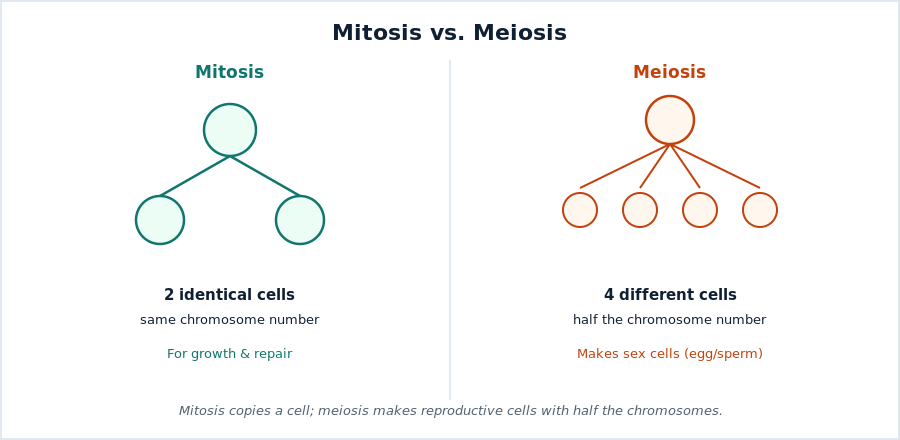
Mitosis takes one cell and makes two new cells that are identical to the original and to each other. Each new cell has the same number of chromosomes as the parent. This is how your body grows and heals: when you scrape your knee, mitosis produces new skin cells to replace the lost ones. The key words for mitosis are two identical cells and same chromosome number.
Meiosis: Making Reproductive Cells
Meiosis is different in two big ways. It produces four cells instead of two, and each has half the chromosome number of the parent. These cells are the sex cells — eggs and sperm. The half-count matters: when an egg and sperm join during reproduction, their halves combine to restore the full chromosome number in the offspring. Meiosis also shuffles genetic material, which is part of why offspring are not identical to their parents.
Keeping Them Straight
Here is the cleanest way to remember the difference. Mitosis: one cell to two identical cells, full chromosome number, for growth and repair. Meiosis: one cell to four different cells, half the chromosome number, for making egg and sperm cells. If a question mentions body growth or healing, think mitosis. If it mentions eggs, sperm, or passing traits to offspring, think meiosis.
Watch: A Short Video Lesson
Amoeba Sisters walks through this skill clearly in a few minutes. It is a helpful companion to the reading above:
A Routine for These Questions
- Mitosis makes 2 identical cells with the full chromosome number.
- Meiosis makes 4 different cells with half the chromosome number.
- Growth and repair → mitosis; eggs, sperm, and reproduction → meiosis.
- The half-count in meiosis lets offspring receive chromosomes from both parents.
Practice
- How many cells does mitosis produce?
- How many cells does meiosis produce?
- Which process makes egg and sperm cells?
- Which process is used for growth and repair?
- How does the chromosome number in meiosis compare to the parent cell?
- Which process makes cells identical to the parent?
Answers
- Two.
- Four.
- Meiosis.
- Mitosis.
- It is half.
- Mitosis.
Where This Fits in Your Science Prep
Cell division builds on the cell and sets up genetics. Meiosis is the reason for the inheritance patterns you will see in heredity and DNA and Punnett squares. See all topics on the Science Topics Hub.

Related to This Article
More math articles
- Exploring the Alternating Series Test: Convergence and Divergence
- The Best Grade 6 ELA Practice Tests for Nevada Students
- Figurative Language, Imagery, and Symbolism
- 8th Grade K-PREP Math Worksheets: FREE & Printable
- 6th Grade English Worksheets for North Carolina (EOG): 46 Free Printable PDFs
- Free Minnesota Grade 2 Math Worksheets
- 4th Grade Math Worksheets for Smarter Balanced States: 43 Free Printable PDFs
- 4th Grade Math Worksheets for Ohio (OST): 43 Free Printable PDFs
- Reading Clocks
- Full-Length 6th Grade Common Core Math Practice Test




















What people say about "Cell Division: Mitosis and Meiosis"?
No one replied yet.