YOUR NYSTCE PREP STARTS HERE
NYSTCE Grades 1–6 Multi-Subject Online Center
This NYSTCE Grades 1–6 Multi-Subject Online Center brings together practice, lessons, worksheets, flashcards and review tools. Choose the resource that matches the skill you want to work on next.
Free study tools · Topic review · Books for focused study
Free NYSTCE Math Practice: Choose Your Format
Preparing for Childhood Mathematics (222)? Use the online practice sets for selected-response review, printable worksheets for individual skills, and the official study guide for the written-response task. The worksheet PDFs are topic practice, not a downloadable full-length official exam.
Try a mixed online set
Work through an independent timed set, then use the feedback to choose a lesson to revisit.
Print focused practice
Search the worksheet list by your weak topic, such as fractions, percent or geometry.
Prepare the written response
Practice explaining student thinking and choosing instruction supported by the evidence.
NYSTCE Grade 1–6 Test Outline
The Multi-Subject: Teachers of Childhood assessment has three required parts. Each part has its own framework, practice Online Center, and 520 passing score. Part Three is shared across the four Multi-Subject grade bands.
Exam update: NYSTCE lists a redeveloped Part One English Language Arts assessment as operational beginning Fall 2026, with the new version required beginning Summer 2028. Check the official NYSTCE testing program update and current preparation materials for the version that applies to your test date.
Literacy and English Language Arts
40 selected-response items and one constructed response.
Topics covered
- Knowledge of literacy and language arts
- Foundational literacy instruction
- English language arts instruction
- Analysis, synthesis, and application
Mathematics
40 selected-response items and one constructed response; an on-screen four-function calculator is provided.
Topics covered
- Number and operations
- Ratios, proportional relationships, and number systems
- Algebra, measurement, geometry, and data
- Instruction in mathematics
- Analysis, synthesis, and application
Arts and Sciences
40 selected-response items across science, social studies, and the arts and applied subjects.
Topics covered
- Science and technology
- Social studies
- Fine arts, health and fitness, family and consumer science, and career development
NYSTCE Practice Tests
Choose a practice activity. Independent practice results are study feedback, not official test scores.
NYSTCE Flashcards
Open a vocabulary or formula resource. Availability and scope are described below.
NYSTCE Study Guides
Compare the actual book titles and check their product pages before choosing. These are independent preparation resources.

NYSTCE Grades 1-6 Math (222) for Beginners
Open the product page to check the contents, edition, format, and purchase options.
View book & purchase options → $17.99 · PDF

NYSTCE Grades 1-6 Math (222) Worksheets
Open the product page to check the contents, edition, format, and purchase options.
View book & purchase options → $19.49 · PDF

NYSTCE Grades 1-6 Math (222) Full Study Guide
Open the product page to check the contents, edition, format, and purchase options.
View book & purchase options → $13.64 · PDF
NYSTCE Quick Review
Review one skill, try its practice, and use the result to choose your next step.
NYSTCE Flashcards
Choose the exam area you are studying. Each set opens its own numbered, hint-supported deck.
Practice Tests 2–6
Take a timed NYSTCE Mathematics (222) practice test, review the explanations, then choose a topic to strengthen.
NYSTCE Grades 1-6 Math (222) Practice Test 2
A fresh selected-response set with instant scoring and lesson links.
Start Test →
NYSTCE Grades 1-6 Math (222) Practice Test 3
Build accuracy across number operations, ratios, algebra, geometry, and data.
Start Test →
NYSTCE Grades 1-6 Math (222) Practice Test 4
Practice mixed NYSTCE Math questions with full answer explanations.
Start Test →
NYSTCE Grades 1-6 Math (222) Practice Test 5
Find weak areas, then jump straight to the matching lesson plan.
Start Test →
NYSTCE Grades 1-6 Math (222) Practice Test 6
A final timed review before test day, with explanations and next steps.
Start Test →
These unofficial practice sets support selected-response review. They do not include the official written-response task or convert practice results into an official NYSTCE score. The official Mathematics (222) passing score is 520. Use the topic feedback to plan your next review, rather than predict passing.
Prepare for the Mathematics Constructed Response
The official Mathematics (222) test includes a written assignment as well as selected-response questions. Use the official Part Two sample assignments, responses and scoring guidance to understand that task.
As you practice, identify what the learner understands, locate a specific gap in the learner’s reasoning, and connect your proposed teaching step to that evidence. Explain how you would check understanding after the intervention. A useful review habit is to label each paragraph with the part of the task it addresses, then check whether your evidence supports the claim.
For test format, time and calculator rules, use the official Childhood Multi-Subject test information. Our online practice feedback does not replace the official written-response scoring guidance.
Quick Review for All Three NYSTCE Parts
Choose your part. Review what matters.
Each part has its own quick review, organized around the official NYSTCE competencies and linked to focused practice.
Three part-specific quick reviews
Open the dedicated part Online Center for its full quick-review deck, topic map, practice tests, and study resources.
Join students who study with a clearer path
This Grade 1–6 study center brings together the full NYSTCE Multi-Subject pathway, with dedicated Online Centers for every required part and quick review, lessons, and practice by subject.
This is an unofficial NYSTCE Math preparation online center from the Effortless Math team. NYSTCE and New York State Teacher Certification Examinations are trademarks of the New York State Education Department. This independent resource is not affiliated with or endorsed by the testing program.
Start With A Practice Test
Start with the part you need, then follow its topic map and quick review. If you are preparing for all three, use the complete pathway below to plan your study order.
Part One: Literacy and ELA
Review literacy development, foundational reading skills, English language arts instruction, and the written response.
Part Two: Mathematics
Build number sense, proportional reasoning, algebra, geometry, data skills, and instructional analysis.
Part Three: Arts and Sciences
Review science and technology, social studies, and arts, health, fitness, and career development.
Check the full test plan
Learn the format, time, score requirement, and how the three parts fit together.
NYSTCE Multi-Subject (221/222/245) Snapshot
separately scored parts
selected-response questions across all three parts
constructed-response assignments in Parts One and Two
scaled passing score for each part
Part Two (222) Mathematics Quick Review Topics
Choose a topic family to open the Quick Review. Each topic includes a focused explanation, key reminders, and worked examples.
Part Two (222) Mathematics Skill Quizzes
Short, focused quizzes, pick one skill, answer 10 questions, get instant scoring and full step-by-step solutions. Each opens right here in a popup.
Number Sense & Rational Numbers
Integers, number lines, rational numbers, and absolute value.
Start Quiz →
Fractions & Decimals
The fraction and decimal arithmetic that appears everywhere on the test.
Start Quiz →
Ratios & Proportional Reasoning
Unit rates, proportions, and real-world comparisons.
Start Quiz →
Percents & Financial Math
Percent change, discounts, interest, and money math.
Start Quiz →
Expressions, Equations & Inequalities
The algebra moves for one-step, two-step, and multi-step questions.
Start Quiz →
Solving Linear Equations
One-step to multi-step equations and literal equations.
Start Quiz →
Functions & Graphs
Slope, lines, functions, and graph interpretation.
Start Quiz →
Geometry & Measurement
Area, volume, angles, circles, and coordinate geometry.
Start Quiz →
Statistics & Data
Charts, centers, variability, scatter plots, and data reasoning.
Start Quiz →
Probability
Simple and compound probability with real-world setups.
Start Quiz →
Part Two (222) Mathematics Topics: Learn, Practice, and Quiz
Choose a Part Two (222) Mathematics topic, open its worksheet, then take a short quiz from the same row.
90 Part Two Mathematics topics · worksheets · quizzes
Number Sense and Rational Numbers
- Comparing and Ordering IntegersQuiz
- Integers and Absolute ValueQuiz
- Adding and Subtracting IntegersQuiz
- Multiplying and Dividing IntegersQuiz
- Order of OperationsQuiz
- Factors Multiples GCF and LCMQuiz
- Fractions Decimals and Rational NumbersQuiz
- Adding and Subtracting FractionsQuiz
- Multiplying Mixed NumbersQuiz
- Multiplying and Dividing FractionsQuiz
- Adding and Subtracting DecimalsQuiz
- Multiplying and Dividing DecimalsQuiz
- Converting Fractions Decimals and PercentsQuiz
- Real World Problems with Rational NumbersQuiz
Ratios, Percents, and Rates
- Simplifying RatiosQuiz
- Unit RatesQuiz
- Proportional RatiosQuiz
- Constant of ProportionalityQuiz
- Scale Drawings and Scale FactorsQuiz
- Converting Units of MeasurementQuiz
- Percent ProblemsQuiz
- Finding the Whole from a Part and PercentQuiz
- Percent of Increase and DecreaseQuiz
- Discount Tax and TipQuiz
- Simple InterestQuiz
- Compound InterestQuiz
- Tips Commissions and FeesQuiz
Exponents, Radicals, and Scientific Notation
Expressions, Equations, and Inequalities
- When an Expression Is UndefinedQuiz
- Evaluating One VariableQuiz
- Evaluating Two VariablesQuiz
- Simplifying Variable ExpressionsQuiz
- The Distributive PropertyQuiz
- Introduction to Equations and SolutionsQuiz
- One Step EquationsQuiz
- Solving Two Step EquationsQuiz
- Multi Step EquationsQuiz
- Equations with Variables on Both SidesQuiz
- Literal Equations and FormulasQuiz
- One Step InequalitiesQuiz
- Multi Step InequalitiesQuiz
- Compound InequalitiesQuiz
- Graphing Single Variable InequalitiesQuiz
- Graphing Linear InequalitiesQuiz
Coordinate Geometry and Lines
Polynomials and Quadratics
Geometry and Measurement
- Complementary and Supplementary AnglesQuiz
- Parallel Lines and TransversalsQuiz
- TrianglesQuiz
- The Pythagorean TheoremQuiz
- Similarity and RatiosQuiz
- Area of TrianglesQuiz
- Area and Perimeter of QuadrilateralsQuiz
- PolygonsQuiz
- CirclesQuiz
- Area and Perimeter of Composite FiguresQuiz
- Rectangular PrismsQuiz
- CubesQuiz
- CylinderQuiz
- Surface Area of SolidsQuiz
- Volume and Surface Area of Composite SolidsQuiz
Data, Statistics, and Probability
- Mean Median Mode and RangeQuiz
- Weighted Averages and Missing Data ValuesQuiz
- Box Plots and Interquartile RangeQuiz
- Histograms and Data DisplaysQuiz
- Pie GraphQuiz
- Scatter Plots and Lines of Best FitQuiz
- Two Way Frequency TablesQuiz
- Probability ProblemsQuiz
- Probability of Compound EventsQuiz
- Permutations and CombinationsQuiz
Part Two (222) Math Skills Worth Reviewing
Use missed questions to find the next skill to review. These topic families connect to the NYSTCE Part Two Mathematics Quick Review and practice materials.
Percent word problems
The trap is choosing the wrong base number before finding the percent.
Slope and graph questions
Students often mix up rise/run, x/y order, or positive and negative slope.
Geometry formulas
Most mistakes come from using diameter as radius or mixing area and perimeter.
Multi-step word problems
Students know the math but lose the setup. Translate the sentence before calculating.
Data and probability
Mean, median, range, and probability are easier when students label each step.
Choose a Part Two (222) Math Prep Tool
Choose a starting point that fits your next step: quick topic review, printable practice, lessons, or a timed test.
Flashcards
Use formulas, vocabulary, and high-frequency concepts when students only have a few minutes.
Worksheets
Print topic-by-topic practice for fractions, percents, algebra, geometry, data, and word problems.
Topic Lessons
Follow the NYSTCE Math course when a student needs examples before practice questions.
Practice Tests
Move into timed questions after the weak skills have been rebuilt.
Part Two (222) Mathematics Practice Paths
Practice is most useful when students know which stack to pick. These paths turn the resource library into a clear sequence.
Foundations Path
For students who feel rusty or anxious before NYSTCE Math.
- Fractions
- Decimals
- Percents
- Ratios
Algebra Path
For students missing equations, inequalities, and word-problem setup.
- Expressions
- Equations
- Inequalities
- Systems
Geometry And Data Path
For students who need formulas, charts, probability, and measurement.
- Area
- Volume
- Graphs
- Statistics
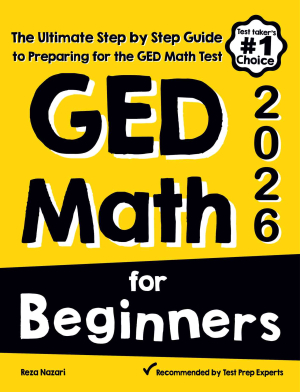
NYSTCE Grades 1-6 Math (222) for Beginners
A step-by-step NYSTCE Math book for students who need the math rebuilt calmly, clearly, and in order.
- Best starting point for rusty or anxious learners
- Pairs well with NYSTCE Math flashcards and worksheets
- Useful before moving into full timed practice tests
- Organized for students who need examples before drills
Step-by-step lessons
Short explanations help students understand the move before they practice it.
Worked examples
Examples show how to translate NYSTCE-style wording into math steps.
Targeted practice
Use the exercises to rebuild one skill at a time instead of jumping around.
Test-day bridge
After each topic, connect the skill to formulas, flashcards, and practice-test questions.
How to use it
- Read one lesson and copy the worked example.
- Do a short worksheet set on the same topic.
- Review the matching flashcards or formulas.
- Try mixed NYSTCE Math questions and mark every miss.
Pair it with free tools
Choose a Part Two (222) Math Resource
Each book has a job: start from scratch, drill weak skills, review fast, or build pacing with full tests.
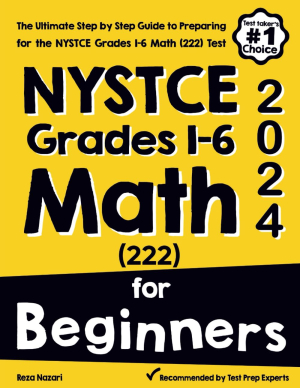
NYSTCE Grades 1–6 Math (222) for Beginners
Best starting point
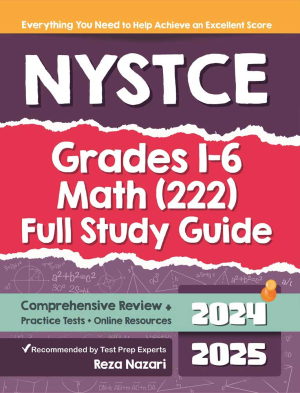
NYSTCE Grades 1–6 Math (222) Full Study Guide
Full study guide
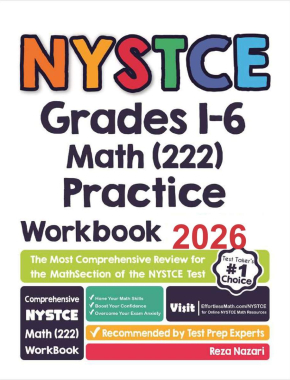
NYSTCE Grades 1-6 Math (222) Practice Workbook 2026
Skill drills
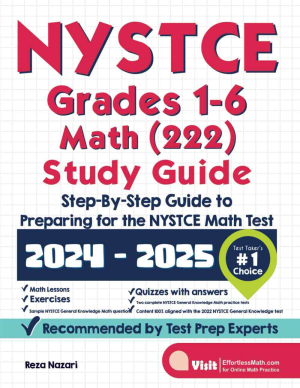
NYSTCE Grades 1–6 Math (222) Study Guide
Focused review
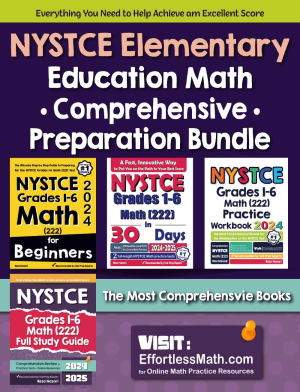
NYSTCE Elementary Education Math Comprehensive Preparation Bundle – more than 2,000 Pages!
Complete resource set

NYSTCE Grades 1-6 Math (222) Worksheets
Recommended practice resource
4-Week NYSTCE Multi-Subject Study Roadmap
A richer online center should help students sequence the work. This roadmap connects diagnostics, lessons, worksheets, flashcards, and timed practice into one month.
Diagnose and rebuild basics
Take a short practice test, then review fractions, decimals, percents, and ratios.
Focus on algebra
Practice expressions, equations, inequalities, graphing, and word-problem setup.
Lock in geometry and data
Review formulas, shapes, charts, mean, median, probability, and units.
Practice in test mode
Take timed practice, review every miss, then revisit flashcards before test day.
NYSTCE Grades 1–6 Multi-Subject FAQ
Which NYSTCE tests are required for Grades 1–6 Multi-Subject?
Candidates must take and pass Part One: Literacy and English Language Arts (221), Part Two: Mathematics (222), and Part Three: Arts and Sciences (245).
How many questions are on the three parts?
Each part has 40 selected-response questions. Parts One and Two also include one constructed-response assignment.
How long does it take to complete all three parts?
The published testing block for all three parts is 5 hours 30 minutes, including a 15-minute break between Parts One and Two. The CBT tutorial and nondisclosure agreement add 15 minutes. Individual testing times are 2 hours for Part One, 2 hours 15 minutes for Part Two, and 1 hour for Part Three.
What score do I need to pass?
The passing score is 520 for each part. You need to pass all three parts for the Grade 1–6 Multi-Subject certificate.
Do I need to take Part Three (245) again for another Multi-Subject grade band?
Part Three: Arts and Sciences (245) is shared across the four Multi-Subject grade bands. If you seek more than one of those certificates, NYSTCE says you need to pass Part Three only once.
What is NYSTCE Flex 602?
Flex 602 is an optional written assessment for eligible candidates who took Mathematics (222) on or after February 26, 2025 and earned a scaled score from 514 to 520. It is an alternative to retaking Part Two, not an additional required part. Check NYSTCE for current eligibility and submission dates.
Make This Your NYSTCE Grades 1–6 Starting Point
Bookmark this Grade 1–6 center, choose the part you need, and follow its competency map, Quick Review, and practice resources.
A USEFUL NEXT STEP
NYSTCE Grades 1–6 Multi-Subject: study questions
What can I study in this NYSTCE Grades 1–6 Multi-Subject Online Center?
This NYSTCE Grades 1–6 Multi-Subject Online Center includes practice, lessons, worksheets, flashcards and review tools. Topics on the page include Part One: Literacy and ELA, Part Two: Mathematics, Part Three: Arts and Sciences.
How should I use the NYSTCE Grades 1–6 Multi-Subject resources?
Choose a topic or practice activity from this Online Center. Review the linked explanation, try the practice, and use the result to decide what to study next. Check each resource’s directions for its format and access requirements.
Resources from Effortless Math · Editorial standards