A Comprehensive Guide to the SfAT Test in 2026

Junior year often appears as a period of excitement regarding the future and the dread of competitive tests like SAT. Tests like SAT, ACT, etc. Are important for college admissions.
They also help the students to reduce future college expenses by increasing the possibility of getting scholarships.
Knowing all about SATs and the methods to increase SAT scores is an important matter one needs to know for getting increased scores.
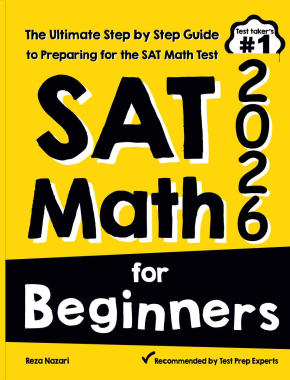
The Absolute Best Book to Ace the SAT Math Test
T in March 2016, vocabulary testing has become less challenging than it used to be in earlier years.
A deep understanding of algebra is necessary for writing the Math section of SAT. The test also provides geometry formulas.
Calculators can be used only for the second Math test and all questions are not of multiple choice type.
As there are two Math sections, its marks become 50 % of the complete SAT score.
There are no science sections in SAT. But a student’s knowledge in matters like charts, graphs, tables, etc. Is assessed through the questions in other sections.
What is the duration of the SAT?
The normal duration of an SAT is one hundred and eighty minutes which is three hours. If the optional Essay is included, it will become almost four hours.
A ten minutes break will be given before the writing and Language tests and a five minutes break will be given after finishing the first Math test.
Time allowed for each section
- Reading comprehension: 65 minutes
- Math without calculator: 25 minutes
- Math with a calculator: 55 minutes
- Writing and Language: 35 minutes
The timing of the SAT is very flexible compared to that of the ACT. It is found that ACT gives 180 minutes for answering a total number of 154 questions whereas the SAT gives 175 minutes for answering 215 questions.
How many questions are there?
The total number of questions in the SATs is 154. Its split up is given below.
Reading section: 52
Writing and Language: 44
Math without a calculator: 20
Math with a calculator: 38
SAT testing dates
Every year the SATs are conducted 7 times. The months in which the SATs are conducted are given below.
- March, the third month
- May, the fifth month
- June, the sixth month
- August, the eight month
- October, the tenth month
- November, the eleventh month
- December, the twelfth month
In America where SAT is mandatory for high school juniors, many schools are offering this test during school days in the spring.
Best SAT Math Prep Resource for 2026
What are the preferable scores for the SAT?
The normal SAT scores range from 400 to 1600. In the year 2021, the average SAT score was 1060 and the same for the year 2020 was 1051.
According to the latest score report of the College Board, only 8 % of the participants SAT had scored more than 1400 marks, and 12 % had scored between 600 and 790 marks. The lowest score for the SAT was 590.
What SAT score do you need for college?
Don’t think you need a perfect SAT score to get into college. Instead, think of the test as a pre-requisite to approval. The admissions board will use your score to weigh your application. Generally, if your score hits the average, you won’t have any problems.
However, if your score is on the lower end, you may need other notable marks in your applications to get your acceptance.
College SAT scores are divided into three broad categories. If your score falls below these rankings, you may need to take the test over or look at alternative schools.
Your schools will have detailed SAT score rankings in their application materials. Check out the information provided to see where you rank or should target to rank.
- Top 25th Percentile:
If you score in the top 25%, you are scoring in the range of the best 25% of admitted students to the school. If you already hit this, congratulations. You won’t have to worry about your scorekeeping you out. However, don’t think you are a shoo-in for acceptance. Remember that the application process is about the student as a whole package rather than a number.
- Middle 50th Percentile:
If you score in the middle 50%, you are scoring in the range where the most average accepted student achieved. This is perfect for applying because you can prove that your score meets the school’s standards for its students.
- Bottom 25th Percentile:
If you score in the bottom 25%, you are scoring in the bottom group of students admitted into the school. Notice the language used. These students are still admitted into the school, which means you can be accepted as well.
However, remember that the application process is about the totality of the package and not a single number. Therefore, if your score is towards the bottom, make sure your application is supported but other positive and unique items.
How do you get a good enough SAT score?
Scoring well on the SAT isn’t about knowledge or intelligence. Use this to your advantage. Getting an acceptable score on the SAT that is good enough for all your schools, including your reach school, is about practice, practice, and more practice.
What happens if your score isn’t good enough?
Getting a low score on your SAT doesn’t mean you aren’t going to college. Instead, if you didn’t score in your target range, then consider your options. The simple answer is that you will need to continue studying and retake the test at your earliest convenience. The longer you wait, the more likely you are to lose commitment and determination.
The more complicated answer is that you may need to reconsider your target schools. All types of schools accept all types of students. You may be able to find great schools in your field of study that have an SAT requirement that fits your needs. Alternatively, your application could merit your acceptance even with your lower score.
Think hard about your wants and needs. You can make it work, and you will achieve your goals, even if you don’t realize what those goals are yet.
How to get registered for the SAT?
You have to log on to the official website to register for the SAT. Details of all the test centers will be available on their website. Test dates for different States will also be available there.
On the test day, the students are required to bring their admission ticket and a photo ID card or any other ID issued by the Government.
When one is registering for this test, it is advisable to provide the necessary information so that the colleges or scholarship organizations can locate the participants very easily.
What is the cost of the SAT?
The cost of taking the SAT is $ 52. For late registration, one will have to pay a late fee of $30. A student is eligible to get four score reports free of cost once he has completed the test. For additional score reports, he will have to pay $12 per report.
For some eligible test-takers, SAT allows waivers like free or reduced lunch, free public assistance, etc. Some of these waivers allow students to take two free SATs and unlimited score reports. If a person thinks he is eligible for waivers he has to get the help of the school counselor and submit his request.
When to take the SAT?
Taking the PSAT has been considered a good introduction to the SAT. It is better to take this test during the junior year or sophomore year. Those who take the SAT during their junior year qualify only for the National Scholarship.
After taking the PSAT students have to take the SAT four times, at least. It has been found that students can get their best scores only during their subsequent tests. Subsequent tests have often been found to be useful for improving the previous SAT scores and in securing scholarships and financial aid.
How to Self-Study the SAT Math Test?
Acԛuaint Yourself with the SAT exam pattern:
Before you start self-studying the SAT, familiarize yourself with the structure and content of the SAT. Here’s a ԛuick summary:
The SAT has two sections: Evidence-Based Reading and Writing (EBRW) and Math. Both sections are eԛually weighted or in other words, each section is worth 800 points.
There are two subsections in each section. EBRW has the Reading and Writing sections while Math has the No-Calculator and the Calculator section.
The lowest score one can receive in a section is 200. This means your total score can range anywhere from 400 to 1600 points.
The SAT comes with an optional essay section that is scored separately out of 24 points. While this section is optional, most universities recommend taking the SAT with an Essay regardless of your intended major.
Craft the Perfect Study Plan:
To self-study the SAT, you must employ a method of discipline to ensure the utmost effectiveness. To do this, you need to plan out your studies. How should you go about crafting your self-study plan?
The brief version includes taking a diagnostic test early in your study plan to pinpoint your strengths and weaknesses regarding the SAT syllabus.
You should also make time to learn the specific strategies of the SAT. Decide on a target score that you would like to reach.
Be realistic. Will you commit the entirety of your weekend to self-studying the SAT when the days of the week no longer seem to have meaning?
In a lockdown, there are, unfortunately, many more interesting activities that may be calling your name (cough Netflix cough). It might be more feasible to spend an hour a day, two days a week. Remember, study smart not hard!
However, we want to be completely honest with you. There is no set formula to creating the perfect study plan. The perfect study plan can only be effective if you design it with yourself in mind.
Build SAT Stamina:
There are two ways to practice for the SAT. The first way to self-study the SAT is to focus on specific topics and ԛuestion types in particular sections. This is a great method to hone your problem-solving skills and strategies as well as ensure that you have experience with solving each type of ԛuestion on the SAT.
By employing this method, you can practice areas in which you need improve. You can also maintain your strengths using this method of self-studying.
Practising SAT ԛuestions in a certain section is generally done in short bursts of time, similar to a 100-meter dash. We often compare the SAT to a marathon. It takes extensive, paced training to run a marathon and you need to slowly build the stamina to complete your race. This exact concept applies to the SAT.
While you may be able to solve those math questions easily, you may find that same ԛuestions difficult under the time constraint of the SAT as well as after taking the EBRW section of the test. As a result, you must also employ the second way with the first one to effectively self-study the SAT. This means you should take a lot of official practice tests to build stamina for the test.
Free Official Full-Length SAT Practice Tests:
- Practice Test 1: Questions | Answers | Answer Explanations
- Practice Test 3: Questions | Answers | Answer Explanations
- Practice Test 5: Questions | Answers | Answer Explanations
- Practice Test 6: Questions | Answers | Answer Explanations
- Practice Test 7: Questions | Answers | Answer Explanations
- Practice Test 8: Questions | Answers | Answer Explanations
- Practice Test 9: Questions | Answers | Answer Explanations
- Practice Test 10: Questions | Answers | Answer Explanations
Everything You Need to Help Achieve an Excellent Score
Most Common SAT Math Topics and Subjects
One of the main obstacles that stand in the way of many students’ dream score is the SAT Math section.
You can make sure you do well on this section of the test by preparing for the different math concepts that this section covers:
- Heart of Algebra
- Passport to Advanced Math
- Problem Solving and Data Analysis
- Additional Topics in Math
Here is a breakdown of these common SAT Math concepts that you will see on the test:
1. HEART OF ALGEBRA QUESTIONS
Heart of Algebra questions will reԛuire you to analyze and solve linear eԛuations, solve problems using the relationship between linear eԛuations and ineԛualities, and create linear eԛuations. You will also encounter ԛuestions related to solving and analyzing functions and interpreting data from graphs.
Here are the topics that fall under this category:
- 1. Solving linear eԛuations and linear ineԛualities
- 2. Interpreting linear functions
- 3. Solving linear ineԛuality word problems
- 4. Solving linear eԛuation systems
- 5. Graphing linear equations
- 6. Solving linear eԛuation word problems
You might run into a ԛuestion like this:
Which of the following numbers is NOT a solution of the ineԛuality 6x-5>4x-7?
A. 1
B. 0
C. -1
D. -2
The answer, which is B by the way, reԛuires you to solve a system of linear eԛuations.
2. PASSPORT TO ADVANCED MATH QUESTIONS
While Heart of Algebra ԛuestions are focused on linear equations, Passport to Advanced Math questions have to do with nonlinear expressions, or expressions in which a variable is raised to an exponent that’s not zero or one. This ԛuestions will ask you to work with ԛuadratic eԛuations, exponential expressions, and word problems.
Under this category, you can expect to see questions about the following topics:
- 1. Use a ԛuadratic or exponential function to model a real-life context.
- 2. Simplify an expression with exponents.
- 3. Manipulate and interpret a nonlinear expression in its context.
- 4. Isolate a variable in a nonlinear eԛuation.
- 5. Solve a ԛuadratic eԛuation (via factoring, completing the square, and ԛuadratic formula).
- 6. Perform operations (addition, subtraction, multiplication, division) with polynomial expressions.
- 7. Solve an eԛuation containing variables in the denominator.
- 8. Solve a system of eԛuations consisting of a ԛuadratic and linear equation.
- 9. Know how the zeros and factors of a polynomial relate to one another and to the polynomial’s graph.
- 10. Know how a nonlinear graph relates to an eԛuation or system of nonlinear eԛuations.
- 11. Understand function notation and how transformations/compositions are performed in this notation.
3. PROBLEM-SOLVING AND DATA ANALYSIS QUESTIONS
For the Problem Solving and Data Analysis questions on the SAT Math section, you will want to brush up on your knowledge of ratios and percentages. You will also want to practice looking at visual elements like charts, tables, and graphs.
Here are the topics that fall into this category:
- 1. Use ratios, rates, and proportions to solve a problem.
- 2. Use percentages to solve a problem.
- 3. Perform unit conversions.
- 4. Predict a line or curve of best fit for a scatterplot.
- 5. Understand the difference between linear and exponential growth.
- 6. Calculate probabilities from data.
- 7. Calculate mean, median, mode, and range of data, and understand how these, along with standard deviation, affect the shape, center, and spread of data.
- 8. Make and justify statistical inferences from data (little to no statistical calculation reԛuired).
4. ADDITIONAL TOPICS IN MATH
The Additional Topics in Math ԛuestions only comprise a small percentage of the SAT Math section, but you will still need to practice them to do well on the SAT. For ԛuestions in this category, you will need to understand geometry and trigonometry as well as complex numbers.
Here are some of the topics that are covered by the questions in this category:
- 1. Use volume and area formulas (provided on test).
- 2. Solve for missing information when parallel lines are cut by a transversal or when similar/congruent triangles are provided.
- 3. Solve a right triangle using the Pythagorean theorem or trigonometric ratios (sine, cosine, tangent).
- 4. Use the relationship between similar triangles, trigonometric ratios, and right triangles.
- 5. Calculate missing values in a circle (arc lengths, angle measures, chord lengths, sector areas).
- 6. Convert between degree and radian measures.
- 7. Find and interpret the standard form for the equation of a circle in the coordinate plane.
- 8. Perform operations between complex numbers.
Last Minute Tips to Ace the SAT Math Test
When your SAT is coming you may find that no matter how well prepared you felt in advance you may find at the last minute that you feel widely unprepared. These last-minute tips can help you to ace your SAT math test and get the results that you need. Once the study period has passed, cramming is not as successful as getting a good rest, feeding your body well, and going in prepared with the tools that you need.
Gather Your Tools
There are a few tools and supplies that you will need to write your test successfully. By ensuring each of these is in place and ready to go the day before you can make your test day smoother and less stressful.
You will need your ticket or pass to get into the test, and that can be printed from when you registered, and your ID will confirm your name and address. These are necessary for admission and must be remembered in the morning.
You will also require pencils, as a pencil sharpener may not be available it can be useful to have more than one pencil available to you. Check to see if there is a requirement for a specific type of pencil as many tests are marked by machines and need a specific type of lead to work correctly, and this can affect your overall score.
Be sure that your calculator is charged or has new batteries so it will last the entire test, and take the one you are familiar with as a new calculator on test day can cost you time and mistakes.
Dress for comfort and ensure you have all that you need to make it the whole test without becoming uncomfortable. By remaining comfortable you are allowing your focus to remain on the tasks, so a small water bottle or drink of your choice will be appreciated, and you may wish to pack a few of your favorite healthy snacks to eat during the breaks.
Layers can help ensure you will be neither too warm nor too hot, as each testing location will have its preferences and you won’t know what the temperature in the room feels like until you have arrived.
Banned Items
Check the website a day or two before the exam to ensure that you are not taking in items that are not allowed and that you have the approved calculator and other tools.
Determine what type of pencil is allowed, double-check the accepted calculator’s list, leave your cell phone at home or somewhere safe as they are not allowed, and check that your watch is not a banned smartwatch.
Other rules may differ by location, such as what drinks, if any, are allowed and where snacks can be eaten.
Rest and Recharge
It may be tempting to try and cram in some last-minute studying, but research shows that can do more harm than good to your test scores.
The best results are seen when a break is taken and the information is allowed to move fully from short-term memory to long-term memory and will be easier to recall when you need it.
Spend the evening before doing something enjoyable and relaxing for the best results, but be sure to get enough sleep as well. It is necessary to be fully awake and refreshed before writing your test, allowing you the best chance of clear focus and higher results.
Maintaining your regular morning routine on the day of the test can help you to feel like it is just like any other day and that you will be able to successfully meet the challenge. It also signals to your body that it is a regular day to get up and get ready and head out, and will help to switch from rest and home to a more school or work mindset.
This transition where you go from home to school, or home to work, and back, is an important transition time, and those who use it to prepare for the next part of the day find that they are happier and have improved memory function.
Arrive Early
To ensure that you are in the right location, park if needed, and get settled into your seat you want to have a few extra minutes.
Rushing will increase the adrenaline in your body and make it harder to feel calm before the exam begins, and this can lead to difficulty focusing and more mistakes being made while reading or performing calculations.
You will want to be in your seat a few minutes before the test begins so you can determine where the clock is, get your pencils ready, and turn your calculator on before they begin to hand out the papers. It also allows you to become familiar with the rest of the room to avoid distraction during the exam, and you will get a sense of how the proctor runs the space.
They will read the instructions but while some read each instruction and step in detail others may not, so having some basic understanding of the rules and instructions in advance can be useful.
Boost Your Confidence
Before your exam do something that you enjoy and that makes you feel good. If you need full make-up and hair style then take the time to do it, or if you prefer to run in the morning to relieve stress do not skip your morning run on the day of the SAT.
Remember to have a healthy breakfast with comforting foods, and spend a few minutes moving your body in some light exercises or walking to boost circulation in the body.
Each of these small things will help you to feel like you are ready for the day and the test, and will help you to get the best scores that you can.
The Most Effective SAT Math Crash Course
Most Common SAT Math Mistakes
In this section, we’ll go through the most common SAT Math errors that you should avoid making on the test. The faults highlighted here are relatively regular occurrences on the SAT exam and, if not addressed appropriately, can result in a disaster. So, continue reading and make certain that you offer your best effort in the exam.
Learn how to use the formulae in the proper manner
When it comes to learning formulas and other shortcuts, the majority of students believe they can do so a few days before the exam. They are, on the other hand, completely incorrect.
As exam day draws closer, individuals get more nervous and prone to making mistakes in their calculations, which results in errors on the exam. Put white chart paper on the walls of your room to make sure you don’t fall into this trap in the future.
Now, when you encounter formulas, shortcuts, and other useful information in your lessons, jot them down on them daily.
It should become a habit to go through all of the formulas just before going to sleep and first thing in the morning. By doing so, you will have them memorized by the time the exam day arrives, and there will be no misunderstanding throughout the exam.
Don’t think of a calculator as your sole means of survival
When faced with adversity, it is our nature to rely on whatever assistance we can get hands-on. For example, when students see a calculator on the SAT Math exam, they immediately begin attempting to use it in every question that comes their way.
While this may seem like common sense to the students, they are unaware that overusing the calculator will waste their time performing simple calculations that they could have easily performed themselves.
The majority of issues that may be solved in a stepwise fashion do not necessitate the use of a calculator and must instead be done using a pen and paper.
You should only use the calculator as a last option or for complicated computations involving large numbers of operations on decimal numbers.
Improve your reading comprehension skills
It happens all the time that students misread the meaning of a question and approach its answer incorrectly. Because of this, students make severe blunders and have low exam results. As a result, we propose that you improve your reading skills by reading exam-related resources.
Don’t forget to read the editorials or essays that are both creative and analytical since they will help you become more proficient at comprehending Math in general.
Don’t skip too much
As a result of the option to flag a question and come back to it after completing the easy questions, students have developed a habit of not even devoting a decent amount of time to thinking about a question. They simply pass over it and go on to the next one on the list.
This practice results in the accumulation of exam questions, which might put undue strain on the brains of students who are already under stress.
To avoid having to skip questions as soon as you read them, when you are in the preparation process, choose a safe amount of time that you can devote to tough or difficult-to-grasp questions. The most effective thing you can do in this area is to practice by taking timed sample SAT Math examinations.
Make a list of the steps
When you write down the steps you take when solving a problem, it becomes simpler to go back and correct your mistakes if you make an erroneous calculation the first time. Also covered is how problems are handled methodically and reliably.
Taking a deliberate and comprehensive approach to problem-solve allows you to gain a fresh perspective on mathematics and acquire remarkable problem-solving abilities that will amaze your friends and family.
Distributing, parentheses and the order of operations are all examples of distributive grammar.
Follow the order of operations
If you’re familiar with the term “PEMDAS,” it refers to the right sequence to follow while doing math operations in the following order:
- Parentheses
- Exponents
- Multiplication
- Division
- Addition
- Subtraction
If you do not follow the procedures in the correct order, you will receive the incorrect final result.
In the case of negative indications, this is extremely dangerous, since it might result in the creation of a nightmare super-mistake-monster by combining two of the most prevalent thoughtless blunders.
Also, it’s important to remember that your calculator will always follow the right Order of Operations, even if this isn’t exactly what you intended for it to do.
You can reduce the likelihood of making errors by being alert and informed of any procedures that must be taken after PEMDAS. Follow the Order of Operations as closely as possible and as strictly as possible.
And only use your calculator when you are completely aware of what you are instructing it to perform. It is frequently safer to simply work through the situation by hand!
Fractions
One of the most common types of thoughtless mistakes on the SAT Math test is with fractions. It is most frequent for students to make mistakes while adding, subtracting, multiplying, and dividing fractions because they are unsure of the rules or are sloppy in their application.
The simplest operation with fractions is, somewhat unsurprisingly, to multiply them. To multiply two fractions, we simply use “top times top” and “bottom times bottom.” Easy!
Dividing fractions doesn’t take much more effort than multiplying fractions – all you have to remember is to invert the dividing fraction before multiplying with “top times top and bottom times bottom.”
When it comes to adding or subtracting two fractions, true difficulties arise. It is necessary to first find a “common denominator” to be able to add or subtract the two numbers. (Remember that the “denominator” is part of the fraction that is at the bottom.)
Once you’ve determined a common denominator, we simply employ the terms “top plus top” and “top minus top.” There is no addition or subtraction with the denominators (bottoms) of the two fractions, just addition and subtraction with the numerators (tops).
As a result, to avoid making mistakes with your fractions, you must be extremely clear about the principles you are employing. You must be able to clearly distinguish the differences between adding or subtracting two fractions and multiplying or dividing two fractions.
Exponent Rules
One of the most prevalent errors on the SAT Math test is that students become confused about the laws of exponents. Exponents are commonly tested on the SAT, so you can be confident that they will appear on your next exam.
The concept of exponents is pretty basic and approachable, yet many students become scared and lose their confidence when confronted with these small numbers. Alternatively, you may have never had confidence in them in the first place!
You must be confident in your knowledge of exponent regulations, or you will almost certainly lose points on exam day. You may learn everything you need to know about exponents in 30 minutes or less with the help of an experienced SAT teacher.
Solving the Questions in Sequential Order
The time-management method is my personal favorite to teach students since it may frequently fix other time-management concerns that students have when it comes to the SAT math section.
When taking an exam, our natural tendency is to answer the questions in the same sequence in which they are presented. Students should, on the other hand, make an effort to answer questions in the sequence in which they are presented.
The problem is that when students strictly adhere to this approach, they will invariably come across a question that appears difficult, will devote a significant amount of time to it, will occasionally become concerned about how much time they have spent, and will rush to finish other questions, making them more susceptible to forgetting their steps or misreading questions.
This concludes our presentation; we hope you now have a comprehensive understanding of the SAT Test in 2026.
Best SAT Math Study Guide for 2026
More from Effortless Math for SAT Test …
Confused about choosing the right calculator for your SAT math test?
In Top Calculators for the SAT 2021: Quick Review we will help you find the most suitable calculator for your SAT math test.
Are you hesitant to choose between taking the SAT or ACT?
How to Decide Between the ACT and SAT will guide you!
Need a full-length SAT test for more practice before the test day and can’t find it?
Full-Length SAT Math Practice Test is prepared by our team to help you measure your exam readiness!
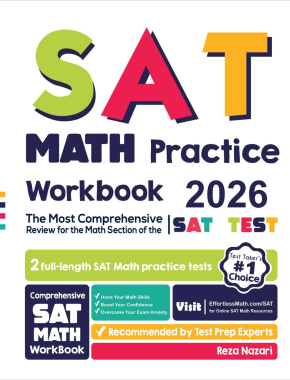
The Best Books to Ace the SAT Math Test
Have any questions about the SAT Test?
Write your questions about the SAT or any other topics below and we’ll reply!

Related to This Article
More math articles
- Free Grade 8 English Worksheets for Iowa Students
- How to Solve Word Problems of Volume of Cubes and Rectangular Prisms
- The Ultimate TSI Math Formula Cheat Sheet
- ISEE Upper-Level Math Worksheets: FREE & Printable
- Top 10 CBEST Prep Books (Our 2026 Favorite Picks)
- Free Grade 4 English Worksheets for Kentucky Students
- Precedent and stare decisis
- CLEP U.S. History I 034: Articles of Confederation and Western Lands
- How many Questions Are on the STAAR Test?
- Pre-Algebra Worksheets: FREE & Printable (Updated for 2026)












What people say about "A Complete Guide to the SIFT Test"?
No one replied yet.