LEARN · PRACTICE · EXPLORE
Indiana Grade 6 English
Revise an original sentence about two students, explain why a pronoun is ambiguous, and practice a selected Indiana Grade 6 grammar expectation.
Focused lessons · Useful practice · Clear next steps
What do Indiana 6th graders learn in ELA?
In 6th grade, Indiana English language arts centers on citing textual evidence, central idea, word choice, and argument writing. Students take the ILEARN grade 6 ELA test in the spring. This page explains each Indiana grade 6 ELA standard and pairs it with short lessons and a full-length practice test.
Printable Indiana grade 6 ELA books:
Standards source: Indiana English Language Arts, Indiana Department of Education.
Replace a vague pronoun with the intended person
A pronoun can agree grammatically with more than one possible antecedent and still leave a reader unsure. Clear revision requires knowing the intended meaning. The task below separates the ambiguity from the two possible revisions.
Curriculum reference: 2023 Indiana Academic Standards: Grade 6 English/Language Arts, from the Indiana Department of Education standards directory.
Indiana Grade 6 references for this activity
Indiana’s 2023 English document includes Grade 6 expectations in the grade’s reading, writing, and communication domains. The expectations selected here support this activity; use the whole document and the school’s sequence for wider coverage.
| Grade-level expectation | Activity focus | Official requirement |
|---|---|---|
| 6.W.6 | Recognize and correct unclear pronoun references within the grammar expectation | Read the state document (PDF page 6) |
These are selected grade-level expectations from Indiana’s current English standards. Activity labels describe a teaching focus rather than reproduce complete requirements. Read the linked state document’s complete grade-level expectations, including its marked essential standards, alongside the school’s curriculum sequence.
A worked Grade 6 reading and writing activity
This original classroom example is separate from official assessment questions.
Nina spoke to Elena after she finished the mural.
| Intended finisher | Clear revision | What changes |
|---|---|---|
| Nina | After finishing the mural, Nina spoke to Elena. | The opening action belongs to Nina |
| Elena | Nina spoke to Elena after Elena finished the mural. | The name states the reference directly |
Try the activity
Who finished the mural? Explain why the sentence leaves that unclear. Write one revision for Nina finishing it and a second for Elena finishing it.
Follow the reasoning
Both Nina and Elena could be the person referred to by she. The sentence supplies no additional detail that settles the choice. If Nina finished the mural, a clear revision is “After finishing the mural, Nina spoke to Elena.” If Elena finished it, “Nina spoke to Elena after Elena finished the mural” states that meaning directly. The second revision repeats a name, but repetition can be useful when a pronoun would obscure the intended person. Neither reading is automatically correct without more context from the writer.
Notice what needs more practice
A rule such as “the pronoun always refers to the nearest name” would decide Elena without sufficient evidence. Nor does matching number or the stated pronoun alone distinguish these two possible antecedents. The original is grammatically possible; its problem is clarity in the supplied context. Avoid improving flow at the cost of changing the intended meaning. The expectation also includes other pronoun uses, agreement, and sentence construction; resolving this one ambiguity is part of that wider work.
Use the next session to build independence
- List the possible antecedents of the pronoun.
- Ask which meaning the writer intends.
- Revise and check that the reader can recover that meaning.
Add a preceding sentence that clearly states who was working on the mural and reconsider whether the original pronoun becomes clear. Compare that contextual solution with repeating a name in the sentence itself. Then write a new sentence with a vague they and two possible plural antecedents. Explain the uncertainty before revising it. When reviewing a longer draft, read each pronoun with the surrounding sentences rather than judging it in isolation; context can make a reference clear or introduce another possible antecedent.
For more general reading and writing resources, visit the Grade 6 English Online Center.
Indiana Grade 6 English: useful planning questions
Does the nearest name always identify a pronoun’s antecedent?
No. Use the sentence and surrounding context. When more than one reading remains plausible, clarify the writer’s intended meaning.
Where are the complete state requirements?
Indiana’s 2023 English document includes Grade 6 expectations in the grade’s reading, writing, and communication domains. The expectations selected here support this activity; use the whole document and the school’s sequence for wider coverage. The school’s sequence also includes reading, writing, speaking, listening, and language work beyond this example.
Official sources checked October 6, 2026. Grade 6 is within the ILEARN English language arts testing range. This original lesson is independent practice. Read the Indiana assessment overview and use the school’s guidance for preparation. ILEARN’s through-year system measures English language arts and mathematics in Grades 3–8 with checkpoints and an end-of-year summative assessment. Follow the school’s current assessment assignment, accommodations, and guidance; this classroom activity is independent practice and does not predict a state performance level. This site’s practice and books are independently published. Check their editions and contents against current standards and assessment guidance.
Grade 6 English in other states
When moving between school systems, compare the official curriculum and the school’s learning sequence. Use the national Online Center’s map to find another state’s resources.
Recommended Indiana Grade 6 resources
Build a Strong Indiana Grade 6 ILEARN English Practice Library
These independently published resources have their own coverage and editions. Check the contents alongside Indiana’s current English standards before choosing assessment preparation.
Use these Indiana Grade 6 resources for reading comprehension, language, writing, and full-length practice where available. Click any cover to open the resource page.
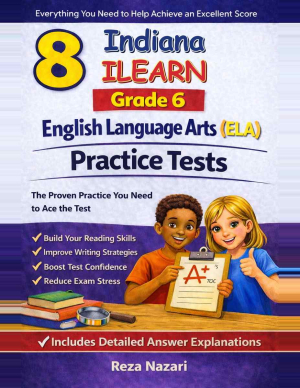
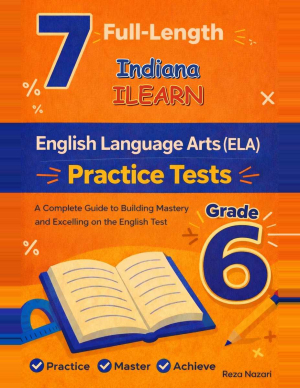
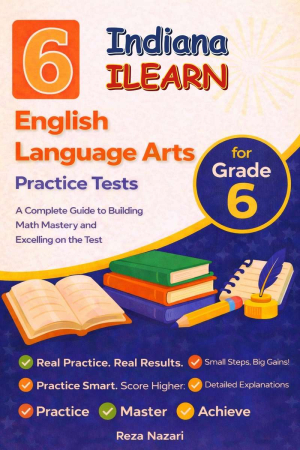
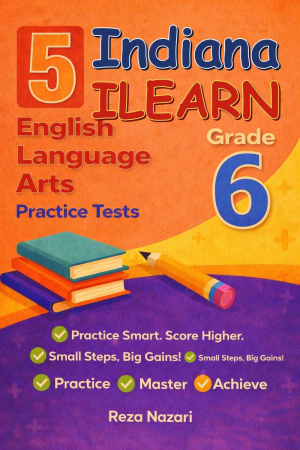
More Grade 6 resources
A USEFUL NEXT STEP
Indiana Grade 6 English: study questions
Does the nearest name always identify a pronoun’s antecedent?
No. Use the sentence and surrounding context. When more than one reading remains plausible, clarify the writer’s intended meaning.
Where are the complete Indiana Grade 6 requirements?
Indiana’s 2023 English document includes Grade 6 expectations in the grade’s reading, writing, and communication domains. The expectations selected here support this activity; use the whole document and the school’s sequence for wider coverage.
Official source ↗Resources from Effortless Math · Editorial standards