LEARN · PRACTICE · EXPLORE
Louisiana Grade 6 English
Analyze a turning-point sentence in an original story, connect it with the resolution, and use current Louisiana Grade 6 English references.
Focused lessons · Useful practice · Clear next steps
What do Louisiana 6th graders learn in ELA?
In 6th grade, Louisiana English language arts centers on citing textual evidence, central idea, word choice, and argument writing. Students take the LEAP grade 6 ELA test in the spring. This page explains each Louisiana grade 6 ELA standard and pairs it with short lessons, printable worksheets and a full-length practice test.
Printable Louisiana grade 6 ELA books:
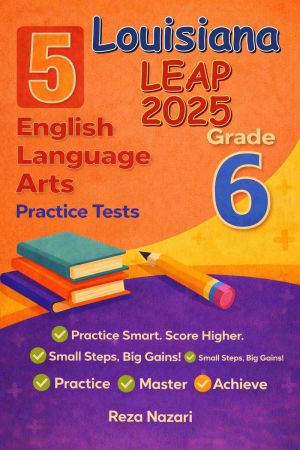
- 5-Louisiana-LEAP-2025 Grade 6 Reading Language Arts Practice Tests
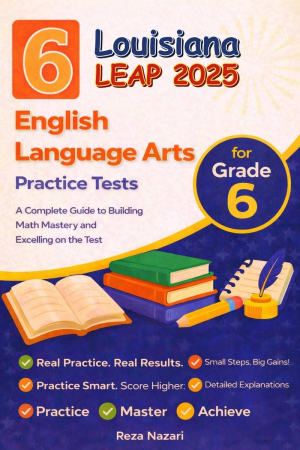
- 6-Louisiana-LEAP-2025 Grade 6 Reading Language Arts Practice Tests
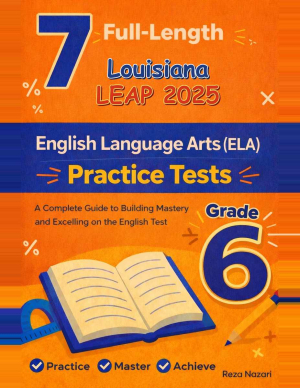
- 7-Louisiana-LEAP-2025 Grade 6 Reading Language Arts Practice Tests
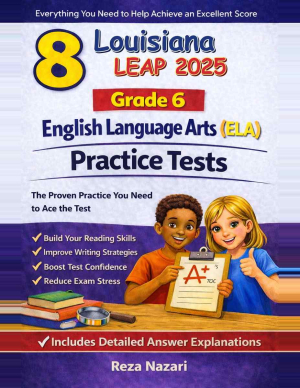
- 8-Louisiana-LEAP-2025 Grade 6 Reading Language Arts Practice Tests
- Louisiana Grade 6 ELA Preparation Bundle
Standards source: Louisiana English Language Arts, Louisiana Department of Education.
Explain why a turning-point sentence matters to the plot
A story’s structure becomes clearer when students ask what a particular sentence changes. This short original scene includes a problem, a decision, and a resolution so a reader can test the role of one sentence against the whole sequence.
Curriculum reference: Louisiana Student Standards for English Language Arts, current document revised March 8, 2019, from the Louisiana Department of Education standards directory.
2027–28 standards transition: Louisiana’s revised English standards take effect in 2027–28. This page uses current classroom references for 2026–27. Read the official implementation notice and the upcoming 2026 standards (PDF) when planning next year.
Louisiana Grade 6 references for this activity
For the 2026–27 school year, use the current Louisiana ELA document linked in the state directory, revised March 8, 2019. The revised 2026 standards take effect in 2027–28. The references below select part of Grade 6 for this activity; use the complete document and the school’s sequence for wider coverage.
| Grade-level expectation | Activity focus | Official requirement |
|---|---|---|
| RL.6.5 | Explain a sentence’s role in story structure | Read the state document (PDF page 33) |
| RL.6.3 | Trace events and the character’s response | Read the state document (PDF page 33) |
These are selected grade-level expectations from Louisiana’s current English standards. Activity labels describe a teaching focus rather than reproduce complete requirements. Read the linked state document’s complete grade-level expectations, including its grade-specific details, alongside the school’s curriculum sequence.
A worked Grade 6 reading and writing activity
This original classroom example is separate from official assessment questions.
The model bridge leaned to one side when Sam set it on the judging table. She pushed the tilted support upright, but it slid again. Two minutes remained before the demonstration. The instruction sheet lay under her bag, where she had shoved it after deciding she remembered every step. Sam pulled it out and read the line about locking the base tabs. She folded the loose tabs into their slots. When the judge arrived, the bridge stood level. “I skipped a step,” Sam said, placing the sheet beside the model.
Try the activity
Explain why the sentence beginning “Sam pulled it out” is a turning point. Link it with an earlier detail and a later result. What does the final action add to the resolution?
Follow the reasoning
Before that sentence, Sam tries pushing the support into place without addressing the base. The instruction sheet has been ignored because she thinks she remembers the process. Reading it changes her method: she identifies the locking-tab step and completes it. The later level bridge supplies evidence that the new action resolves the structural problem in this scene. The sentence matters because it connects the failed attempts with a different, informed action. At the end, Sam places the sheet beside the model and admits the omission. Those details suggest that she is willing to acknowledge the mistake and keep the instructions accessible. They do not show that she wins a prize or never makes another error.
Notice what needs more practice
Calling a sentence a turning point should include what turns. “It is near the end” gives a location, not a structural explanation. If a student chooses the moment the bridge stands level, discuss the difference between the decision that changes the approach and the resulting resolution. Both moments matter, but they play different roles. Sam is not shown replacing the whole bridge or getting a new model. An explanation should follow the actual sequence. The theme could concern checking assumptions or learning from a mistake, but this activity first asks for the sentence’s contribution to plot, not a moral detached from the events.
Use the next session to build independence
- Trace the unsuccessful action, changed approach, and result.
- Explain what the selected sentence introduces that was absent before.
- Check the explanation against the ending without inventing a reward.
Remove the selected sentence and read the shortened scene. Discuss the missing link between the ignored sheet and the locked tabs. Then choose a passage from a longer classroom story where a paragraph or scene changes the direction of the plot. Ask students to distinguish a decision from its consequence and explain how both fit the structure. A complete Grade 6 program requires sustained texts and other reading, writing, speaking, listening, and language expectations beyond this deliberately brief example.
For more general reading and writing resources, visit the Grade 6 English Online Center.
Louisiana Grade 6 English: useful planning questions
Is a turning point simply the last event in a story?
No. Identify an event or decision that changes the direction of the action, then explain how the later outcome follows from it.
Where are the complete state requirements?
For the 2026–27 school year, use the current Louisiana ELA document linked in the state directory, revised March 8, 2019. The revised 2026 standards take effect in 2027–28. The references below select part of Grade 6 for this activity; use the complete document and the school’s sequence for wider coverage. The school’s sequence also includes reading, writing, speaking, listening, and language work beyond this example.
Official sources checked October 6, 2026. Grade 6 is within the LEAP Grades 3–8 ELA testing range. Follow the school’s assigned assessment pathway and current directions. Read the Louisiana 2026–27 assessment calendar and guidance. This original activity is independently published classroom practice, not an official LEAP question, a complete curriculum-alignment certification, or a prediction of a performance level. Check books, worksheet collections, and other independent practice against current classroom requirements. Plan the 2027–28 English standards transition with the school using the official implementation notice.
Grade 6 English in other states
When moving between school systems, compare the official curriculum and the school’s learning sequence. Use the national Online Center’s map to find another state’s resources.
Recommended Louisiana Grade 6 resources
Build a Strong Louisiana Grade 6 LEAP English Practice Library
These independently published resources have their own coverage and editions. Check the contents alongside Louisiana’s current English standards before choosing assessment preparation.
Use these Louisiana Grade 6 resources for reading comprehension, language, writing, and full-length practice where available. Click any cover to open the resource page.
More Grade 6 resources
A USEFUL NEXT STEP
Louisiana Grade 6 English: study questions
Is a turning point simply the last event in a story?
No. Identify an event or decision that changes the direction of the action, then explain how the later outcome follows from it.
Where are the complete Louisiana Grade 6 requirements?
For the 2026–27 school year, use the current Louisiana ELA document linked in the state directory, revised March 8, 2019. The revised 2026 standards take effect in 2027–28. The references below select part of Grade 6 for this activity; use the complete document and the school’s sequence for wider coverage.
Official source ↗Resources from Effortless Math · Editorial standards