LEARN · PRACTICE · EXPLORE
Connecticut Grade 6 English
Analyze an original classroom-storage report, explain a paragraph’s role, and revise transitions with Connecticut Grade 6 reading and writing references.
Focused lessons · Useful practice · Clear next steps
What do Connecticut 6th graders learn in ELA?
In 6th grade, Connecticut English language arts centers on citing textual evidence, central idea, word choice, and argument writing. Students take the Smarter Balanced grade 6 ELA test in the spring. This page explains each Connecticut grade 6 ELA standard and pairs it with short lessons and a full-length practice test.
Printable Connecticut grade 6 ELA books:
- 5-Connecticut-Smarter-Balanced Grade 6 Reading Language Arts Practice Tests
- 6-Connecticut-Smarter-Balanced Grade 6 Reading Language Arts Practice Tests
- 7-Connecticut-Smarter-Balanced Grade 6 Reading Language Arts Practice Tests
- 8-Connecticut-Smarter-Balanced Grade 6 Reading Language Arts Practice Tests
- Connecticut Grade 6 ELA Preparation Bundle
Standards source: Connecticut ELA resources, Connecticut State Department of Education.
Explain how a paragraph changes the direction of a report
A paragraph contributes more than a collection of facts. Its position can introduce a problem, qualify a proposed solution, or show what to do next. This three-part report lets students examine those jobs and choose transitions that match the relationships.
Curriculum source: Common Core State Standards for English Language Arts & Literacy, adopted as Connecticut Core Standards in 2010, from the Connecticut State Department of Education ELA resource directory.
Connecticut Grade 6 references for this activity
Connecticut uses the Core Standards for English language arts, adopted in 2010. The full ELA document contains the Grade 6 expectations across its subject strands. These are two selected references for the activity on this page; use the full document for curriculum planning.
| Core Standards reference | Activity focus | Official requirement |
|---|---|---|
| RI.6.5 | How a paragraph contributes to a text’s ideas and structure | Read the primary standards document, page 39 |
| W.6.2c | Transitions that clarify relationships in explanatory writing | Read the primary standards document, page 42 |
These are selected CCSS references used in Connecticut’s Core Standards. Activity labels describe a teaching focus rather than reproduce the full requirements. Districts develop their own curriculum sequence; use the complete document and the school’s plan for wider coverage.
A worked Grade 6 reading and writing activity
This original classroom example is separate from official assessment questions.
Paragraph 1: Loose art supplies collect at the bottom of our classroom cupboard. Students spend time searching for a matching set of tools. Labeled trays could make the sets easier to locate.
Paragraph 2: Trays alone will not solve every problem. If students return scissors to the wrong set, a clear label cannot make that set complete. The class also needs a return routine.
Paragraph 3: We will try the trays and the return routine for one week. At cleanup, a helper will check each tray against its label and note missing items.
Try the activity
Describe the role of each paragraph in the report. Explain what the second paragraph adds that the first does not. Then add a transition at the start of the second paragraph and explain why it fits. Choose a different transition for the third paragraph that makes the next step clear.
Follow the reasoning
The first paragraph introduces a storage problem and a possible response. The second qualifies that response: labels and trays do not ensure that tools are returned correctly. The third proposes a trial with a check during cleanup. “However” can introduce the limitation in paragraph 2 because it signals a contrast with the promise of labeled trays. “To test this combined approach” can introduce paragraph 3 because the trial includes both trays and a return routine. The transitions make existing relationships clearer rather than adding new results.
Notice what needs more practice
If a student calls paragraph 2 an unrelated problem, connect the misplaced scissors to the original search for complete tool sets. If the student removes that paragraph, ask what the reader loses: a reason the return routine is needed. “For example” alone at its opening could blur the relationship, because the paragraph chiefly limits the first proposal rather than merely illustrating its success. No paragraph reports that the trial has already worked; the final section is a plan, not evidence of an outcome.
Use the next session to build independence
- Give each paragraph a label describing its job, not only its topic.
- Explain why paragraph 2 follows the first proposal.
- Choose transitions that show limitation and a planned next step.
- Reread the report without one paragraph and describe the missing connection.
Draft a fourth paragraph that states what information the class should review after the trial. Specify missing-item notes and time spent searching as possible observations, but do not invent favorable results. Then revise the complete explanation for a reader who has not seen the cupboard. For another lesson, examine a longer report in which a section defines a term or introduces an exception, and explain how that section contributes to the overall idea.
For more general reading and writing resources, visit the Grade 6 English Online Center.
Connecticut Grade 6 English: useful planning questions
Can I use any transition to make a paragraph flow?
Choose a transition that expresses the actual relationship. A contrast, example, cause, and next step do different jobs; smooth wording cannot repair a misleading connection.
Where are the complete state requirements?
Connecticut uses the Core Standards for English language arts, adopted in 2010. The full ELA document contains the Grade 6 expectations across its subject strands. These are two selected references for the activity on this page; use the full document for curriculum planning. The school’s sequence also includes reading, writing, speaking, listening, and language work beyond this example.
State sources checked October 5, 2026. Grade 6 is within the Connecticut Smarter Balanced English language arts testing range. This original lesson is independent practice. Read the official assessment overview and use the school’s guidance for preparation.
Grade 6 English in other states
When moving between school systems, compare the official curriculum and the school’s learning sequence. Use the national Online Center’s map to find another state’s resources.
Recommended Connecticut Grade 6 resources
Build a Strong Connecticut Grade 6 SBAC English Practice Library
Use these Connecticut Grade 6 resources for reading comprehension, language, writing, and full-length practice where available. Click any cover to open the resource page.
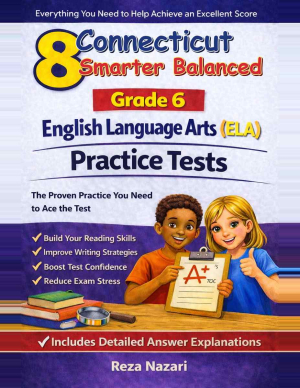 8-Connecticut-Smarter-Balanced Grade 6 Reading Language Arts Practice Tests
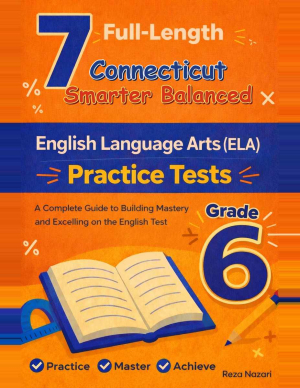 7-Connecticut-Smarter-Balanced Grade 6 Reading Language Arts Practice Tests
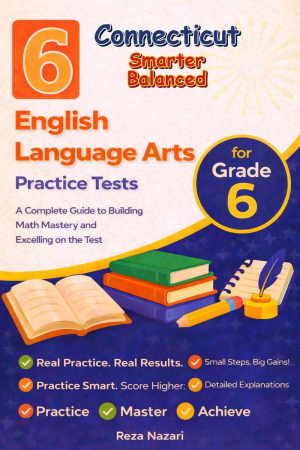 6-Connecticut-Smarter-Balanced Grade 6 Reading Language Arts Practice Tests
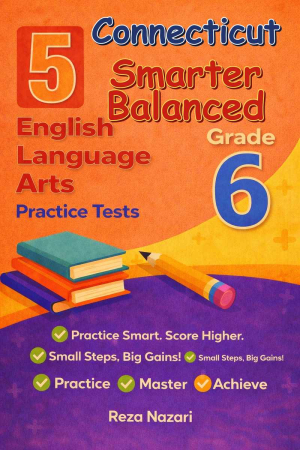 5-Connecticut-Smarter-Balanced Grade 6 Reading Language Arts Practice Tests
A USEFUL NEXT STEP
Connecticut Grade 6 English: study questions
Can I use any transition to make a paragraph flow?
Choose a transition that expresses the actual relationship. A contrast, example, cause, and next step do different jobs; smooth wording cannot repair a misleading connection.
Where are the complete Connecticut Grade 6 requirements?
Connecticut uses the Core Standards for English language arts, adopted in 2010. The full ELA document contains the Grade 6 expectations across its subject strands. These are two selected references for the activity on this page; use the full document for curriculum planning.
Official source ↗Resources from Effortless Math · Editorial standards