LEARN · PRACTICE · EXPLORE
Vermont Grade 6 English
Explain central-idea development and summarize objectively. Read an original Grade 6 activity, follow its explanation, and find the selected Vermont reading reference.
Focused lessons · Useful practice · Clear next steps
What do Vermont 6th graders learn in ELA?
In 6th grade, Vermont English language arts centers on citing textual evidence, central idea, word choice, and argument writing. Students take the VTCAP grade 6 ELA test in the spring. This page explains each Vermont grade 6 ELA standard and pairs it with short lessons and a full-length practice test.
Printable Vermont grade 6 ELA books:
Standards source: Vermont adopted content standards.
Trace a Central Idea without Adding an Opinion
Explain central-idea development and summarize objectively. Use the original reading below to discuss a particular skill, then apply that reasoning to a fuller classroom text.
Curriculum reference: Common Core State Standards for English Language Arts & Literacy, June 2010 edition, from the Vermont English language arts standards page.
Vermont Grade 6 references for this activity
The Vermont Agency of Education identifies the Common Core State Standards for K–12 English language arts. The linked CCSS edition lists separate grade reading requirements, including Grade 6. Read the complete standards and the school’s curriculum sequence. This original example selects one reading focus; it does not fulfill the complete curriculum.
| Selected Vermont reading reference | Activity focus | State-linked standards document |
|---|---|---|
| RI.6.2 | Explain central-idea development and summarize objectively | Read the state-linked document (PDF page 39) |
These selected reference labels identify an activity focus, with the correct grade and PDF page linked separately. Read the complete standards selected by the school and its learning sequence, including reading, writing, language, speaking, and listening. This short original example does not fulfill the entire curriculum or establish a student’s grade-level proficiency.
Why the display log matters
This original classroom example is separate from official assessment questions.
A classroom display log records what is shown, not simply what the organizer intends to show. First, the organizer lists the objects placed on the table. When an object is moved or removed, the log is updated. At the end of the day, another member compares the table with the latest list. These checks help the group notice a difference between the recorded display and its actual contents. The log does not explain why a particular object was moved unless someone adds that information.
Try the activity
State a central idea and explain how the sequence of details conveys it. Give an objective summary. Would “This is the smartest display system” belong in that summary?
Follow the reasoning
A central idea is that keeping the log useful requires recording the actual display and updating and checking it as contents change. The opening distinguishes actual contents from intentions; the listing and updating steps show how the record is maintained; the comparison explains how discrepancies can be noticed. The last sentence limits what the log reveals about reasons for changes. An objective summary can connect these points without declaring the system smartest or claiming it prevents every loss. That evaluation is not supplied by the passage. Trace the idea through several details rather than choosing the first sentence and ignoring its development.
Notice what needs more practice
The account is invented and describes a planned routine, not measured results from an actual class. Updating a record may identify a difference without explaining its cause. The summary should retain that distinction and should not report that missing objects were recovered.
Use the next session to build independence
- State the central idea in your own words.
- Explain what successive details add to it.
- Summarize the text while excluding unsupported judgment.
Read a fuller informational classroom text. Explain how its central idea is conveyed through particular details and write an objective summary that preserves meaningful limits. Reconsider the idea if a later section qualifies it.
For more general reading and writing resources, visit the Grade 6 English Online Center.
Vermont Grade 6 English: useful planning questions
Does an objective summary omit every qualification?
No. Keep qualifications that affect the text’s meaning. Exclude unsupported personal judgments rather than removing important limits.
Which standards does the school use?
The Vermont Agency of Education identifies the Common Core State Standards for K–12 English language arts. The linked CCSS edition lists separate grade reading requirements, including Grade 6. Read the complete standards and the school’s curriculum sequence. This original example selects one reading focus; it does not fulfill the complete curriculum. The school’s sequence also includes reading, writing, speaking, listening, and language work beyond this example.
Sources checked October 6, 2026. The agency’s current Academic Proficiency overview lists general VTCAP English and mathematics assessment in Grades 3–9. Grade 6 is included in that English range. Follow the school’s current assessment and accommodation directions. This original classroom activity is not an official state item. Read the Vermont English assessment overview and English standards guidance. Independently published practice has its own directions and scoring. Its result does not predict a state performance level, and this original activity is not an official assessment item.
Grade 6 English in other states
When moving between school systems, compare the official curriculum and the school’s learning sequence. Use the national Online Center’s map to find another state’s resources.
Recommended Vermont Grade 6 resources
Choose Vermont Grade 6 English practice resources
These independently published resources have their own coverage and editions. Check the contents alongside Vermont’s current English standards before choosing assessment preparation.
Use these Vermont Grade 6 resources for reading comprehension, language, writing, and full-length practice where available. Click any cover to open the resource page.
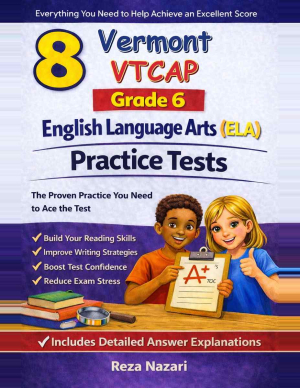
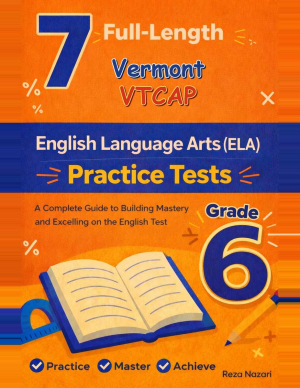
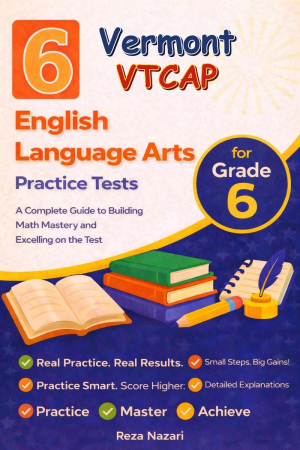
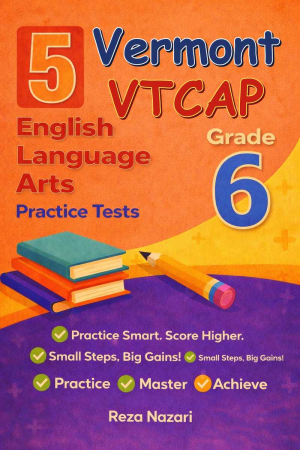
More Grade 6 resources
A USEFUL NEXT STEP
Vermont Grade 6 English: study questions
Does an objective summary omit every qualification?
No. Keep qualifications that affect the text’s meaning. Exclude unsupported personal judgments rather than removing important limits.
Where are the complete Vermont Grade 6 requirements?
The Vermont Agency of Education identifies the Common Core State Standards for K–12 English language arts. The linked CCSS edition lists separate grade reading requirements, including Grade 6. Read the complete standards and the school’s curriculum sequence. This original example selects one reading focus; it does not fulfill the complete curriculum.
Official source ↗Resources from Effortless Math · Editorial standards