LEARN · PRACTICE · EXPLORE
Kentucky Grade 6 English
Integrate an original report and visual chart, distinguish preferences from learning outcomes, and use current Kentucky Grade 6 informational reading references.
Focused lessons · Useful practice · Clear next steps
What do Kentucky 6th graders learn in ELA?
In 6th grade, Kentucky English language arts centers on citing textual evidence, central idea, word choice, and argument writing. Students take the KSA grade 6 ELA test in the spring. This page explains each Kentucky grade 6 ELA standard and pairs it with short lessons and a full-length practice test.
Printable Kentucky grade 6 ELA books:
Standards source: Kentucky English Language Arts, Kentucky Department of Education.
Combine a report and a chart without adding information neither contains
Read a short original report with its accompanying chart. Each format contributes information to the same question. The counts are invented classroom data, and the chart represents choices rather than measured learning outcomes.
Curriculum reference: Kentucky Academic Standards for Reading and Writing, October 2025, from the Kentucky Department of Education standards directory.
Kentucky Grade 6 references for this activity
Kentucky’s current directory links the October 2025 Reading and Writing standards, adopted into law in May 2026. Read the Grade 6 expectations in the full state document. The selected reference supports this activity; use the school’s sequence and the remaining expectations for wider coverage.
| Grade-level expectation | Activity focus | Official requirement |
|---|---|---|
| RI.6.7 | Integrate information across written and visual formats | Read the state document (PDF page 209) |
These are selected grade-level expectations from Kentucky’s current English standards. Activity labels describe a teaching focus rather than reproduce complete requirements. Read the linked state document’s complete grade-level expectations, including its grade-specific details, alongside the school’s curriculum sequence.
A worked Grade 6 reading and writing activity
This original classroom example is separate from official assessment questions.
A museum club asked all forty of its members which guide they would choose for an imaginary visit: a recorded audio guide or a printed guide. Each member selected one option. The chart gives the counts. Organizers plan to offer both formats. They have not tested how much information members would remember after using either guide.
Try the activity
Use the report and chart to explain which option more members selected, what population the counts describe, and whether the information proves that one guide teaches better.
Follow the reasoning
The chart supplies the counts: twenty-four selections for audio and sixteen for print. Audio is the more frequently selected option among these forty club members. The report supplies context that the chart alone does not: all members answered, each selected one option, the visit is imaginary, and no learning comparison has been conducted. Together, the formats support a statement about this group’s choices. They do not establish which guide leads to better recall or what all museum visitors prefer. A coherent explanation uses a relevant number and the scope of the report rather than treating a longer bar as proof of every possible advantage.
Notice what needs more practice
Start with the chart title, labels, and stated counts. Its bars encode the number of choices, not minutes spent listening or the number of facts remembered. Since each of forty members chose one option, the two counts sum to the reported group size. That consistency check does not turn preference into learning evidence. The larger group is not “everyone who visits a museum.” The report also states a plan to offer both guides, not a completed experiment showing their effects. If a claim concerns learning, name the missing measurement and explain why the displayed counts cannot answer that question.
Use the next session to build independence
- Read the report for the group, question, and conditions.
- Read the chart for the named categories and counts.
- Combine the formats in one supported explanation with an appropriate limit.
Rewrite the chart’s caption so a reader viewing it alone knows who answered and what the bars measure. Then remove the report’s sentence about the untested learning outcome and ask whether the chart begins to establish that outcome. It does not: omitting a limitation creates no new evidence. For transfer, use a teacher-selected report with an actual visual and compare what each contributes, checking that they concern the same group and time. Kentucky’s selected standard addresses integrating information across formats; this worked example practices a focused part of that expectation alongside the school’s broader reading and writing sequence.
For more general reading and writing resources, visit the Grade 6 English Online Center.
Kentucky Grade 6 English: useful planning questions
Does the longer bar prove that an audio guide teaches better?
No. This chart measures preferences among forty imaginary club members. The report says learning outcomes have not been compared.
Where are the complete state requirements?
Kentucky’s current directory links the October 2025 Reading and Writing standards, adopted into law in May 2026. Read the Grade 6 expectations in the full state document. The selected reference supports this activity; use the school’s sequence and the remaining expectations for wider coverage. The school’s sequence also includes reading, writing, speaking, listening, and language work beyond this example.
Official sources checked October 6, 2026. Grade 6 is within the Kentucky Summative Assessment reading testing range. This original lesson is independent practice. Read Kentucky’s current assessment guidance and use the school’s guidance for preparation. Kentucky’s current guidance lists KSA reading and mathematics in Grades 3–8 and 10. Beginning in 2026–27, KSA no longer tests writing or editing and mechanics. Writing and language remain part of classroom instruction. The other KSA content-area tests remain; follow the school’s current assignment and directions, including any assigned alternate-assessment pathway. This original classroom activity is independently published practice, not an official KSA item or a prediction of a state performance level. The May 2026 adoption notice explains the revised reading and writing standards. Check independently published books and practice against current standards and assessment guidance.
Grade 6 English in other states
When moving between school systems, compare the official curriculum and the school’s learning sequence. Use the national Online Center’s map to find another state’s resources.
Recommended Kentucky Grade 6 resources
Build a Strong Kentucky Grade 6 KSA English Practice Library
These independently published resources have their own coverage and editions. Check the contents alongside Kentucky’s current English standards before choosing assessment preparation.
Use these Kentucky Grade 6 resources for reading comprehension, language, writing, and full-length practice where available. Click any cover to open the resource page.
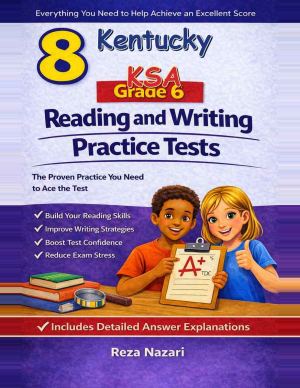
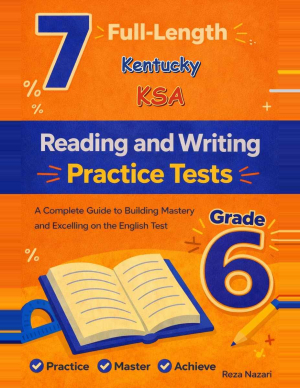
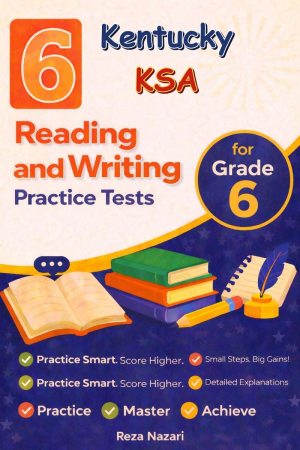
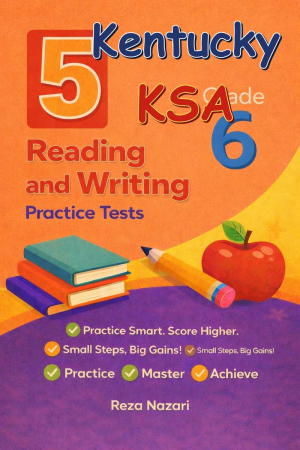
More Grade 6 resources
A USEFUL NEXT STEP
Kentucky Grade 6 English: study questions
Does the longer bar prove that an audio guide teaches better?
No. This chart measures preferences among forty imaginary club members. The report says learning outcomes have not been compared.
Where are the complete Kentucky Grade 6 requirements?
Kentucky’s current directory links the October 2025 Reading and Writing standards, adopted into law in May 2026. Read the Grade 6 expectations in the full state document. The selected reference supports this activity; use the school’s sequence and the remaining expectations for wider coverage.
Official source ↗Resources from Effortless Math · Editorial standards