LEARN · PRACTICE · EXPLORE
Colorado Grade 6 English
Evaluate an original library-hours proposal, qualify claims from a small survey, and practice evidence-based discussion with Colorado Grade 6 references.
Focused lessons · Useful practice · Clear next steps
What do Colorado 6th graders learn in ELA?
In 6th grade, Colorado English language arts centers on citing textual evidence, central idea, word choice, and argument writing. Students take the CMAS grade 6 ELA test in the spring. This page explains each Colorado grade 6 ELA standard and pairs it with short lessons and a full-length practice test.
Printable Colorado grade 6 ELA books:
Standards source: Standards and Instructional Support, Colorado Department of Education.
Evaluate what a small survey can support
An argument may offer relevant evidence without supporting every part of its claim. Students should identify what the evidence establishes, where the argument reaches further, and how a discussion can improve the proposal.
Curriculum source: 2020 Colorado Academic Standards: Reading, Writing, and Communicating (adopted 2018), from the Colorado Department of Education resource directory.
Colorado Grade 6 references for this activity
Colorado’s official English language arts document contains the Grade 6 expectations across its subject strands. These are two selected references for the activity on this page; use the full document for curriculum planning.
| Colorado reference | Activity focus | Official requirement |
|---|---|---|
| RW.6.2.2 RI.6.8 | Evaluate claims and supporting evidence | Read the state document, page 15 |
| RW.6.1.1 SL.6.1d | Review ideas after collaborative discussion | Read the state document, page 12 |
The RW code identifies Colorado’s grade-level expectation; the smaller code is the CCSS reference attached to the selected evidence outcome in the document. Read the full expectation, its other outcomes, and the Colorado context. These activity labels do not reproduce every requirement.
A worked Grade 6 reading and writing activity
This original classroom example is separate from official assessment questions.
Our school library should stay open later every afternoon. We asked fourteen students in the after-school drama club whether they would use an extra half hour of library time. Nine said yes. Therefore, nearly everyone at the school needs longer library hours. A later closing time could help students who cannot visit during lunch.
Try the activity
Identify the proposal, the evidence, and a claim that goes beyond that evidence. Write a more careful version of the survey-based claim. Discuss one additional piece of information that would help the school evaluate the proposal, then revise your response after hearing a partner’s idea.
Follow the reasoning
The proposal is to keep the library open later every afternoon. The evidence reports the answers of fourteen drama-club students, nine of whom said they would use extra time. That supports a statement about those respondents; it does not establish that nearly everyone at the school needs later hours. A qualified claim is: “Nine of the fourteen drama-club students surveyed said they would use an extra half hour.” The possible benefit for students who cannot visit at lunch is a reason to investigate the proposal, but the passage does not measure how many students face that situation.
Notice what needs more practice
A student may dismiss the entire proposal because the survey is small. Ask what the responses still contribute: they show interest among some respondents. A different error is to assume the surveyed club represents all grades, activities, and schedules. Identify who was asked before generalizing. Neither nine yes responses nor five other responses alone decides whether the school should change hours; staffing, access, and demand need further investigation.
Use the next session to build independence
- Separate the requested action from the claims supporting it.
- Record exactly who supplied the evidence and what they answered.
- Rewrite an overgeneralization so its scope matches the evidence.
- Listen to a partner’s proposed follow-up question and explain whether it changes your view.
A partner might suggest surveying students from several grades or finding out when students currently use the library. Ask how that information would address a specific uncertainty. Avoid collecting facts merely because they sound persuasive. Draft a revised proposal that preserves the goal while acknowledging what remains unknown. In the next discussion, students can compare the original argument with the revision and identify what became more accurate, more cautious, or still unresolved. This is invented classroom material, not a report about a Colorado school.
For more general reading and writing resources, visit the Grade 6 English Online Center.
Colorado Grade 6 English: useful planning questions
Does limited evidence make every part of a proposal false?
No. Identify the part it supports and the claims that need more evidence. A careful revision can preserve a reasonable proposal while narrowing an unsupported generalization.
Where are the complete state requirements?
Colorado’s official English language arts document contains the Grade 6 expectations across its subject strands. These are two selected references for the activity on this page; use the full document for curriculum planning. The school’s sequence also includes reading, writing, speaking, listening, and language work beyond this example.
State sources checked October 5, 2026. Grade 6 is within the CMAS English language arts testing range. This original lesson is independent practice. Read the official assessment overview and use the school’s guidance for preparation.
Grade 6 English in other states
When moving between school systems, compare the official curriculum and the school’s learning sequence. Use the national Online Center’s map to find another state’s resources.
Recommended Colorado Grade 6 resources
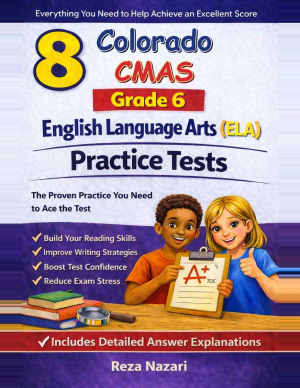
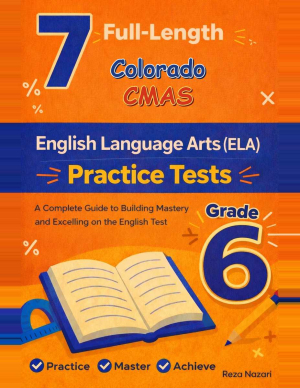
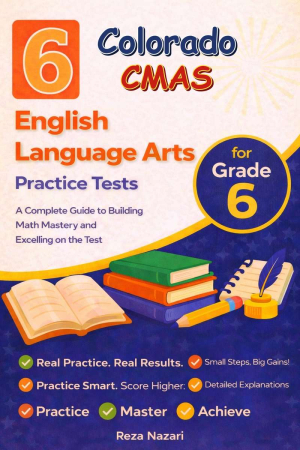
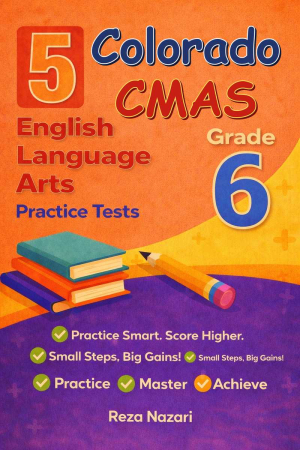
Build a Strong Colorado Grade 6 CMAS English Practice Library
Use these Colorado Grade 6 resources for reading comprehension, language, writing, and full-length practice where available. Click any cover to open the resource page.
A USEFUL NEXT STEP
Colorado Grade 6 English: study questions
Does limited evidence make every part of a proposal false?
No. Identify the part it supports and the claims that need more evidence. A careful revision can preserve a reasonable proposal while narrowing an unsupported generalization.
Where are the complete Colorado Grade 6 requirements?
Colorado’s official English language arts document contains the Grade 6 expectations across its subject strands. These are two selected references for the activity on this page; use the full document for curriculum planning.
Official source ↗Resources from Effortless Math · Editorial standards