LEARN · PRACTICE · EXPLORE
Arizona Grade 6 English
Practice Arizona Grade 6 English vocabulary with a worked multiple-meaning example, context checks, dictionary verification, and current state references.
Focused lessons · Useful practice · Clear next steps
What do Arizona 6th graders learn in ELA?
In 6th grade, Arizona English language arts centers on citing textual evidence, central idea, word choice, and argument writing. Students take the AASA grade 6 ELA test in the spring. This page explains each Arizona grade 6 ELA standard and pairs it with short lessons and a full-length practice test.
Printable Arizona grade 6 ELA books:
Standards source: Arizona Academic Standards, Arizona Department of Education.
Resolve a word’s meaning with context and a reference
An academic word may have several meanings, and the first dictionary entry may not fit a passage. Grade 6 readers need to form a reasonable meaning from context, test it, and verify it. This example follows the word model across two uses instead of treating a vocabulary answer as a guess.
Curriculum source: Arizona’s Grade 6 ELA document, updated January 29, 2025, from the Arizona Department of Education standards directory.
Arizona Grade 6 references for this activity
Arizona’s official Grade 6 document gives the complete requirements. The references below are selected for this activity, rather than a complete course checklist.
| Arizona code | Activity focus | Official requirement |
|---|---|---|
| 6.RI.4 | Determine a technical meaning within a passage | Read the state document, page 6 |
| 6.L.4 | Use flexible strategies and verify an unfamiliar meaning | Read the state document, page 11 |
The state document marks Essential Standards for assessment emphasis. Those marks do not replace the rest of the grade’s curriculum. Use the complete document and the school’s pacing plan when organizing a full course.
A worked Grade 6 reading and writing activity
This original classroom example is separate from official assessment questions.
The design team built a cardboard model of the proposed reading room. Tiny tables showed where people could sit, and a narrow strip marked the entrance. The model helped the team discuss the arrangement before moving real furniture. In a later meeting, the coordinator called another school’s reading program a model for the team to follow. That second model was an example of an approach, not a miniature room.
Try the activity
Give a meaning for model in each part of the passage. Identify the clues, substitute your meanings into the sentences, and use a school dictionary to confirm the two senses.
Follow the reasoning
The first model is a small representation of a proposed room. Cardboard, tiny tables, and planning before moving furniture support that meaning. The second is an example of an approach to follow, supported by the reference to another school’s program. Substituting ‘small representation’ works in the first sentence but does not describe the program well. A dictionary can confirm that one word has both senses; the context determines which sense belongs in each sentence.
Notice what needs more practice
‘Model means a person posing’ chooses a possible meaning without checking this passage. ‘Both are cardboard’ carries information from the first use into the second without support. Ask the student to draw one box around each local group of clues, then explain each meaning separately. If the explanation is sound but the dictionary entry seems unfamiliar, help the student read the examples in the entry.
Use the next session to build independence
- Read enough of the passage to find the local clues, rather than isolating the word.
- Propose a meaning and explain the phrase that supports it.
- Substitute the meaning into the sentence and check whether the whole passage still makes sense.
- Confirm the sense with a dictionary, then write a new sentence using it accurately.
Keep a vocabulary record with four columns: word, local clue, provisional meaning, and verified meaning. When a word has a recognizable affix or root, use that clue too, but test the result against the passage before settling on a definition.
For more general reading and writing resources, visit the Grade 6 English Online Center.
Arizona Grade 6 English: useful planning questions
What if the first dictionary meaning does not fit?
Read the other senses and their examples. Choose the sense supported by the passage, then substitute it into the sentence to check the interpretation.
Where are the complete state requirements?
Arizona’s official Grade 6 document gives the complete requirements. The references below are selected for this activity, rather than a complete course checklist. The school’s sequence also includes reading, writing, speaking, listening, and language work beyond this example.
State sources checked October 5, 2026. AASA covers English language arts in Grades 3–8. Read official AASA guidance.
Grade 6 English in other states
When moving between school systems, compare the official curriculum and the school’s learning sequence. Use the national Online Center’s map to find another state’s resources.
Recommended Arizona Grade 6 resources
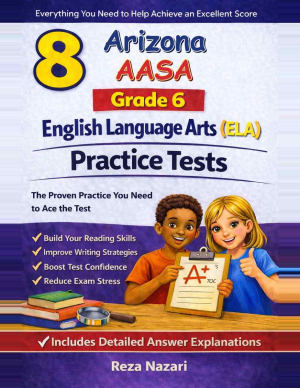
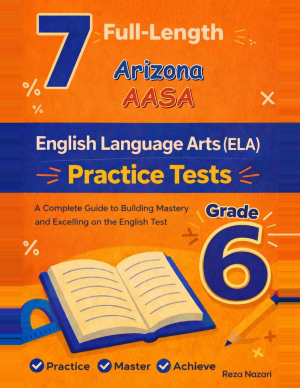
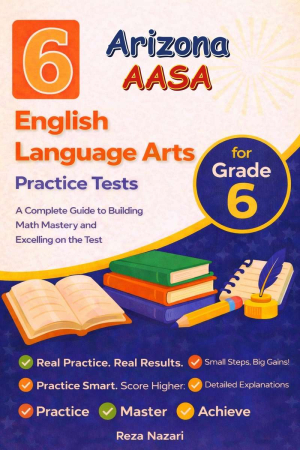
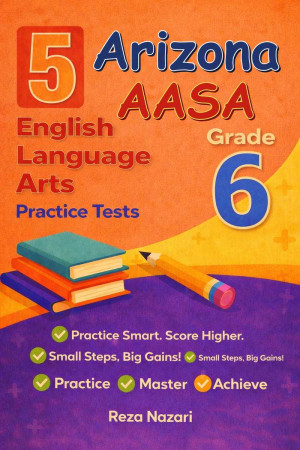
Build a Strong Arizona Grade 6 AASA English Practice Library
Use these Arizona Grade 6 resources for reading comprehension, language, writing, and full-length practice where available. Click any cover to open the resource page.
A USEFUL NEXT STEP
Arizona Grade 6 English: study questions
What if the first dictionary meaning does not fit?
Read the other senses and their examples. Choose the sense supported by the passage, then substitute it into the sentence to check the interpretation.
Where are the complete Arizona Grade 6 requirements?
Arizona’s official Grade 6 document gives the complete requirements. The references below are selected for this activity, rather than a complete course checklist.
Official source ↗Resources from Effortless Math · Editorial standards