The Math Behind Poker: Probability, Odds & EV
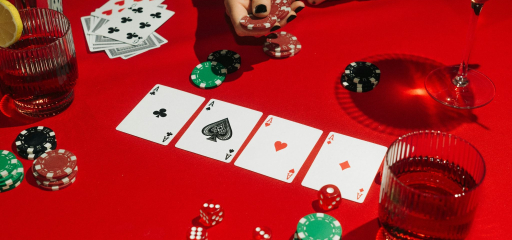
Poker looks unpredictable because every hand begins with hidden information. Yet beneath the cards, bets, and bluffs sits a mathematical structure. Poker probability helps players estimate how often a hand improves, poker odds show what price a decision offers, and expected value measures whether that decision should make or lose money over repeated situations.
The important distinction is between results and decisions. A correct call can lose. A poor call can win. Poker math focuses on which choice produces the better average outcome over time.
Poker probability starts with combinations
A standard 52-card deck produces 2,598,960 possible five-card combinations. Those combinations explain why some hands occur far less frequently than others. A royal flush, for example, has only four possible five-card combinations, while one pair appears in more than one million.
In Texas Hold’em, players rarely calculate complete poker hand probability tables during a hand. More often, they count outs in poker: unseen cards likely to improve the current hand.
Suppose a player has four cards to a flush after the turn. Nine cards of that suit remain among 46 unseen cards, giving roughly a 19.6% chance of completing the flush on the river.
That percentage becomes useful only when compared with the cost of continuing.
Pot odds turn a bet into a percentage
Pot odds compare the amount required to call with the total pot available after calling.
Imagine there is $100 in the pot and an opponent bets $50. Calling costs $50, and the final pot after the call would be $200. The calculation is:
$50 ÷ $200 = 25%
The player therefore needs roughly 25% equity for a break-even call, before considering future betting. Upswing Poker describes this comparison between call cost and final pot size as the mathematical basis for deciding which calls can be profitable.
Poker apps make these decisions happen rapidly. Players comparing software at https://worldpokerdeals.com/blog/mobile-poker-apps can see differences in mobile interfaces, table limits, game availability, connection quality, and multitabling. Those practical factors matter because playing several hands quickly increases the frequency with which players must estimate equity and pot odds under time pressure.
Expected value tells you what a decision is worth
Expected value in poker, usually shortened to EV, estimates the average financial result of a decision if the same situation occurred many times.
The basic structure is:
EV = probability of winning × amount won − probability of losing × amount lost
If a play produces positive EV, it should make money over a large enough sample. Negative EV means the opposite.
This explains why winning an individual hand does not prove that the decision was correct. A player can call while far behind, hit a lucky river card, and still have made a mathematically poor decision. Conversely, a player can make a profitable call and lose the hand because the unfavorable outcome occurred that time.
Upswing Poker defines EV as the average result of a play repeated hundreds or thousands of times.
Equity connects probability with decisions
Equity is the percentage of the pot a hand would expect to win based on its chance of winning against an opponent’s hand or range.
Against one exact hand, equity can be calculated directly. Real poker decisions are harder because opponents do not reveal their cards. Players therefore estimate ranges: groups of hands an opponent could reasonably hold after taking a particular line.
A flush draw might have strong equity against one pair but much less against a higher flush draw or a completed set. The quality of an EV calculation therefore depends heavily on how realistic the estimated range is.
The mathematical side of poker is also documented in academic work on game theory and imperfect-information games. Research from institutions such as the University of Alberta Computer Poker Research Group has used poker to study decision-making when players lack complete information.
Implied odds look beyond the current pot
Implied odds extend pot odds by estimating money that might be won on later streets.
A draw can have insufficient immediate pot odds but still justify a call if completing the hand is likely to produce another large bet from the opponent. Dinogame describes implied odds as an adjustment that accounts for potential future winnings rather than only the chips already in the pot.
The difficulty is that future bets are estimates rather than known values. If an opponent is unlikely to pay after an obvious draw completes, implied odds may be much smaller than they initially appear.
Variance explains why good players still lose
Mathematical edges do not appear evenly from hand to hand. Poker contains substantial variance, meaning short-term results can move far away from expected value.
A player who repeatedly makes +EV decisions can still have a losing session or month. Likewise, someone making weak decisions can run well temporarily.
This is why serious analysis focuses on decision quality over large samples rather than isolated wins. Poker probability, pot odds, equity, implied odds, and EV are not methods for predicting the next card. They are tools for deciding whether the price of taking a risk is mathematically justified.
The core idea is simple: poker math does not remove uncertainty. It gives players a disciplined way to make decisions inside it.

Related to This Article
More math articles
- Top 10 Tips to Overcome ATI TEAS 7 Math Anxiety
- Recruiting candidates
- Top 10 GED Math Prep Books to buy! (2026 Picks)
- Repeating Decimals
- Solving Two-Step Equations Worksheet with Answers
- How to Master All the Properties of Definite Integrals
- Chapter 34: American Political Culture
- Political speech
- Full-Length 6th Grade PSSA Math Practice Test
- How to Use Order of Operations? (+FREE Worksheet!)






















What people say about "The Math Behind Poker: Probability, Odds & EV - Effortless Math"?
No one replied yet.