LEARN · PRACTICE · EXPLORE
Connecticut Grade 8 English
Analyze an original school quiet-space proposal, evaluate its response to an opposing view, and write a qualified argument using Connecticut Grade 8 references.
Focused lessons · Useful practice · Clear next steps
What do Connecticut 8th graders learn in ELA?
In 8th grade, Connecticut English language arts centers on evaluating arguments, analyzing tone and word choice, and research-based writing. Students take the Smarter Balanced grade 8 ELA test in the spring. This page explains each Connecticut grade 8 ELA standard and pairs it with short lessons, printable worksheets and a full-length practice test.
Printable Connecticut grade 8 ELA books:
- 5 Connecticut Smarter Balanced Grade 8 English Language Arts (ELA) Practice Tests
- 6 Connecticut Smarter Balanced Grade 8 English Language Arts (ELA) Practice Tests
- 7 Connecticut Smarter Balanced Grade 8 English Language Arts (ELA) Practice Tests
- 8 Connecticut Smarter Balanced Grade 8 English Language Arts (ELA) Practice Tests
- Connecticut Grade 8 ELA Preparation Bundle
Standards source: Connecticut ELA resources, Connecticut State Department of Education.
Judge whether a proposal answers its strongest concern
Acknowledging a concern is not the same as answering it. Students can strengthen an argument by tracing the author’s position, the competing view, and the reasoning offered in response. This invented proposal provides a concrete case for that analysis.
Curriculum source: Common Core State Standards for English Language Arts & Literacy, adopted as Connecticut Core Standards in 2010, from the Connecticut State Department of Education ELA resource directory.
Connecticut Grade 8 references for this activity
Connecticut uses the Core Standards for English language arts, adopted in 2010. The full ELA document contains the Grade 8 expectations across its subject strands. These are two selected references for the activity on this page; use the full document for curriculum planning.
| Core Standards reference | Activity focus | Official requirement |
|---|---|---|
| RI.8.6 | Author position and response to conflicting viewpoints | Read the primary standards document, page 39 |
| W.8.1a | Distinguish a claim from alternative or opposing claims | Read the primary standards document, page 42 |
These are selected CCSS references used in Connecticut’s Core Standards. Activity labels describe a teaching focus rather than reproduce the full requirements. Districts develop their own curriculum sequence; use the complete document and the school’s plan for wider coverage.
A worked Grade 8 reading and writing activity
This original classroom example is separate from official assessment questions.
We should reserve one lunch table as a quiet reading space for a two-week trial. Some students worry that the table would reduce seats available for talking with friends. During the trial, the table would return to ordinary use whenever the cafeteria becomes crowded. This condition could protect seating access while letting the school observe demand for quiet space. The trial would not tell us whether a permanent space works throughout the year.
Try the activity
Identify the author’s position and the opposing concern. Explain which proposed condition responds to that concern and what uncertainty remains. Write a brief argument supporting, revising, or questioning the trial. Distinguish your claim from the alternative view and address the seating issue directly.
Follow the reasoning
The author supports a limited quiet-table trial. The opposing concern is loss of social seating, not opposition to reading itself. Returning the table to ordinary use when crowded responds to access, but “crowded” still needs a workable definition. A qualified response could support the trial if staff and students agree on when the table reopens and how demand will be observed. It can acknowledge that the table may still affect where friends sit even when total seats are sufficient. That concern is related to seating access but is not fully settled by counting empty chairs.
Notice what needs more practice
A response claiming critics dislike books misrepresents the stated concern. Reread the sentence about seats and friends. A response saying the condition proves no disruption is possible also overstates the proposal: it describes a planned safeguard, not a measured result. Rejecting the trial solely because a yearlong conclusion is unavailable misses the author’s limited aim. Evaluate whether two weeks can answer the questions assigned to the trial, while separating those questions from a permanent policy decision.
Grade 8 English worksheets
Choose printable practice that matches the skill being taught. Check the task, reading difficulty, and directions before assigning it; the collection is independently published.
Use the next session to build independence
- State the proposal and competing concern in fair, specific language.
- Locate the author’s response and explain how it addresses the concern.
- Identify a condition or measurement that needs clarification.
- Draft your claim, acknowledge an alternative, and connect each reason to the available information.
Revise the proposal to define the crowded-room condition and explain how observations would be collected. For example, students could propose counting requests for the quiet space and recording occasions when ordinary seating takes priority; those are planned measures, not existing findings. Ask a partner who favors a different conclusion to check whether the response represents their concern fairly. Then revise the argument without pretending that an unresolved trade-off has disappeared. This text is classroom fiction, not a current Connecticut school policy.
For more general reading and writing resources, visit the Grade 8 English Online Center.
Connecticut Grade 8 English: useful planning questions
Is naming an opposing view enough to address it?
No. Explain the view accurately, then show how your reasoning or proposed conditions respond to it. Identify concerns that remain unresolved instead of treating acknowledgment as proof that they are settled.
Where are the complete state requirements?
Connecticut uses the Core Standards for English language arts, adopted in 2010. The full ELA document contains the Grade 8 expectations across its subject strands. These are two selected references for the activity on this page; use the full document for curriculum planning. The school’s sequence also includes reading, writing, speaking, listening, and language work beyond this example.
State sources checked October 5, 2026. Grade 8 is within the Connecticut Smarter Balanced English language arts testing range. This original lesson is independent practice. Read the official assessment overview and use the school’s guidance for preparation.
Grade 8 English in other states
When moving between school systems, compare the official curriculum and the school’s learning sequence. Use the national Online Center’s map to find another state’s resources.
Recommended Connecticut Grade 8 resources
Build a Strong Connecticut Grade 8 SBAC English Practice Library
Use these Connecticut Grade 8 resources for reading comprehension, language, writing, and full-length practice where available. Click any cover to open the resource page.
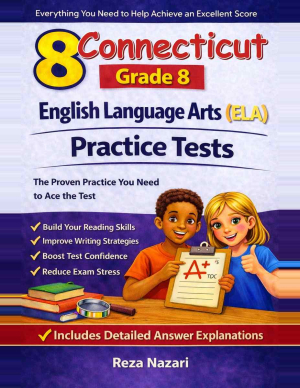 8 Connecticut Smarter Balanced Grade 8 English Language Arts (ELA) Practice Tests
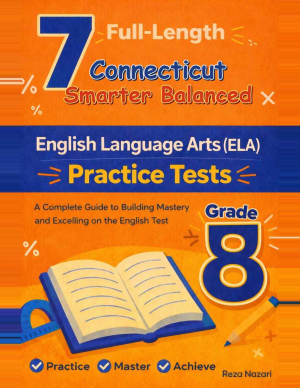 7 Connecticut Smarter Balanced Grade 8 English Language Arts (ELA) Practice Tests
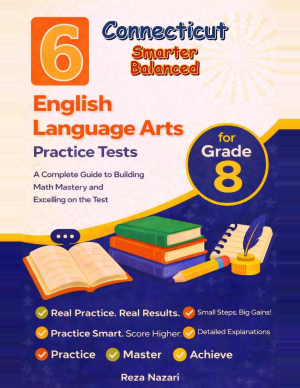 6 Connecticut Smarter Balanced Grade 8 English Language Arts (ELA) Practice Tests
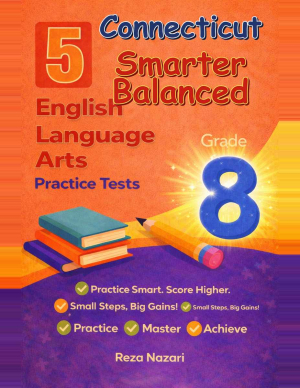 5 Connecticut Smarter Balanced Grade 8 English Language Arts (ELA) Practice Tests
A USEFUL NEXT STEP
Connecticut Grade 8 English: study questions
Is naming an opposing view enough to address it?
No. Explain the view accurately, then show how your reasoning or proposed conditions respond to it. Identify concerns that remain unresolved instead of treating acknowledgment as proof that they are settled.
Where are the complete Connecticut Grade 8 requirements?
Connecticut uses the Core Standards for English language arts, adopted in 2010. The full ELA document contains the Grade 8 expectations across its subject strands. These are two selected references for the activity on this page; use the full document for curriculum planning.
Official source ↗Resources from Effortless Math · Editorial standards