LEARN · PRACTICE · EXPLORE
Wisconsin Grade 8 English
Practice comparing the structure of two texts with an original Grade 8 reading example, worked explanation, printable resources, and selected Wisconsin English references.
Focused lessons · Useful practice · Clear next steps
What do Wisconsin 8th graders learn in ELA?
In 8th grade, Wisconsin English language arts centers on evaluating arguments, analyzing tone and word choice, and research-based writing. Students take the Wisconsin Forward Exam grade 8 ELA test in the spring. This page explains each Wisconsin grade 8 ELA standard and pairs it with short lessons, printable worksheets and a full-length practice test.
Printable Wisconsin grade 8 ELA books:
- 5 Wisconsin Forward Exam Grade 8 English Language Arts (ELA) Practice Tests
- 6 Wisconsin Forward Exam Grade 8 English Language Arts (ELA) Practice Tests
- 7 Wisconsin Forward Exam Grade 8 English Language Arts (ELA) Practice Tests
- 8 Wisconsin Forward Exam Grade 8 English Language Arts (ELA) Practice Tests
- Wisconsin Grade 8 ELA Preparation Bundle
Standards source: Wisconsin English policy and resources.
Comparing the Structure of Two Texts
Use this original Grade 8 example to practice comparing the structure of two texts. Read the passage, explain the evidence, and test the explanation with a changed detail. The short example is a starting point for teacher-selected reading, rather than a complete measure of grade-level proficiency.
Curriculum reference: Wisconsin Standards for English Language Arts, 2020, updated September 2025, from the Wisconsin English language arts standards page.
Wisconsin Grade 8 references for this activity
Wisconsin’s state English standards were adopted May 27, 2020. The current DPI-linked edition was updated in September 2025 with considerations for students who use or are learning to use braille. State standards serve as a model; local school boards determine the standards and curriculum used in their communities. The selected Grade 8 reference here identifies the focus of an original reading activity. Read the complete document and ask the teacher how the school sequences reading, writing, language, speaking, listening, and foundational skills. A short example is not a complete curriculum or certification of every independent resource.
| Selected Wisconsin reading reference | Activity focus | State-linked standards document |
|---|---|---|
| R.8.5 | Compare how differing text structures contribute to overall meaning | Read the state-linked document (PDF page 39) |
These selected reference labels identify an activity focus, with the correct grade and PDF page linked separately. Read the complete standards selected by the school and its learning sequence, including reading, writing, language, speaking, and listening. This short original example does not fulfill the entire curriculum or establish a student’s grade-level proficiency.
One change, two ways to organize it
This original classroom example is separate from official assessment questions.
Text A
At Monday’s meeting, the class listed a problem: water bottles crowded the single refill tap after lunch. On Tuesday, the class marked two waiting lanes. On Wednesday, students tried the lanes and recorded their observations.
Text B
The refill tap had become a bottleneck after lunch. To make the waiting order clearer, the class tried two marked lanes. The trial would be reviewed using observations of waiting time and confusion about turns.
Try the activity
Compare how the texts organize the same classroom change. Explain how each structure affects the reader’s understanding, and identify an outcome neither text establishes.
Follow the reasoning
Text A organizes the events chronologically. Its day labels let the reader trace a sequence from identifying the problem to preparing and trying the lanes. Text B organizes the information as a problem, a proposed response, and a plan for evaluating it. That structure foregrounds the purpose of the change and the criteria for reviewing it rather than the dates. The texts therefore differ in emphasis while describing compatible parts of one classroom trial. Neither reports the observation results, so neither establishes that the lanes reduced waiting time or confusion. Comparing structure should explain what the organization does for meaning, rather than simply naming “sequence” and “problem/solution.”
Notice what needs more practice
These invented short texts allow a focused structural comparison. A longer reading task may include several structures, more developed themes, or conflicting evidence. A stated purpose is not a measured result, and a chronological sequence does not itself prove effectiveness.
Grade 8 English worksheets
Choose printable practice that matches the skill being taught. Check the task, reading difficulty, and directions before assigning it; the collection is independently published.
Use the next session to build independence
- Read the original passage and identify the question it can answer.
- Point to the words or features supporting the explanation.
- Try the changed detail, then choose a longer classroom text for the same reading focus.
Add the same observation result to both texts: the waiting time was unchanged, but fewer students asked whose turn it was. Place it where it best fits each structure and explain how it qualifies the proposed benefit.
For more general reading and writing resources, visit the Grade 8 English Online Center.
Wisconsin Grade 8 English: useful planning questions
Can two differently organized texts describe compatible events?
Yes. The chronological text foregrounds the sequence, while the problem-and-response text foregrounds purpose and review criteria. Explain those effects and check whether either text supplies a measured outcome.
Which standards does the school use?
Wisconsin’s state English standards were adopted May 27, 2020. The current DPI-linked edition was updated in September 2025 with considerations for students who use or are learning to use braille. State standards serve as a model; local school boards determine the standards and curriculum used in their communities. The selected Grade 8 reference here identifies the focus of an original reading activity. Read the complete document and ask the teacher how the school sequences reading, writing, language, speaking, listening, and foundational skills. A short example is not a complete curriculum or certification of every independent resource. The school’s sequence also includes reading, writing, speaking, listening, and language work beyond this example.
Sources checked October 6, 2026. DPI’s Forward Exam overview lists English language arts and mathematics in Grades 3–8, science in Grades 4 and 8, and social studies in Grades 4, 8, and 10. Grade 8 is included in that listed English range; follow current school directions and accommodations. This identifies listed grade coverage, not a test duration, item count, or guaranteed result. Read the Wisconsin English assessment overview, English standards guidance, and content standards and policies. Independently published practice has its own directions and scoring. Its result does not predict a state performance level, and this original activity is not an official assessment item.
Grade 8 English in other states
When moving between school systems, compare the official curriculum and the school’s learning sequence. Use the national Online Center’s map to find another state’s resources.
Recommended Wisconsin Grade 8 resources
Choose Wisconsin Grade 8 English practice resources
These independently published resources have their own coverage and editions. Check the contents alongside Wisconsin’s current English standards before choosing assessment preparation.
Use these Wisconsin Grade 8 resources for reading comprehension, language, writing, and full-length practice where available. Click any cover to open the resource page.
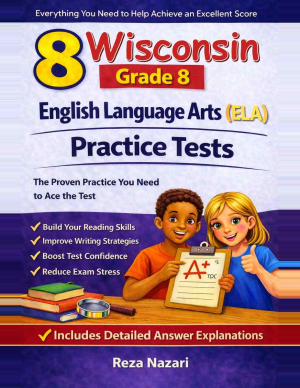 8 Wisconsin Forward Exam Grade 8 English Language Arts (ELA) Practice Tests
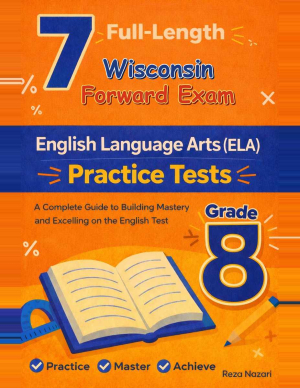 7 Wisconsin Forward Exam Grade 8 English Language Arts (ELA) Practice Tests
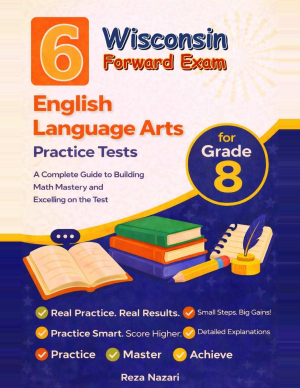 6 Wisconsin Forward Exam Grade 8 English Language Arts (ELA) Practice Tests
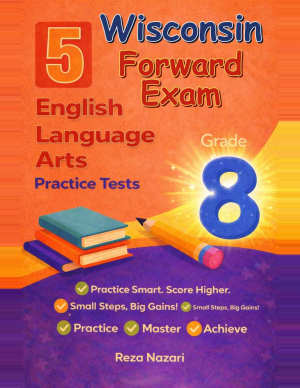 5 Wisconsin Forward Exam Grade 8 English Language Arts (ELA) Practice Tests
More Grade 8 resources
A USEFUL NEXT STEP
Wisconsin Grade 8 English: study questions
Can two differently organized texts describe compatible events?
Yes. The chronological text foregrounds the sequence, while the problem-and-response text foregrounds purpose and review criteria. Explain those effects and check whether either text supplies a measured outcome.
Where are the complete Wisconsin Grade 8 requirements?
Wisconsin’s state English standards were adopted May 27, 2020. The current DPI-linked edition was updated in September 2025 with considerations for students who use or are learning to use braille. State standards serve as a model; local school boards determine the standards and curriculum used in their communities. The selected Grade 8 reference here identifies the focus of an original reading activity. Read the complete document and ask the teacher how the school sequences reading, writing, language, speaking, listening, and foundational skills. A short example is not a complete curriculum or certification of every independent resource.
Official source ↗Resources from Effortless Math · Editorial standards