LEARN · PRACTICE · EXPLORE
Idaho Grade 8 English
Read an original invitation scene, trace a difference in reader and character knowledge, and explain dramatic irony using an Idaho Grade 8 literature reference.
Focused lessons · Useful practice · Clear next steps
What do Idaho 8th graders learn in ELA?
In 8th grade, Idaho English language arts centers on evaluating arguments, analyzing tone and word choice, and research-based writing. Students take the ISAT grade 8 ELA test in the spring. This page explains each Idaho grade 8 ELA standard and pairs it with short lessons, printable worksheets and a full-length practice test.
Printable Idaho grade 8 ELA books:
Standards source: Idaho English Language Arts, Idaho Department of Education.
Compare what the reader knows with what a character believes
Dramatic irony can depend on a reader learning something a character has not learned. This activity traces that difference through a short fictional scene. The explanation should connect the knowledge gap with its effect, then identify the point where the gap closes rather than label every surprise dramatic irony.
Curriculum source: Idaho Content Standards for English Language Arts/Literacy, January 2022, from the Idaho Department of Education standards directory.
Idaho Grade 8 references for this activity
Idaho’s current English document includes Grade 8 expectations across reading, writing, language, speaking, and listening. The expectations selected here support this activity; use the whole document and the school’s sequence for wider coverage.
| Grade-level expectation | Activity focus | Official requirement |
|---|---|---|
| 8.RC.L.5d | Explain how dramatic irony creates suspense or humor | Read the state document (PDF page 47) |
These are selected grade-level expectations from Idaho’s current English standards. Activity labels describe a teaching focus rather than reproduce complete requirements. Read the linked grade-level document, including the reading, writing, language, speaking, and listening sections, alongside the school’s curriculum sequence.
A worked Grade 8 reading and writing activity
This original classroom example is separate from official assessment questions.
While Theo was upstairs, his sister moved the concert invitation from the hall table into his blue notebook. The reader sees her slide it between the first two pages.
Theo returned and stared at the empty table. "I must have left the invitation at school," he said. He put the blue notebook in his bag and started making a list of classrooms to search. At the front door, he opened the notebook to check yesterday’s homework. The invitation fell into his hand.
| Moment | Reader knows | Theo believes or learns |
|---|---|---|
| Before the search plan | Invitation is in the notebook | It may be at school |
| Packing the bag | The solution travels with Theo | Classrooms need searching |
| Notebook opens | Invitation falls out | He sees its location |
Try the activity
Identify what the reader knows before Theo makes his search plan. Explain how his mistaken belief affects the reader’s response to that plan. Locate the event that ends this particular knowledge gap, and explain why a reader who did not see the first paragraph would experience the scene differently.
Follow the reasoning
The reader knows the invitation is in the blue notebook, but Theo initially believes it is at school. His plan to search classrooms is therefore unnecessary in a way the reader can recognize before he can. Packing the notebook brings the solution along with him while he continues worrying about the wrong location. That contrast can create humor through the wasted plan, or anticipation as the reader waits for discovery. Opening the notebook closes this location-based knowledge gap when Theo sees the invitation.
Notice what needs more practice
The scene does not establish why the sister moved the invitation or whether she intended a prank. Do not invent her motive to explain the irony. The reader also does not know every character’s thoughts simply because one action was shown outside Theo’s presence. If the opening paragraph were removed, the falling invitation could surprise the reader and Theo together; the earlier knowledge contrast would be absent. Surprise and dramatic irony can produce different effects even when the final event is the same.
Grade 8 English worksheets
Choose printable practice that matches the skill being taught. Check the task, reading difficulty, and directions before assigning it; the collection is independently published.
Use the next session to build independence
- Locate the detail the reader learns before the character.
- Compare that detail with the character’s stated belief and action.
- Explain the effect of the gap and locate its ending.
Rewrite the scene so Theo tells the reader only what he experiences. Preserve the empty table and the discovery in the notebook, then compare how the reader’s expectation changes. Write a second version that keeps the original opening but delays the discovery until the concert begins, and explain how timing changes the effect. Use specific passages from a longer classroom story or play to extend the comparison. This short scene isolates one knowledge gap; a complete analysis considers how point of view develops across the work.
For more general reading and writing resources, visit the Grade 8 English Online Center.
Idaho Grade 8 English: useful planning questions
Would the invitation’s discovery always be dramatic irony?
No. In this version the reader learns its location before Theo, creating a knowledge gap. If both learned the location only when it fell out, that earlier gap would be absent and the discovery could surprise both.
Where are the complete state requirements?
Idaho’s current English document includes Grade 8 expectations across reading, writing, language, speaking, and listening. The expectations selected here support this activity; use the whole document and the school’s sequence for wider coverage. The school’s sequence also includes reading, writing, speaking, listening, and language work beyond this example.
Official sources checked October 6, 2026. Grade 8 is within the ISAT English language arts testing range. This original lesson is independent practice. Read the Idaho assessment overview and use the school’s guidance for preparation. Idaho’s 2024 essential-standards guidance helps schools prioritize teaching; it does not revise or remove the adopted standards and is not a mandate. The state assessment overview explains ISAT and alternate-assessment pathways; follow the school’s current assignment and guidance. This site’s practice and books are independently published. Check their editions and contents against current standards and assessment guidance.
Grade 8 English in other states
When moving between school systems, compare the official curriculum and the school’s learning sequence. Use the national Online Center’s map to find another state’s resources.
Recommended Idaho Grade 8 resources
Build a Strong Idaho Grade 8 ISAT English Practice Library
These independently published resources have their own coverage and editions. Check the contents alongside Idaho’s current English standards before choosing assessment preparation.
Use these Idaho Grade 8 resources for reading comprehension, language, writing, and full-length practice where available. Click any cover to open the resource page.
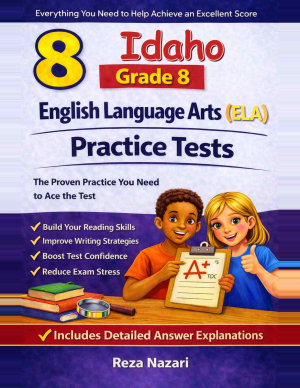
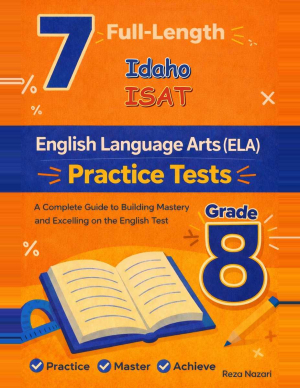
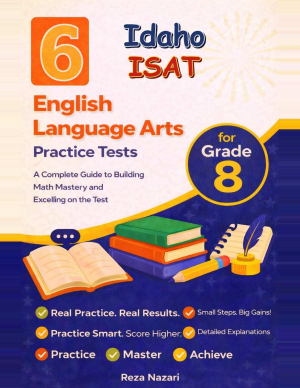
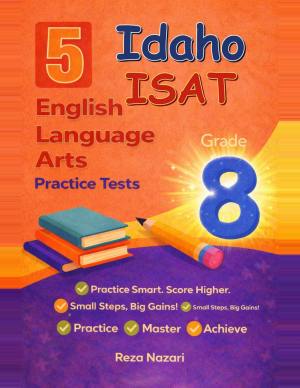
More Grade 8 resources
A USEFUL NEXT STEP
Idaho Grade 8 English: study questions
Would the invitation’s discovery always be dramatic irony?
No. In this version the reader learns its location before Theo, creating a knowledge gap. If both learned the location only when it fell out, that earlier gap would be absent and the discovery could surprise both.
Where are the complete Idaho Grade 8 requirements?
Idaho’s current English document includes Grade 8 expectations across reading, writing, language, speaking, and listening. The expectations selected here support this activity; use the whole document and the school’s sequence for wider coverage.
Official source ↗Resources from Effortless Math · Editorial standards