LEARN · PRACTICE · EXPLORE
Tennessee Grade 8 English
Locate disagreement about facts and interpretations in two accounts. Read a worked Grade 8 example and find the selected Tennessee reading reference.
Focused lessons · Useful practice · Clear next steps
What do Tennessee 8th graders learn in ELA?
In 8th grade, Tennessee English language arts centers on evaluating arguments, analyzing tone and word choice, and research-based writing. Students take the TCAP grade 8 ELA test in the spring. This page explains each Tennessee grade 8 ELA standard and pairs it with short lessons, printable worksheets and a full-length practice test.
Printable Tennessee grade 8 ELA books:
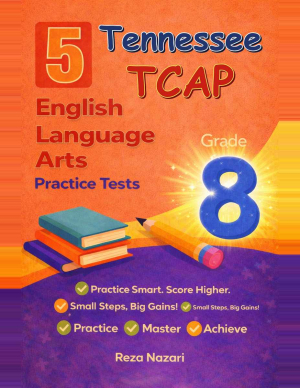
- 5 Tennessee TCAP Grade 8 English Language Arts (ELA) Practice Tests
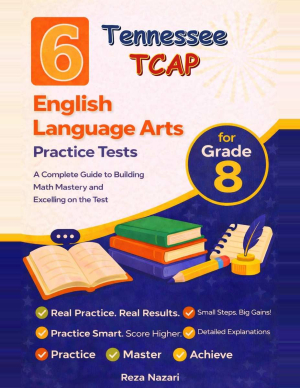
- 6 Tennessee TCAP Grade 8 English Language Arts (ELA) Practice Tests
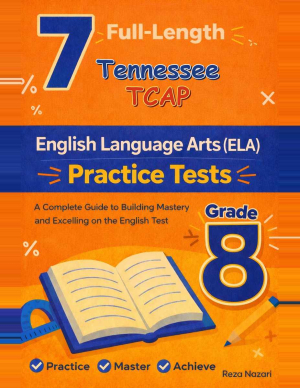
- 7 Tennessee TCAP Grade 8 English Language Arts (ELA) Practice Tests
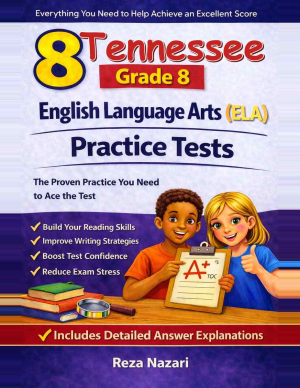
- 8 Tennessee TCAP Grade 8 English Language Arts (ELA) Practice Tests
- Tennessee Grade 8 ELA Preparation Bundle
Standards source: Tennessee adopted content standards.
Distinguish Conflicting Facts from Different Judgments
Locate disagreement about facts and interpretations in two accounts. Start with the short original text below, discuss the reasoning, and apply the same reading skill to a fuller classroom text.
Curriculum reference: Tennessee English Language Arts Standards, current state-linked 2019 edition, from the Tennessee English language arts standards page.
Tennessee Grade 8 references for this activity
The Tennessee State Board identifies the English language arts standards approved in February 2019 as the current edition through the transition to 2029–30. The department lists 2029–30 for implementation and assessment of a future revision. This page uses the currently linked 2019 document rather than treating a review or proposed revision as current. The activity addresses one selected reading reference; the complete curriculum also includes foundational skills, writing, language, speaking, and listening.
| Selected Tennessee reading reference | Activity focus | State-linked standards document |
|---|---|---|
| 8.RI.IKI.9 | Locate disagreement about facts and interpretations in two accounts | Read the state-linked document (PDF page 39) |
These selected reference labels identify an activity focus, with the correct grade and PDF page linked separately. Read the complete standards selected by the school and its learning sequence, including reading, writing, language, speaking, and listening. This short original example does not fulfill the entire curriculum or establish a student’s grade-level proficiency.
Two reports about the same borrowing week
This original classroom example is separate from official assessment questions.
Account A: “For the club’s September 14–18 borrowing week, eighteen books were due by Friday at 3 p.m. Twelve were returned by that deadline. In my view, the reminder plan worked well enough to keep.”
Account B: “For the same September 14–18 week, the same eighteen books were due by Friday at 3 p.m. Fourteen were returned by that deadline. In my view, the reminder plan still fell short and needs revision.”
Both accounts are invented. Neither supplies the borrowing log or explains the criterion for judging the plan.
Try the activity
Find the factual conflict and the disagreement in interpretation. Explain why the writers’ judgments could still differ even if a checked log resolved the count. What evidence would help with each issue?
Follow the reasoning
The accounts conflict over the number returned by the same deadline: twelve versus fourteen, with the same eighteen due and the same week specified. Those are competing factual claims about one defined event; consulting a complete, reliable log could help resolve them. “Worked well enough” and “fell short” express different judgments about the plan. Even if the writers agreed on the count, they could disagree over the acceptable return rate or other criteria. Evaluating the plan would also require a stated goal and relevant comparison information; a single count does not by itself establish the effect of reminders. Distinguish the factual conflict from the different evaluations instead of treating all disagreement as an arithmetic error.
Notice what needs more practice
Do not choose a count merely because it is larger or assume that one writer deliberately lied. The supplied accounts omit the log and the evaluation criteria. Also do not convert the report into a causal claim that reminders produced the returns: no prior comparison or alternative explanations are given.
Grade 8 English worksheets
Choose printable practice that matches the skill being taught. Check the task, reading difficulty, and directions before assigning it; the collection is independently published.
Use the next session to build independence
- Check that the accounts concern the same defined event.
- Mark the incompatible factual claims separately from the judgments.
- Identify evidence needed to resolve a count and criteria needed to evaluate a plan.
Compare two teacher-selected accounts of the same topic. Locate the exact point of disagreement, examine the sources’ definitions and evidence, and explain whether the conflict concerns fact, interpretation, or both. State what remains unresolved.
For more general reading and writing resources, visit the Grade 8 English Online Center.
Tennessee Grade 8 English: useful planning questions
Would agreeing on the count guarantee agreement on the conclusion?
No. Writers can agree on facts while applying different criteria or interpreting their significance differently. Explain which part of the disagreement a checked source would resolve.
Which standards does the school use?
The Tennessee State Board identifies the English language arts standards approved in February 2019 as the current edition through the transition to 2029–30. The department lists 2029–30 for implementation and assessment of a future revision. This page uses the currently linked 2019 document rather than treating a review or proposed revision as current. The activity addresses one selected reading reference; the complete curriculum also includes foundational skills, writing, language, speaking, and listening. The school’s sequence also includes reading, writing, speaking, listening, and language work beyond this example.
Sources checked October 6, 2026. The department’s English assessment overview lists Grades 3–8, including Grade 8, as well as high-school end-of-course assessments. Follow current school assessment and accommodation directions. This original reading activity is not an official assessment item. Read the Tennessee English assessment overview and English standards guidance. Independently published practice has its own directions and scoring. Its result does not predict a state performance level, and this original activity is not an official assessment item.
Grade 8 English in other states
When moving between school systems, compare the official curriculum and the school’s learning sequence. Use the national Online Center’s map to find another state’s resources.
Recommended Tennessee Grade 8 resources
Build a Strong Tennessee Grade 8 TCAP English Practice Library
These independently published resources have their own coverage and editions. Check the contents alongside Tennessee’s current English standards before choosing assessment preparation.
Use these Tennessee Grade 8 resources for reading comprehension, language, writing, and full-length practice where available. Click any cover to open the resource page.
More Grade 8 resources
A USEFUL NEXT STEP
Tennessee Grade 8 English: study questions
Would agreeing on the count guarantee agreement on the conclusion?
No. Writers can agree on facts while applying different criteria or interpreting their significance differently. Explain which part of the disagreement a checked source would resolve.
Where are the complete Tennessee Grade 8 requirements?
The Tennessee State Board identifies the English language arts standards approved in February 2019 as the current edition through the transition to 2029–30. The department lists 2029–30 for implementation and assessment of a future revision. This page uses the currently linked 2019 document rather than treating a review or proposed revision as current. The activity addresses one selected reading reference; the complete curriculum also includes foundational skills, writing, language, speaking, and listening.
Official source ↗Resources from Effortless Math · Editorial standards