LEARN · PRACTICE · EXPLORE
New Jersey Grade 4 English
Compare two original accounts in New Jersey Grade 4 English, identify shared facts and differing viewpoints, and practice a supported response with clear next steps.
State resources · Focused study · Clear next steps
What do New Jersey 4th graders learn in ELA?
In 4th grade, New Jersey English language arts centers on theme and summary, text structure, figurative language, and multi-paragraph essays. Students take the NJSLA grade 4 ELA test in the spring. This page explains each New Jersey grade 4 ELA standard and pairs it with printable worksheets and a full-length practice test.
Printable New Jersey grade 4 ELA books:
- New Jersey NJSLA ELA Grade 4: 5 Full Practice Tests
- 6 New Jersey NJSLA English Language Arts (ELA) Grade 4: Full Practice Tests
- 7 New Jersey NJSLA English Language Arts (ELA) Grade 4: Full Practice Tests
- 8 New Jersey NJSLA English Language Arts (ELA) Grade 4: Full Practice Tests
- New Jersey Grade 4 ELA Preparation Bundle
Standards source: 2023 New Jersey ELA standards.
Compare what two participants emphasize about the same event
Compare two original accounts in New Jersey Grade 4 English, identify shared facts and differing viewpoints, and practice a supported response with clear next steps. The selected 2023 New Jersey standards identify this activity’s focus; use the complete grade expectations and the school’s teaching sequence for broader planning.
Curriculum reference: 2023 New Jersey Student Learning Standards for English Language Arts, official grade page, from the official New Jersey ELA standards directory.
New Jersey Grade 4 references for this activity
The 2023 New Jersey Student Learning Standards for English Language Arts define grade-specific end-of-year expectations. These selected references point to the activity’s reading focus; the complete grade page also includes language, writing, speaking, and listening. Use the full expectations and the school’s teaching sequence when planning instruction.
| Selected state reference | Activity focus | Official grade page |
|---|---|---|
| RI.CR.4.1 | Use details and examples to support explanation and inference | Read the complete grade expectations |
| RI.PP.4.5 | Compare viewpoints in accounts of the same event | Read the complete grade expectations |
These selected reference labels identify an activity focus, with links to the official grade page. Read the complete New Jersey standards and the school’s learning sequence, including reading, writing, language, speaking, and listening. This short original example does not fulfill the entire curriculum or establish a student’s grade-level proficiency.
Two reports from the book exchange
This original classroom example is separate from official assessment questions.
Report A — Student organizer
Our class book exchange ran from ten until eleven on Friday. We put picture books on the low table and chapter books on the tall table. Three volunteers helped readers find a table. All the donated books had found new readers by closing time. I was proud that our signs and table plan helped the exchange go smoothly.
Report B — Classroom observer
The Friday book exchange lasted one hour, beginning at ten. Readers found the picture-book table easily, but a group waited near the tall table while a volunteer explained where to line up. After another volunteer moved a sign, the line became clearer. Every donated book was taken by the end. I would put the line sign in place before opening next time.
Try the activity
Identify two facts both accounts share. Explain one important difference in what the writers emphasize. Does that difference prove that one report is false? Support your answer with details from each report.
Follow the reasoning
Both accounts place the exchange on Friday, starting at ten and lasting until eleven or one hour. Both also say every donated book had been taken by the end. The organizer emphasizes the success of the signs, tables, and volunteers and expresses pride. The observer describes an initial difficulty near the tall table, the moved sign, and a possible improvement for next time. These emphases can coexist: a successful overall event can include a short confusing line. The organizer does not claim that nobody ever waited or needed an explanation. A careful comparison therefore identifies shared facts and different viewpoints without inventing a contradiction. The first writer participated in organizing; the second presents observations and a recommendation. Those roles help explain their emphasis, but the reader should still cite the language each actually uses.
Notice what needs more practice
Do not convert “go smoothly” into an exact claim that there was no wait anywhere. Also do not label the organizer dishonest merely because the observer supplies a detail the first report omits. Point of view includes what the writer notices and stresses; agreement about the timing does not make every emphasis identical. These classroom reports are invented for reading practice and are not news accounts of an actual New Jersey school event.
Grade 4 English worksheets
Choose printable practice that matches the skill being taught. Check the task, reading difficulty, and directions before assigning it; the collection is independently published.
Use the next session to build independence
- Mark facts that appear in both reports.
- Underline an evaluation or recommendation unique to each writer.
- Write a comparison with one agreement, one difference, and an explanation of whether the accounts conflict.
Ask two readers to write separate reports of the same classroom demonstration. Compare which details they include and what each emphasizes. If they disagree about a factual detail, return to the event record instead of treating every difference as just a matter of opinion.
For more general reading and writing resources, visit the Grade 4 English Online Center.
New Jersey Grade 4 English: useful planning questions
Do different viewpoints always produce contradictory facts?
No. Two writers can agree about an event’s timing and outcome while emphasizing different parts. Check whether one account actually denies a fact stated by the other.
Which standards does the school use?
The 2023 New Jersey Student Learning Standards for English Language Arts define grade-specific end-of-year expectations. These selected references point to the activity’s reading focus; the complete grade page also includes language, writing, speaking, and listening. Use the full expectations and the school’s teaching sequence when planning instruction. The school’s sequence also includes reading, writing, speaking, listening, and language work beyond this example.
Sources checked October 6, 2026. The official 2026–2027 schedule lists NJSLA-A ELA for Grades 3–9, including Grade 4. NJDOE describes ELA and mathematics as adaptive assessments. Confirm the learner’s assigned pathway and school directions. Read the official adaptive assessment overview, 2026–2027 statewide schedule, and 2023 ELA standards directory. Independently published practice has its own timing and scoring and does not predict a state performance level. Use the teacher’s sequence for further reading, writing, speaking, listening, and language work. This original activity is not an official assessment item.
Grade 4 English in other states
When moving between school systems, compare the official curriculum and the school’s learning sequence. Use the national Online Center’s map to find another state’s resources.
Recommended New Jersey Grade 4 resources
Build a Strong New Jersey Grade 4 NJSLA English Practice Library
These independently published resources have their own coverage and editions. Check the contents alongside New Jersey’s current English standards before choosing assessment preparation.
Use these New Jersey Grade 4 resources for reading comprehension, language, writing, and full-length practice where available. Click any cover to open the resource page.
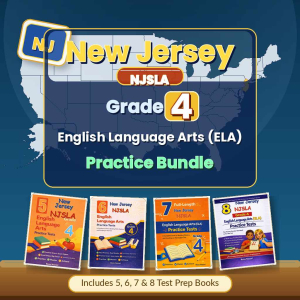 New Jersey Grade 4 ELA Preparation Bundle
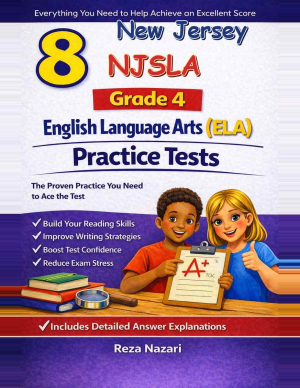 8 New Jersey NJSLA English Language Arts (ELA) Grade 4: Full Practice Tests
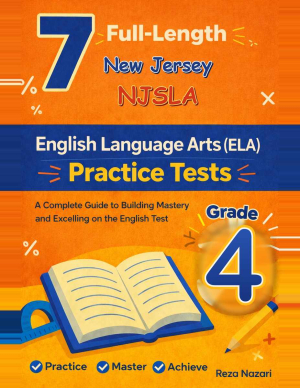 7 New Jersey NJSLA English Language Arts (ELA) Grade 4: Full Practice Tests
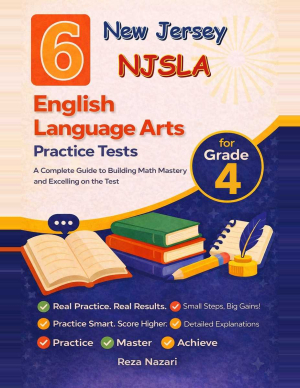 6 New Jersey NJSLA English Language Arts (ELA) Grade 4: Full Practice Tests
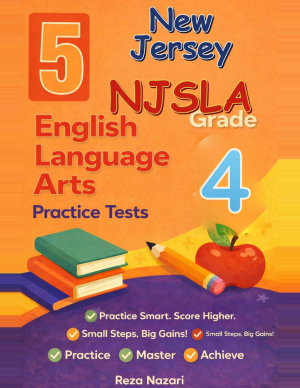 New Jersey NJSLA ELA Grade 4: 5 Full Practice Tests
More Grade 4 resources
A USEFUL NEXT STEP
New Jersey Grade 4 English: study questions
Do different viewpoints always produce contradictory facts?
No. Two writers can agree about an event’s timing and outcome while emphasizing different parts. Check whether one account actually denies a fact stated by the other.
Where are the complete New Jersey Grade 4 requirements?
The 2023 New Jersey Student Learning Standards for English Language Arts define grade-specific end-of-year expectations. These selected references point to the activity’s reading focus; the complete grade page also includes language, writing, speaking, and listening. Use the full expectations and the school’s teaching sequence when planning instruction.
Official source ↗Resources from Effortless Math · Editorial standards