LEARN · PRACTICE · EXPLORE
Iowa Grade 4 English
Listen to an original classroom proposal, connect its reasons and observations with a specific point, and practice an Iowa Grade 4 speaking-and-listening focus.
State resources · Focused study · Clear next steps
What do Iowa 4th graders learn in ELA?
In 4th grade, Iowa English language arts centers on theme and summary, text structure, figurative language, and multi-paragraph essays. Students take the ISASP grade 4 ELA test in the spring. This page explains each Iowa grade 4 ELA standard and pairs it with short lessons, printable worksheets and a full-length practice test.
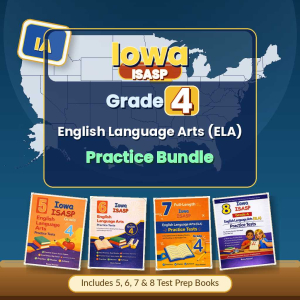
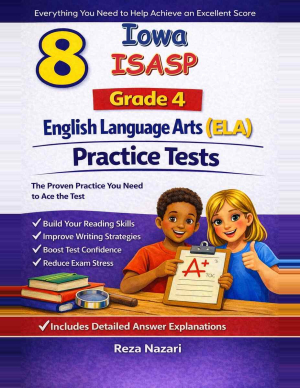
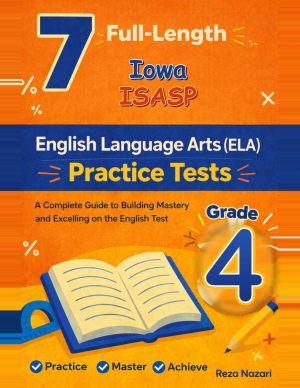
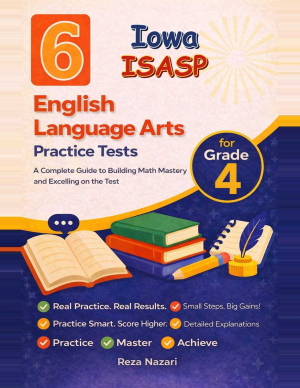
Printable Iowa grade 4 ELA books:
Standards source: Iowa English Language Arts, Iowa Department of Education.
Match a speaker’s reasons and evidence with the point they support
A convincing-sounding proposal still needs details that connect with its point. An adult reads this original speech aloud. Students first identify what the speaker proposes and then decide which information supports that proposal.
Curriculum reference: 2024 Iowa Academic Standards: English Language Arts, from the Iowa Department of Education standards directory.
Iowa Grade 4 references for this activity
Iowa adopted its current English Language Arts standards on June 20, 2024. Read the Grade 4 expectations in the full state document. The selected reference supports this activity; use the school’s sequence and the remaining expectations for wider coverage.
| Grade-level expectation | Activity focus | Official requirement |
|---|---|---|
| SL.4.3 | Identify reasons and evidence supporting a speaker’s points | Read the state document (PDF page 35) |
These are selected grade-level expectations from Iowa’s current English standards. Activity labels describe a teaching focus rather than reproduce complete requirements. Read the linked state document’s complete grade-level expectations, including its grade-specific details, alongside the school’s curriculum sequence.
A worked Grade 4 reading and writing activity
This original classroom example is separate from official assessment questions.
I suggest a labeled drying shelf for our art projects. Last week, we spent part of two lessons looking for space to leave wet projects. A shared shelf would give everyone a known place to check. We could label each space so that projects are easier to find. Our class also has a bright window.
| Speech detail | Role in the proposal |
|---|---|
| Spent time looking for space | Reported evidence of a problem |
| Known place to check | Reason for a shared shelf |
| Labels make projects easier to find | Proposed benefit |
| Bright window | Connection to the proposal is not supplied |
Try the activity
Name the speaker’s proposal. Identify one reported observation and one reason supporting it. Explain whether the bright-window sentence supports the stated point as clearly.
Follow the reasoning
The speaker proposes a labeled drying shelf. The reported loss of lesson time while searching for space is evidence offered about the problem. A known place to check and labeled spaces provide reasons for the proposed design. The bright-window detail does not explain how the shelf would address the problem; the speech gives no connection between the window and finding space. A student can identify this weaker detail without deciding that the entire proposal is useless. Each explanation should name the specific point being supported instead of call every sentence evidence simply because it appears in the speech.
Notice what needs more practice
A reported observation differs from a proposed benefit. The speech says time was spent looking for space, but it does not say a shelf has already saved time. Labels might improve finding projects, yet the proposal would still need to be tried. The original speech is a classroom example, not a record from an Iowa school. Ask the student to connect each reason or detail with the proposal before introducing labels such as relevant and unrelated. A pleasant detail can be accurate while providing little support for the point under discussion.
Grade 4 English worksheets
Choose printable practice that matches the skill being taught. Check the task, reading difficulty, and directions before assigning it; the collection is independently published.
Use the next session to build independence
- Listen for the speaker’s specific proposal.
- Name an observation and a reason and explain their connections.
- Identify a detail whose connection is missing and suggest a clearer revision.
Revise the final sentence to supply a relevant detail, such as how the proposed shelf would fit the available space, while labeling any invented measurements as invented. Read the revised speech to a partner and ask which point the new detail supports. A later classroom proposal should use actual observations and constraints before claiming a result. This activity begins the Grade 4 expectation through an oral presentation; it does not substitute for broader discussion, reporting, reading, or writing work in the school’s sequence.
For more general reading and writing resources, visit the Grade 4 English Online Center.
Iowa Grade 4 English: useful planning questions
Does every accurate detail support the speaker’s point?
No. A detail needs a clear connection with the point. The bright-window sentence does not explain how the proposed shelf would address the stated problem.
Where are the complete state requirements?
Iowa adopted its current English Language Arts standards on June 20, 2024. Read the Grade 4 expectations in the full state document. The selected reference supports this activity; use the school’s sequence and the remaining expectations for wider coverage. The school’s sequence also includes reading, writing, speaking, listening, and language work beyond this example.
Official sources checked October 6, 2026. Grade 4 is within the ISASP English language arts testing range. This original lesson is independent practice. Read the Iowa assessment overview and use the school’s guidance for preparation. Iowa’s 2026–27 required-assessments overview identifies ISASP reading, language/writing, and mathematics in Grades 3–11 and science in Grades 5, 8, and 11. Eligible students use the assigned alternate-assessment pathway. Follow the school’s current assessment assignment, accommodations, and guidance; this classroom activity is independent practice and does not predict a state performance level. This site’s practice and books are independently published. Check their editions and contents against current standards and assessment guidance.
Grade 4 English in other states
When moving between school systems, compare the official curriculum and the school’s learning sequence. Use the national Online Center’s map to find another state’s resources.
Recommended Iowa Grade 4 resources
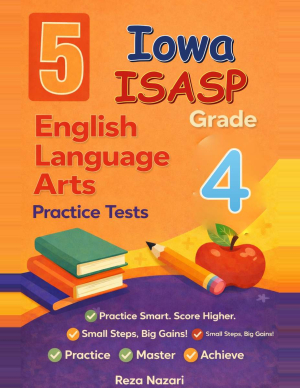
Build a Strong Iowa Grade 4 ISASP English Practice Library
These independently published resources have their own coverage and editions. Check the contents alongside Iowa’s current English standards before choosing assessment preparation.
Use these Iowa Grade 4 resources for reading comprehension, language, writing, and full-length practice where available. Click any cover to open the resource page.
More Grade 4 resources
A USEFUL NEXT STEP
Iowa Grade 4 English: study questions
Does every accurate detail support the speaker’s point?
No. A detail needs a clear connection with the point. The bright-window sentence does not explain how the proposed shelf would address the stated problem.
Where are the complete Iowa Grade 4 requirements?
Iowa adopted its current English Language Arts standards on June 20, 2024. Read the Grade 4 expectations in the full state document. The selected reference supports this activity; use the school’s sequence and the remaining expectations for wider coverage.
Official source ↗Resources from Effortless Math · Editorial standards