LEARN · PRACTICE · EXPLORE
Illinois Grade 4 English
Compare original prose and drama versions of a short scene, identify structural features, and practice a selected Illinois Grade 4 literature expectation.
State resources · Focused study · Clear next steps
What do Illinois 4th graders learn in ELA?
In 4th grade, Illinois English language arts centers on theme and summary, text structure, figurative language, and multi-paragraph essays. Students take the IAR grade 4 ELA test in the spring. This page explains each Illinois grade 4 ELA standard and pairs it with short lessons, printable worksheets and a full-length practice test.
Printable Illinois grade 4 ELA books:
Standards source: Illinois English Language Arts, Illinois State Board of Education.
Explain how narration and stage directions present the same action
A dramatic scene gives speakers and performers information in a different form from a prose narrative. Students can compare how the same action reaches the reader instead of identifying a genre from punctuation alone. This short pair introduces prose and drama; poetry is another part of the complete expectation.
Curriculum reference: Illinois Learning Standards incorporating Common Core English Language Arts/Literacy, from the Illinois State Board of Education standards directory.
Illinois Grade 4 references for this activity
Illinois’s current English document includes Grade 4 expectations across reading, writing, language, speaking, and listening. The expectations selected here support this activity; use the whole document and the school’s sequence for wider coverage.
| Grade-level expectation | Activity focus | Official requirement |
|---|---|---|
| RL.4.5 | Explain structural differences between prose and drama | Read the state document (PDF page 12) |
These are selected grade-level expectations from Illinois’s current English standards. Activity labels describe a teaching focus rather than reproduce complete requirements. Read the linked state document, including the reading, writing, language, speaking, and listening sections and grade-level progression, alongside the school’s curriculum sequence.
A worked Grade 4 reading and writing activity
This original classroom example is separate from official assessment questions.
Prose: Maya paused at the door and listened. “The rehearsal has already started,” she whispered. She opened the door quietly.
Drama: MAYA [pauses at the door and listens]: The rehearsal has already started. [She opens the door quietly.]
| Feature | Prose version | Drama version |
|---|---|---|
| Action | Narrated in story sentences | Given in stage directions |
| Speaker | Identified through narration | Named by MAYA label |
| Voice | Whisper stated explicitly | No whisper instruction supplied |
Try the activity
Identify the narration in the prose version and the speaker label and stage directions in the drama version. Explain how each form communicates Maya’s actions. State which spoken words remain the same, and identify a detail supplied explicitly in only one version.
Follow the reasoning
The prose narrator describes the pause, listening, whisper, and quiet opening as part of sentences in the story. The drama names the speaker as MAYA and uses bracketed stage directions for the pause, listening, and door opening. Both versions give Maya the same spoken sentence. The prose explicitly says she whispers; the dramatic version does not include that vocal instruction, so a performer would need to decide or receive further direction. Structural comparison includes both shared content and differences in how it is presented.
Notice what needs more practice
Brackets in this original scene are a convention for stage directions, not words Maya must speak. Likewise, a capitalized speaker name identifies a role; it does not mean the character shouts. A prose story can contain dialogue without becoming a play. Explain how narration and performance instructions function in the actual examples rather than rely on a single visual sign. The pair does not include a full cast list, scene-setting description, or poem, all of which may matter when studying wider forms.
Grade 4 English worksheets
Choose printable practice that matches the skill being taught. Check the task, reading difficulty, and directions before assigning it; the collection is independently published.
Use the next session to build independence
- Separate the spoken line from descriptions of action.
- Name the form’s features and explain their functions.
- Compare one shared detail and one difference between versions.
Revise the drama to include a direction indicating a whisper, then discuss how that instruction changes a performance. Convert the revised scene back into prose and preserve the same actions. Next, examine a complete classroom play and a prose story, using terms such as dialogue, stage direction, and narration accurately. Include poetry in a later comparison using its own structural features. This introductory pair supports a selected part of the Illinois Grade 4 expectation; it does not demonstrate every literary form or require students to infer unprovided stage details.
For more general reading and writing resources, visit the Grade 4 English Online Center.
Illinois Grade 4 English: useful planning questions
Should a performer read the stage directions aloud as dialogue?
In this scene, the bracketed directions describe actions for the performance. Maya’s spoken line is the sentence after the speaker label; the directions are not part of that dialogue.
Where are the complete state requirements?
Illinois’s current English document includes Grade 4 expectations across reading, writing, language, speaking, and listening. The expectations selected here support this activity; use the whole document and the school’s sequence for wider coverage. The school’s sequence also includes reading, writing, speaking, listening, and language work beyond this example.
Official sources checked October 6, 2026. Grade 4 is within the IAR English language arts testing range. This original lesson is independent practice. Read the Illinois assessment overview and use the school’s guidance for preparation. IAR measures English language arts and mathematics in Grades 3–8. Follow the school’s current assessment assignment, accommodations, and guidance; this classroom activity is independent practice and does not predict a state performance level. This site’s practice and books are independently published. Check their editions and contents against current standards and assessment guidance.
Grade 4 English in other states
When moving between school systems, compare the official curriculum and the school’s learning sequence. Use the national Online Center’s map to find another state’s resources.
Recommended Illinois Grade 4 resources
Build a Strong Illinois Grade 4 IAR English Practice Library
These independently published resources have their own coverage and editions. Check the contents alongside Illinois’s current English standards before choosing assessment preparation.
Use these Illinois Grade 4 resources for reading comprehension, language, writing, and full-length practice where available. Click any cover to open the resource page.
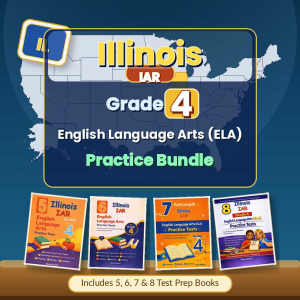 Illinois Grade 4 ELA Preparation Bundle
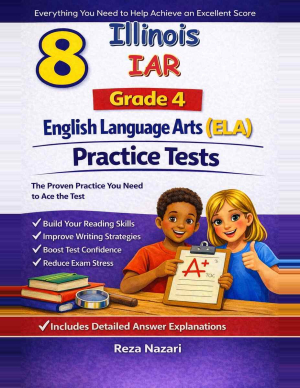 8 Illinois IAR English Language Arts (ELA) Grade 4: Full Practice Tests
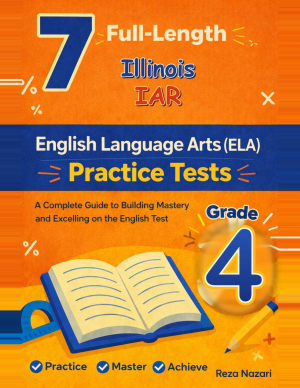 7 Illinois IAR English Language Arts (ELA) Grade 4: Full Practice Tests
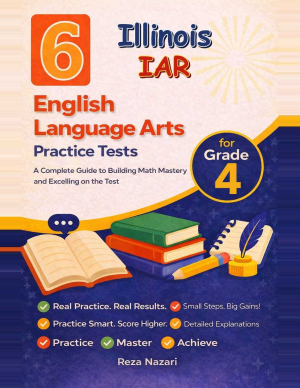 6 Illinois IAR English Language Arts (ELA) Grade 4: Full Practice Tests
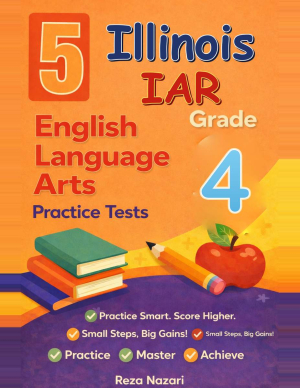 Illinois IAR ELA Grade 4: 5 Full Practice Tests
More Grade 4 resources
A USEFUL NEXT STEP
Illinois Grade 4 English: study questions
Should a performer read the stage directions aloud as dialogue?
In this scene, the bracketed directions describe actions for the performance. Maya’s spoken line is the sentence after the speaker label; the directions are not part of that dialogue.
Where are the complete Illinois Grade 4 requirements?
Illinois’s current English document includes Grade 4 expectations across reading, writing, language, speaking, and listening. The expectations selected here support this activity; use the whole document and the school’s sequence for wider coverage.
Official source ↗Resources from Effortless Math · Editorial standards