LEARN · PRACTICE · EXPLORE
Rhode Island Grade 4 English
Explain structural differences among literary forms in an original Grade 4 reading activity, with Rhode Island references and a worked explanation.
State resources · Focused study · Clear next steps
What do Rhode Island 4th graders learn in ELA?
In 4th grade, Rhode Island English language arts centers on theme and summary, text structure, figurative language, and multi-paragraph essays. Students take the RICAS grade 4 ELA test in the spring. This page explains each Rhode Island grade 4 ELA standard and pairs it with printable worksheets and a full-length practice test.
Printable Rhode Island grade 4 ELA books:
- Rhode Island RICAS ELA Grade 4: 5 Full Practice Tests
- 6 Rhode Island RICAS English Language Arts (ELA) Grade 4: Full Practice Tests
- 7 Rhode Island RICAS English Language Arts (ELA) Grade 4: Full Practice Tests
- 8 Rhode Island RICAS English Language Arts (ELA) Grade 4: Full Practice Tests
- Rhode Island Grade 4 ELA Preparation Bundle
Standards source: Rhode Island adopted content standards.
Prose, Poetry, and Drama
Explain structural differences among literary forms in an original Grade 4 reading activity. Read the passage, try the task, and use the explanation to check the evidence behind your response.
Curriculum reference: Rhode Island Core Standards for English Language Arts/Literacy, 2021, from the Rhode Island English language arts standards page.
Rhode Island Grade 4 references for this activity
Rhode Island’s Council on Elementary and Secondary Education endorsed the Rhode Island Core Standards for English language arts/literacy and mathematics on March 9, 2021. This activity links a selected reading reference in RIDE’s 2021 English document. The complete curriculum also includes writing, language, speaking, and listening; check the school’s texts and learning sequence.
| Selected Rhode Island reading reference | Activity focus | State-linked standards document |
|---|---|---|
| RL.4.5 | Explain structural differences among literary forms | Read the state-linked document (PDF page 33) |
These selected reference labels identify an activity focus, with the correct grade and PDF page linked separately. Read the complete standards selected by the school and its learning sequence, including reading, writing, language, speaking, and listening. This short original example does not fulfill the entire curriculum or establish a student’s grade-level proficiency.
One small event in three forms
This original classroom example is separate from official assessment questions.
Prose
Mira set the paper boat in the puddle. It turned once and stopped against a leaf. She moved the leaf aside and watched the boat drift again.
Poetry
One paper boat
turns in a puddle;
a leaf holds it still
until Mira makes room.Drama
Characters: Mira, Sol
Scene: Beside a puddle.
[Mira places a paper boat in the water. It stops against a leaf.]
SOL: The leaf is in its way.
MIRA: I can move it.
[Mira moves the leaf. Both watch the boat drift.]
Try the activity
Compare how the three versions present the boat’s movement. Refer to paragraphs, lines, named speakers, and stage directions. How would a performer learn what to do in the drama?
Follow the reasoning
The prose version gives the event through sentences collected into a paragraph. It describes Mira’s actions and what happens to the boat. The poem arranges the words into short lines; its line breaks shape how the reader encounters the movement and pause. It does not need rhyme to be a poem. The drama identifies characters and a scene, labels the speakers, and uses bracketed stage directions for actions. A performer uses those directions to place the boat, move the leaf, and watch it. All three versions share an event, but their structures present it differently. This short prose passage has no chapter division, and the poem shown here is a single stanza. Refer to the features actually present instead of assigning features that the text lacks.
Notice what needs more practice
A speaker label belongs to the drama’s structure; it is not evidence that prose cannot contain dialogue. Poems do not all rhyme, and prose can describe the same event with different paragraph arrangements.
Grade 4 English worksheets
Choose printable practice that matches the skill being taught. Check the task, reading difficulty, and directions before assigning it; the collection is independently published.
Use the next session to build independence
- Identify one visible structural feature in each form.
- Explain what that feature helps a reader or performer do.
- Compare the shared event while naming the different structures.
Compare teacher-approved prose, poetry, and drama. Use the actual paragraph, stanza, scene, and stage-direction features found in those selections.
For more general reading and writing resources, visit the Grade 4 English Online Center.
Rhode Island Grade 4 English: useful planning questions
Must a poem rhyme?
No. Look at its lines, stanzas, language, and other structural choices. Rhyme is one possible feature, not a requirement for every poem.
Which standards does the school use?
Rhode Island’s Council on Elementary and Secondary Education endorsed the Rhode Island Core Standards for English language arts/literacy and mathematics on March 9, 2021. This activity links a selected reading reference in RIDE’s 2021 English document. The complete curriculum also includes writing, language, speaking, and listening; check the school’s texts and learning sequence. The school’s sequence also includes reading, writing, speaking, listening, and language work beyond this example.
Sources checked October 6, 2026. RIDE places the RICAS English and mathematics assessments in Grades 3–8, including Grade 4. Confirm the school’s current assignments, directions, and accommodations. This independently authored reading activity is not an official RICAS item and does not reproduce a state test. Read the Rhode Island English assessment overview and English standards guidance. Independently published practice has its own directions and scoring. Its result does not predict a state performance level, and this original activity is not an official assessment item.
Grade 4 English in other states
When moving between school systems, compare the official curriculum and the school’s learning sequence. Use the national Online Center’s map to find another state’s resources.
Recommended Rhode Island Grade 4 resources
Build a Strong Rhode Island Grade 4 RICAS English Practice Library
These independently published resources have their own coverage and editions. Check the contents alongside Rhode Island’s current English standards before choosing assessment preparation.
Use these Rhode Island Grade 4 resources for reading comprehension, language, writing, and full-length practice where available. Click any cover to open the resource page.
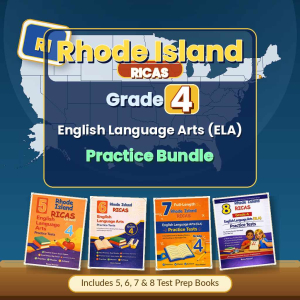 Rhode Island Grade 4 ELA Preparation Bundle
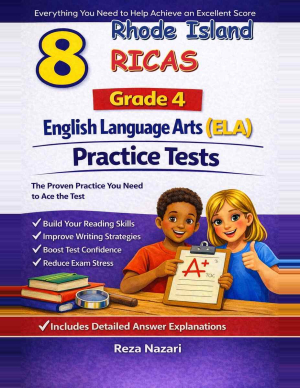 8 Rhode Island RICAS English Language Arts (ELA) Grade 4: Full Practice Tests
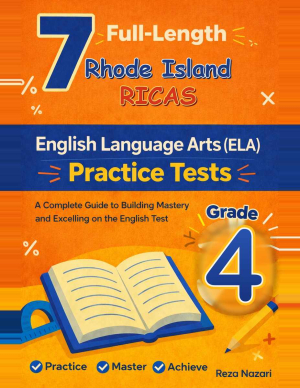 7 Rhode Island RICAS English Language Arts (ELA) Grade 4: Full Practice Tests
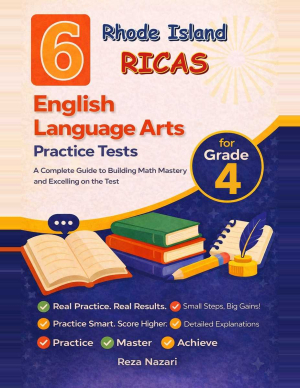 6 Rhode Island RICAS English Language Arts (ELA) Grade 4: Full Practice Tests
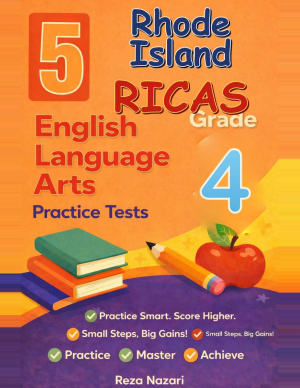 Rhode Island RICAS ELA Grade 4: 5 Full Practice Tests
More Grade 4 resources
A USEFUL NEXT STEP
Rhode Island Grade 4 English: study questions
Must a poem rhyme?
No. Look at its lines, stanzas, language, and other structural choices. Rhyme is one possible feature, not a requirement for every poem.
Where are the complete Rhode Island Grade 4 requirements?
Rhode Island’s Council on Elementary and Secondary Education endorsed the Rhode Island Core Standards for English language arts/literacy and mathematics on March 9, 2021. This activity links a selected reading reference in RIDE’s 2021 English document. The complete curriculum also includes writing, language, speaking, and listening; check the school’s texts and learning sequence.
Official source ↗Resources from Effortless Math · Editorial standards