LEARN · PRACTICE · EXPLORE
New Mexico Grade 4 English
Compare two original Grade 4 accounts of a class event, explain differences in focus, and practice evidence-based reading with New Mexico English resources.
State resources · Focused study · Clear next steps
What do New Mexico 4th graders learn in ELA?
In 4th grade, New Mexico English language arts centers on theme and summary, text structure, figurative language, and multi-paragraph essays. Students take the NM-MSSA grade 4 ELA test in the spring. This page explains each New Mexico grade 4 ELA standard and pairs it with printable worksheets and a full-length practice test.
Printable New Mexico grade 4 ELA books:
- New Mexico NM-MSSA ELA Grade 4: 5 Full Practice Tests
- 6 New Mexico NM-MSSA English Language Arts (ELA) Grade 4: Full Practice Tests
- 7 New Mexico NM-MSSA English Language Arts (ELA) Grade 4: Full Practice Tests
- 8 New Mexico NM-MSSA English Language Arts (ELA) Grade 4: Full Practice Tests
- New Mexico Grade 4 ELA Preparation Bundle
Standards source: New Mexico adopted content standards.
Compare a participant’s account with a later report
Compare two original Grade 4 accounts of a class event, explain differences in focus, and practice evidence-based reading with New Mexico English resources. New Mexico uses Common Core English expectations together with state additions. This activity addresses selected skills; use the full requirements and the school’s sequence for broader planning.
Curriculum reference: 2010 Common Core ELA/literacy standards, current New Mexico state-hosted copy, from the New Mexico adopted content standards directory.
New Mexico Grade 4 references for this activity
New Mexico uses the Common Core English language arts standards together with additional state expectations in NMAC 6.29.13. The selected Common Core references below identify this activity’s focus. The linked state additions include further cultural, oral-source, writing, and discussion work appropriate to each grade; read the full requirements and the school’s sequence.
| Selected Common Core reference | Activity focus | State-hosted standards document |
|---|---|---|
| RI.4.1 | Use details and examples to support explanation | Read the state-hosted document (PDF page 14) |
| RI.4.6 | Compare firsthand and secondhand accounts | Read the state-hosted document (PDF page 14) |
NMAC 6.29.13.8(B)(5)(a)–(b) includes Grade 4 oral traditions and historical perspectives. This classroom comparison practices account analysis only. Extend it with appropriate, contextualized sources selected with the teacher; it does not claim to fulfill the entire state addition. Read New Mexico’s additional English requirements (NMAC 6.29.13, PDF).
These selected reference labels identify an activity focus, with the grade column and PDF page linked separately. Read the complete standards selected by the school and its learning sequence, including reading, writing, language, speaking, and listening. This short original example does not fulfill the entire curriculum or establish a student’s grade-level proficiency.
The ramp demonstration, twice
This original classroom example is separate from official assessment questions.
Account A — A student who took part
I held the ramp while Marta released the toy car. On our first run it stopped against a curled paper edge. I felt disappointed because I wanted a clean run. We taped that edge flat and tried again. The car reached the finish mark on the second run. I was relieved when we could show the class our record.
Account B — A report written later by a class editor who did not attend
The student team’s written record describes two ramp runs. In the first, the car stopped at a curled paper edge. After the edge was taped flat, the second run reached the finish mark. The record names the ramp holder and the person releasing the car. It does not give the car’s speed or describe tests of other ramp surfaces.
Try the activity
Which account is firsthand, and which is secondhand? Identify shared facts and one difference in focus. Explain whether the editor’s omission of feelings contradicts the participant’s account. What does the editor identify as missing?
Follow the reasoning
Account A is firsthand because its writer reports participating as the ramp holder and describes personal feelings during the event. Account B is secondhand: the editor did not attend and uses the team’s written record. Both describe the first stop, the taped edge, and the successful second run. The participant focuses partly on disappointment and relief; the editor summarizes recorded actions and states limits in the record. Omitting feelings does not deny that the participant felt them. The editor says speed and tests of other surfaces are absent, which prevents a reader from treating these accounts as a complete investigation of how every ramp performs. Firsthand status indicates direct experience, not automatic completeness or accuracy. Each claim still needs support.
Notice what needs more practice
“I” is a helpful clue here because the writer describes taking part, but a first-person sentence in any text does not by itself prove eyewitness status. The editor reports the written record, not a visit to the classroom. Do not invent speeds or claim taping always solves every ramp problem. All events and documents in this example are fictional.
Grade 4 English worksheets
Choose printable practice that matches the skill being taught. Check the task, reading difficulty, and directions before assigning it; the collection is independently published.
Use the next session to build independence
- Identify the writer’s relationship to the event.
- Compare shared details and each writer’s focus.
- Explain one limit of what the accounts can establish.
Compare an approved firsthand account and a later report of the same historical event, checking dates, authorship, and context. New Mexico’s Grades 3–5 additions include oral histories and cultural perspective. Treat an oral history as a source with a speaker, setting, and provenance; do not reclassify it as a fable or use this invented demonstration as an authentic historical account.
For more general reading and writing resources, visit the Grade 4 English Online Center.
New Mexico Grade 4 English: useful planning questions
Is a firsthand account always more complete?
No. A participant may report personal experiences while overlooking other events. A secondhand report may combine records or identify missing information. Compare the actual evidence each provides.
Which standards does the school use?
New Mexico uses the Common Core English language arts standards together with additional state expectations in NMAC 6.29.13. The selected Common Core references below identify this activity’s focus. The linked state additions include further cultural, oral-source, writing, and discussion work appropriate to each grade; read the full requirements and the school’s sequence. The school’s sequence also includes reading, writing, speaking, listening, and language work beyond this example.
Sources checked October 6, 2026. The current NM-MSSA resource page describes statewide ELA and mathematics assessment at the end of Grades 3–8, including Grade 4. Results are one measure and should be considered alongside classroom and other assessment evidence. Confirm the learner’s assigned pathway and current school directions. Read the official NM-MSSA resource page, state standards directory, and additional New Mexico English requirements. The state assessment directory is updating resources for 2026–2027; this page does not claim later-year timing, tool, or administration details from a Spring 2026 manual. Independently published practice has its own directions and scoring and does not predict a state performance level. This original activity is not an official assessment item.
Grade 4 English in other states
When moving between school systems, compare the official curriculum and the school’s learning sequence. Use the national Online Center’s map to find another state’s resources.
Recommended New Mexico Grade 4 resources
Build a Strong New Mexico Grade 4 NM-MSSA English Practice Library
These independently published resources have their own coverage and editions. Check the contents alongside New Mexico’s current English standards before choosing assessment preparation.
Use these New Mexico Grade 4 resources for reading comprehension, language, writing, and full-length practice where available. Click any cover to open the resource page.
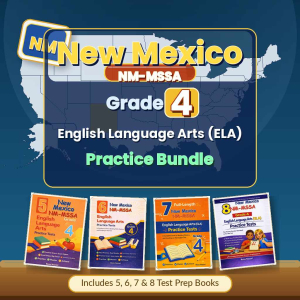 New Mexico Grade 4 ELA Preparation Bundle
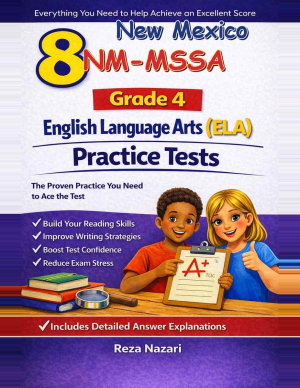 8 New Mexico NM-MSSA English Language Arts (ELA) Grade 4: Full Practice Tests
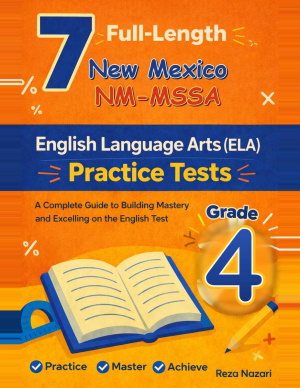 7 New Mexico NM-MSSA English Language Arts (ELA) Grade 4: Full Practice Tests
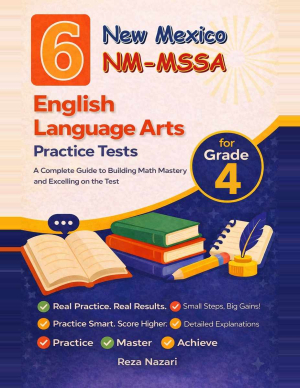 6 New Mexico NM-MSSA English Language Arts (ELA) Grade 4: Full Practice Tests
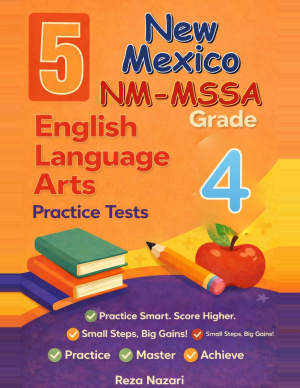 New Mexico NM-MSSA ELA Grade 4: 5 Full Practice Tests
More Grade 4 resources
A USEFUL NEXT STEP
New Mexico Grade 4 English: study questions
Is a firsthand account always more complete?
No. A participant may report personal experiences while overlooking other events. A secondhand report may combine records or identify missing information. Compare the actual evidence each provides.
Where are the complete New Mexico Grade 4 requirements?
New Mexico uses the Common Core English language arts standards together with additional state expectations in NMAC 6.29.13. The selected Common Core references below identify this activity’s focus. The linked state additions include further cultural, oral-source, writing, and discussion work appropriate to each grade; read the full requirements and the school’s sequence.
Official source ↗Resources from Effortless Math · Editorial standards