LEARN · PRACTICE · EXPLORE
New Hampshire Grade 5 English
Develop New Hampshire Grade 5 English with a narrative-pacing revision, a worked scene, printable practice, and selected Common Core curriculum references.
Focused lessons · Useful practice · Clear next steps
What do New Hampshire 5th graders learn in ELA?
In 5th grade, New Hampshire English language arts centers on comparing texts, quoting accurately, point of view, and essays supported with evidence. Students take the NH SAS grade 5 ELA test in the spring. This page explains each New Hampshire grade 5 ELA standard and pairs it with short lessons, printable worksheets and a full-length practice test.
Printable New Hampshire grade 5 ELA books:
- 5 New Hampshire NH SAS English Language Arts (ELA) Grade 5: Full Practice Tests
- 6 New Hampshire NH SAS English Language Arts (ELA) Grade 5: Full Practice Tests
- 7 New Hampshire NH SAS English Language Arts (ELA) Grade 5: Full Practice Tests
- 8 New Hampshire NH SAS English Language Arts (ELA) Grade 5: Full Practice Tests
- New Hampshire Grade 5 ELA Preparation Bundle
Standards source: New Hampshire school-approval rules, Ed 306.29.
Grade 5: slow a narrative at the moment that matters
A narrative can move quickly through routine actions and slow down when a character faces a meaningful choice. This original writing activity develops that distinction through a short revision. Students add purposeful dialogue and action rather than lengthening every sentence. The goal is to make the response to a situation visible while keeping the event sequence understandable.
Curriculum reference: 2010 Common Core ELA/literacy standards, original publisher’s document, from the New Hampshire school-approval rules (Ed 306.29).
New Hampshire Grade 5 references for this activity
New Hampshire’s current school-approval rules, Ed 306.29, allow local boards to use the adopted 2010 Common Core English standards or approved alternative academic standards. Confirm the school’s choice and competencies first. The selected Common Core references here were checked in the original publisher’s 2010 document, using the correct grade column. These references identify this activity’s focus and are not a complete local curriculum checklist.
| Selected Common Core reference | Activity focus | Publisher’s document |
|---|---|---|
| W.5.3b | Use dialogue, description, and pacing to develop a narrative | Read the publisher’s document (PDF page 20) |
These selected reference labels identify an activity focus, with the grade column and PDF page linked separately. Read the complete standards selected by the school and its learning sequence, including reading, writing, language, speaking, and listening. This short original example does not fulfill the entire curriculum or establish a student’s grade-level proficiency.
Expand a decision, not the whole afternoon
This original classroom example is separate from official assessment questions.
We carried our posters into the classroom. One poster slipped from my hands and the corner tore. I felt upset. Nia helped me fix it. We put the posters on the wall.
Try the activity
Keep the opening and ending as brief summaries. Revise the middle so the reader can follow the narrator’s reaction and Nia’s response. Include a short exchange and actions that show how they decide what to do. You may invent details for this fictional scene.
Follow the reasoning
One possible middle is: “The poster slid against the table, leaving a split at the corner. I held the torn pieces together. ‘It won’t stay up like this,’ I said. Nia set down her own poster. ‘Let’s put a backing behind it.’ She brought a scrap of card, and I kept the edges lined up while she attached it.” The revision slows down the problem and response through actions and a brief exchange. It does not need to describe every step of carrying supplies into the room. Many revisions can work; the important question is whether the added details develop the characters’ response and preserve the sequence.
Notice what needs more practice
Adding a long list of colors may make a paragraph longer without showing a decision. Dialogue should contribute to the moment rather than fill a quotation requirement. Do not treat this model’s invented backing as the only correct repair. The writing task concerns narrative technique, not a real repair procedure. A revision should also keep the same narrator unless a deliberate change is clearly explained.
Grade 5 English worksheets
Choose printable practice that matches the skill being taught. Check the task, reading difficulty, and directions before assigning it; the collection is independently published.
Use the next session to build independence
- Identify the event that changes the narrator’s situation. Decide which routine actions can remain summarized.
- Draft a brief exchange and two purposeful actions at that moment. Read the revision aloud to hear whether the pace changes.
- Ask a partner what the details reveal about each character’s response. Revise an unclear action or unnecessary line before adding more description.
Apply the technique to a longer narrative with a beginning, developed event sequence, and conclusion. Check how transitions and precise details work with pacing. A strong scene is one part of a complete narrative; a short successful revision does not demonstrate all Grade 5 writing requirements.
For more general reading and writing resources, visit the Grade 5 English Online Center.
New Hampshire Grade 5 English: useful planning questions
Does good pacing mean making every event longer?
No. This revision keeps routine movement brief and develops the torn-poster moment. Pacing reflects the purpose of a scene; adding detail everywhere can hide the event that matters.
Which standards does the school use?
New Hampshire’s current school-approval rules, Ed 306.29, allow local boards to use the adopted 2010 Common Core English standards or approved alternative academic standards. Confirm the school’s choice and competencies first. The selected Common Core references here were checked in the original publisher’s 2010 document, using the correct grade column. These references identify this activity’s focus and are not a complete local curriculum checklist. The school’s sequence also includes reading, writing, speaking, listening, and language work beyond this example.
Sources checked October 6, 2026. The 2025–2026 public NH SAS manual describes general ELA testing in Grades 3–8, including Grade 5, with reading and writing sessions. Confirm the learner’s assigned pathway and the school’s current directions. Read the public NH SAS manual resource page, students and families portal and school-approval rules. The manual reviewed here is the 2025–2026 edition; confirm later-year directions with the school. Independently published practice has its own timing and scoring and does not predict a state performance level. Use local competencies and the teacher’s sequence for further reading, writing, speaking, listening, and language work. This original activity is not an official assessment item.
Grade 5 English in other states
When moving between school systems, compare the official curriculum and the school’s learning sequence. Use the national Online Center’s map to find another state’s resources.
Recommended New Hampshire Grade 5 resources
Build a Strong New Hampshire Grade 5 NH SAS English Practice Library
These independently published resources have their own coverage and editions. Check the contents alongside New Hampshire’s current English standards before choosing assessment preparation.
Use these New Hampshire Grade 5 resources for reading comprehension, language, writing, and full-length practice where available. Click any cover to open the resource page.
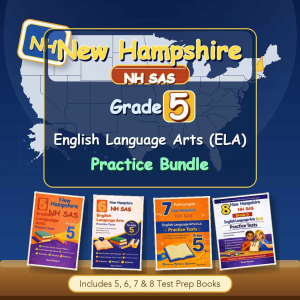 New Hampshire Grade 5 ELA Preparation Bundle
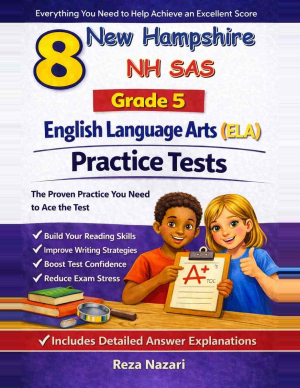 8 New Hampshire NH SAS English Language Arts (ELA) Grade 5: Full Practice Tests
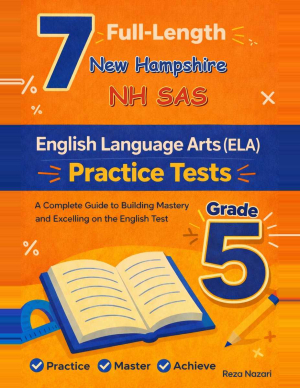 7 New Hampshire NH SAS English Language Arts (ELA) Grade 5: Full Practice Tests
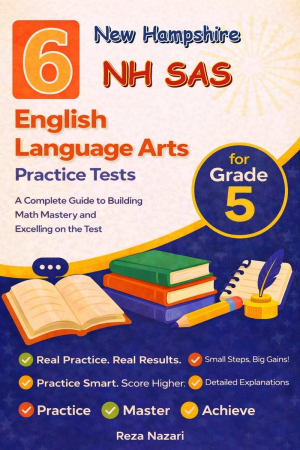 6 New Hampshire NH SAS English Language Arts (ELA) Grade 5: Full Practice Tests
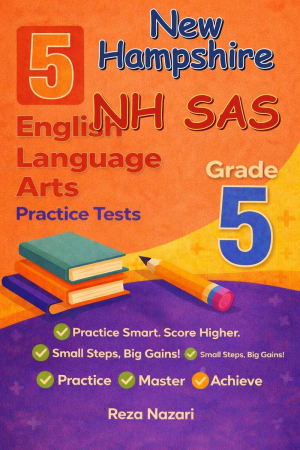 5 New Hampshire NH SAS English Language Arts (ELA) Grade 5: Full Practice Tests
More Grade 5 resources
A USEFUL NEXT STEP
New Hampshire Grade 5 English: study questions
Does good pacing mean making every event longer?
No. This revision keeps routine movement brief and develops the torn-poster moment. Pacing reflects the purpose of a scene; adding detail everywhere can hide the event that matters.
Where are the complete New Hampshire Grade 5 requirements?
New Hampshire’s current school-approval rules, Ed 306.29, allow local boards to use the adopted 2010 Common Core English standards or approved alternative academic standards. Confirm the school’s choice and competencies first. The selected Common Core references here were checked in the original publisher’s 2010 document, using the correct grade column. These references identify this activity’s focus and are not a complete local curriculum checklist.
Official source ↗Resources from Effortless Math · Editorial standards