CLEP U.S. History I 058: Factories, Lowell, and Clock Discipline
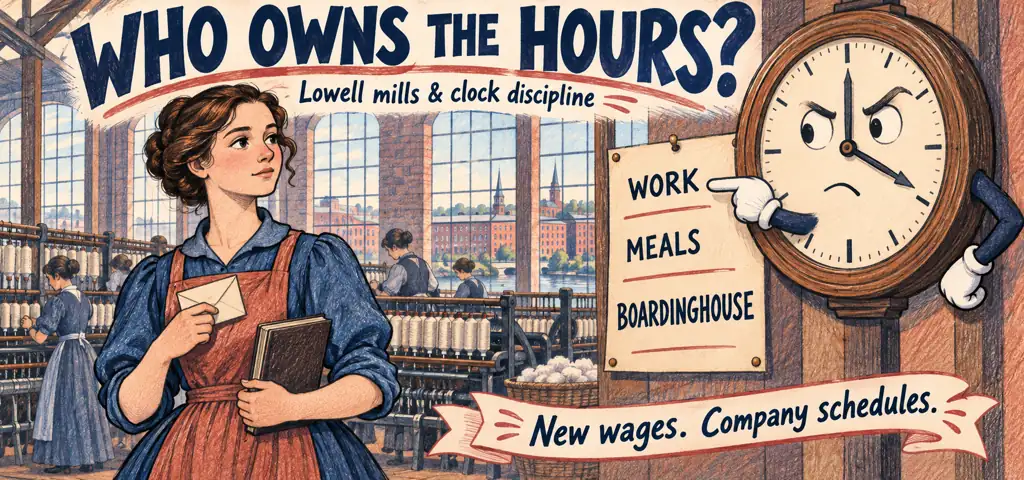
Lesson 11.3 of Chapter 11 of the U.S. History to 1877 study guide on Effortless Math covers CLEP U.S. History I 058: Factories, Lowell, and Clock Discipline: the key terms, the core ideas, and worked examples showing how this topic is tested on the exam.
U.S. History to 1877 | Chapter 11 | Lesson 11.3
Early industrialization changed production by concentrating machinery, power, capital, and workers. Samuel Slater helped establish mechanized cotton spinning in Rhode Island, where mills often used families, including children. Francis Cabot Lowell and associates later integrated spinning and weaving in large Massachusetts mills. The “Lowell system” recruited young women from New England farms, housed them in supervised boardinghouses, and paid cash wages. Owners advertised disciplined, respectable employment rather than permanent factory dependency.
Mill women experienced opportunity and control together. Wages could support relatives, fund education, or provide unusual independence before marriage. Workers formed friendships, attended lectures, read, and published. Yet bells regulated waking, meals, and long workdays. Overseers enforced production. Heat, noise, lint, and moving machinery created hazards. When companies cut wages or raised boarding charges, women organized turnouts in the 1830s and later petitioned for a ten-hour day. These efforts did not immediately transform labor law, but they show that women workers interpreted wage contracts politically.
The phrase “clock discipline” names a change in control over time. Artisans and farm households had also worked intensely, but tasks and seasons often shaped their pace. Factory machinery required simultaneous arrival, regular shifts, and output set by managers. Time became a measurable cost. Workers sold hours under supervision rather than selling a finished product they controlled.
Industrialization spread unevenly. Waterpower initially placed mills along rivers. Steam later loosened that constraint. Textile production depended on patent practices, machine shops, credit, transportation, and a large market. It also depended on cotton produced by enslaved labor. A northern mill and a southern plantation belonged to the same commodity chain even though their labor systems differed sharply.
By midcentury, many Lowell workers were Irish immigrants rather than native-born farm daughters. This shift reflected declining wages, changing opportunities for native-born women, and immigrants’ need for work. The factory system was not a single stable model. Employers repeatedly changed the workforce and organization of labor.
See the history take shape
Watch this account from Historymemoryculture.org with one question in mind: which evidence makes the lesson's strongest claim hold up?
Video: “And that’s how we did in the mill” Women in the Lowell Textile Mills, Historymemoryculture.org.
Check your understanding
- Which labor arrangement most distinguished the early Lowell system from Rhode Island’s family-labor mills?
- young rural women living in company-supervised boardinghouses
- family groups working in small water-powered mills
- enslaved operatives hired from nearby plantations
- artisans contracted to finish cloth in independent workshops
- apprentices who owned tools and controlled their output
- “Clock discipline” most precisely describes
- farmers adjusting tasks to seasonal daylight
- employers controlling arrival, shifts, and machine pace
- workers retaining ownership of completed goods
- artisans receiving payment for each finished piece
- railroads adopting standardized time zones across regions
- Deep Practice: select all that apply. Mill women’s experience included
- cash wages
- boardinghouse regulation
- long hours
- collective protest
- complete control of machinery and schedules
- Deep Practice: open response. Explain how Lowell could offer new independence and new discipline simultaneously.
Write a brief response using a named fact from the lesson.
Open the answers and reasoning
Independent preparation. CLEP is a registered trademark of the College Board, which does not endorse this lesson.

Related to This Article
More math articles
- How to Prepare for the Pre-Algebra Test?
- Full Faith and Credit Clause
- Grade 3 Math: Division Facts
- The Best Grade 4 Math Book for Georgia Students
- How to Solve Simple Interest Problems? (+FREE Worksheet!)
- Impartial jury
- Manual Cleaning: Disassembly, Sinks, and Aerosol Control
- Eisenhower’s New Look, Suez, and the Space Race
- 3rd Grade MCAS Math Practice Test Questions
- Study Skills Guide For Studying Math

















What people say about "Factories, Lowell and Clock Discipline"?
No one replied yet.