Articles

You can find helpful articles about mathematics and test prep here.

Interested in Becoming an Effortless Math Guest Blogger? Click here

Search in Articles articles.

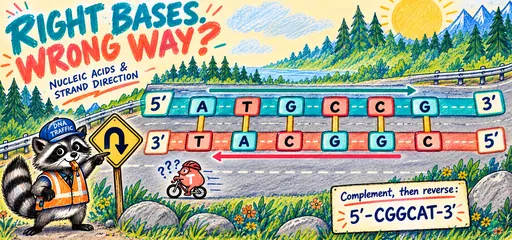
Nucleic Acids and Strand Direction

Nucleic Acids and Strand Direction

Reading CAT from the opposite end gives TAC. Direction also matters when you read a DNA sequence, but DNA’s two ends are chemically different: one is called 5′ and the other 3′. Labeling those ends lets you identify how a strand is oriented and write its complementary strand correctly.

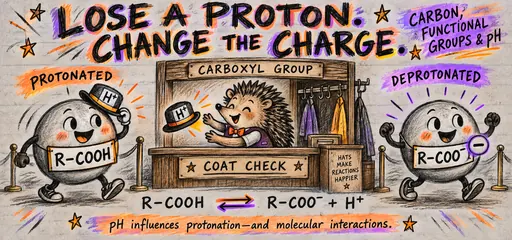
Carbon, Functional Groups, and pH

Carbon, Functional Groups, and pH

Two molecules can contain exactly the same atoms in exactly the same numbers and behave nothing alike. Ethanol and dimethyl ether are both \(\text{C}_2\text{H}_6\text{O}\) . One is a liquid that mixes with water in any proportion and that yeast produces by the ton; the other is a gas at ordinary roo

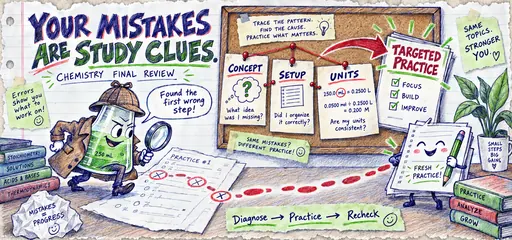
Chemistry Final Review: Use Mistakes to Choose Your Next Practice

Chemistry Final Review: Use Mistakes to Choose Your Next Practice

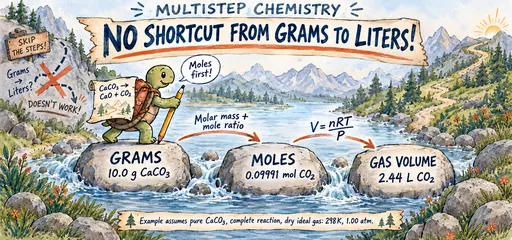
Multistep Chemistry Problems: Connect Moles, Gas Volume, and Assumptions

Multistep Chemistry Problems: Connect Moles, Gas Volume, and Assumptions

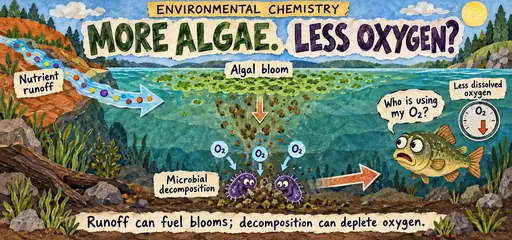
Environmental Chemistry: Carbon, Water, and Nutrient Pathways

Environmental Chemistry: Carbon, Water, and Nutrient Pathways

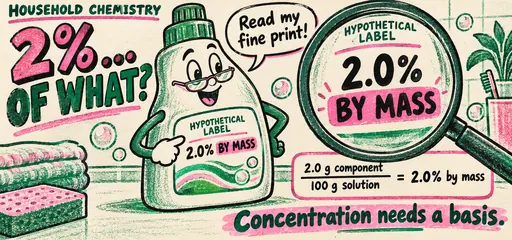
Household Chemistry: Soap, Product Labels, and Concentration Claims

Household Chemistry: Soap, Product Labels, and Concentration Claims

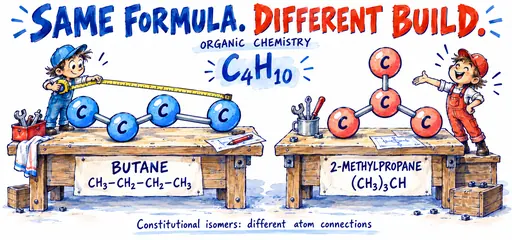
Organic Chemistry Basics: Carbon Skeletons, Isomers, and Functional Groups

Organic Chemistry Basics: Carbon Skeletons, Isomers, and Functional Groups

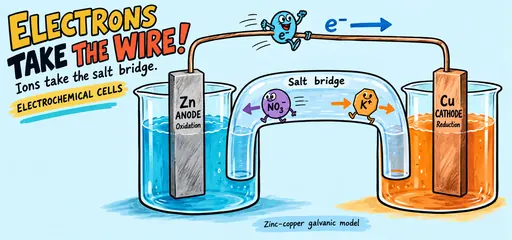
Electrochemical Cells: Electron Flow, Salt Bridges, and Cell Voltage

Electrochemical Cells: Electron Flow, Salt Bridges, and Cell Voltage

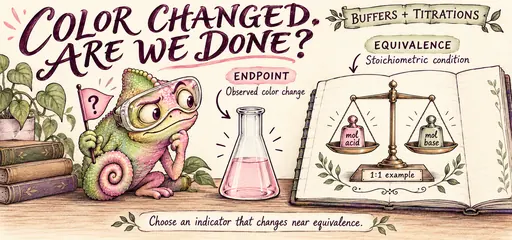
Buffers and Titrations: Conjugate Pairs, Endpoints, and Equivalence

Buffers and Titrations: Conjugate Pairs, Endpoints, and Equivalence

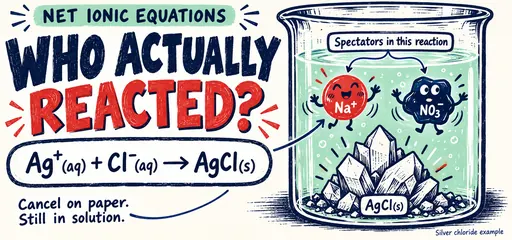
Net Ionic Equations: Precipitates, Spectator Ions, and Charge Balance

Net Ionic Equations: Precipitates, Spectator Ions, and Charge Balance

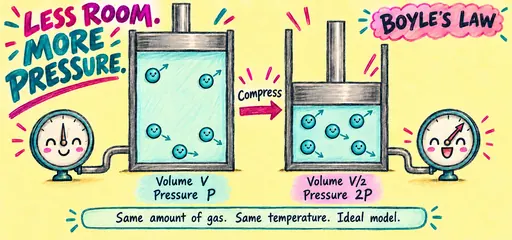
Gas Laws and States of Matter: Pressure, Volume, and Kelvin Temperature

Gas Laws and States of Matter: Pressure, Volume, and Kelvin Temperature

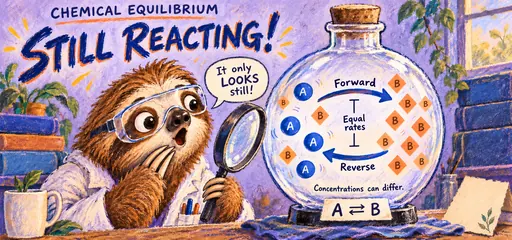
Chemical Equilibrium: Equal Rates, Equilibrium Expressions, and Shifts

Chemical Equilibrium: Equal Rates, Equilibrium Expressions, and Shifts