CLEP U.S. History I 070: Abolitionists and Antislavery Politics
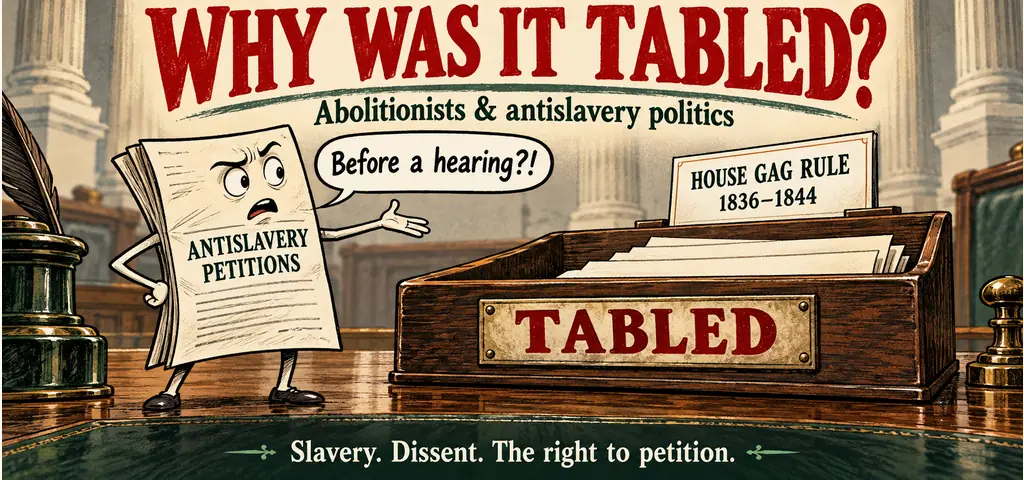
Lesson 13.3 of Chapter 13 of the U.S. History to 1877 study guide on Effortless Math covers CLEP U.S. History I 070: Abolitionists and Antislavery Politics: the key terms, the core ideas, and worked examples showing how this topic is tested on the exam.
U.S. History to 1877 | Chapter 13 | Lesson 13.3
Colonization societies proposed gradual emancipation paired with Black migration to Africa, helping establish Liberia. Some white supporters opposed slavery but doubted interracial citizenship. Many free Black Americans rejected removal from their native country. In the 1830s immediate abolitionists demanded an end to slavery without compensation to enslavers. William Lloyd Garrison’s Liberator and the American Anti-Slavery Society used moral suasion, print, lectures, and petitions.
Black abolitionists were central, not auxiliary. David Walker’s Appeal denounced slavery and racial hypocrisy. Frederick Douglass used autobiography, speech, and newspapers after escaping slavery. Maria Stewart addressed public audiences. Black conventions debated education, migration, labor, and rights. Their testimony challenged claims that slavery was benevolent and insisted abolition include equal citizenship.
Women such as Sarah and Angelina Grimké spoke from experience in a slaveholding family. Abby Kelley organized. Black women linked racism and sexism. Their public leadership provoked controversy within the movement. Disputes over women’s authority, electoral politics, and Garrison’s attacks on the Constitution split abolitionist organizations.
Political antislavery took several forms. The Liberty Party made abolition a federal political question. Later Free Soil advocates focused on stopping slavery’s territorial expansion, a position broader but less committed to racial equality or immediate abolition in states. Congress’s “gag rule” automatically tabled many antislavery petitions from 1836 until 1844, turning petition rights into a national controversy. Mob violence destroyed presses and killed editor Elijah Lovejoy, demonstrating the risks dissenters faced.
Abolitionists remained a minority before the 1850s, especially in the South, where states suppressed antislavery material. Their significance lies in keeping slavery’s morality and politics before the public, building networks, and changing the language of citizenship.
See the history take shape
Mr. Gallion's Classes traces the people and chronology behind this lesson. Listen for the evidence that sharpens the written account, then try the questions below.
Video: Standard 2.4 – African Americans & Abolitionists in the Antebellum Period, Mr. Gallion's Classes.
Check your understanding
- In contrast to colonizationists, immediate abolitionists demanded
- prompt emancipation without compensation to enslavers
- gradual emancipation followed by compulsory emigration
- prohibition of slavery only north of 36°30′
- ending the overseas trade while preserving domestic slavery
- compensated emancipation at an unspecified distant date
- The congressional gag rule became a civil-liberties controversy because it automatically tabled
- petitions for tariff reduction
- antislavery petitions
- memorials supporting a national bank
- petitions against Indian removal
- requests for federal school aid
- Deep Practice: select all that apply. Abolitionist tools included
- newspapers
- lectures
- petitions
- political parties
- federal slave patrols
- Deep Practice: open response. Distinguish immediate abolition from Free Soil.
Write a brief response using a named fact from the lesson.
Open the answers and reasoning
Independent preparation. CLEP is a registered trademark of the College Board, which does not endorse this lesson.

Related to This Article
More math articles
- What to Consider When Retaking the ACT or SAT
- How to Apply Trigonometry to General Triangles?
- Top 10 PERT Math Prep Books (Our 2023 Favorite Picks)
- How to Add and Subtract Decimals? (+FREE Worksheet!)
- The Best School Supplies for Learning Math
- Rounding Numbers
- Package Integrity and Method Verification
- How to Understand the Nuance of Equality of Vectors in Two Dimensions
- Best Calculators for High School Algebra II
- What Are the Applications of Inverse Trigonometric Functions?













What people say about "Abolitionists and Antislavery Politics"?
No one replied yet.