CLEP U.S. History I 047: Native Confederacy and Frontier Conflict
Lesson 9.3 of Chapter 9 of the U.S. History to 1877 study guide on Effortless Math covers CLEP U.S. History I 047: Native Confederacy and Frontier Conflict: the key terms, the core ideas, and worked examples showing how this topic is tested on the exam.
U.S. History to 1877 | Chapter 9 | Lesson 9.3
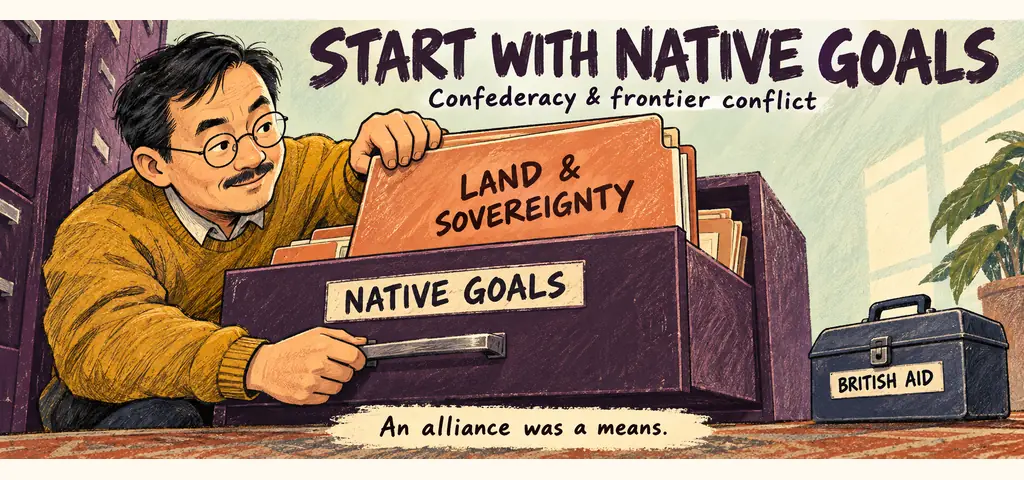
U.S. settlers and officials sought land north of the Ohio River through treaties, purchases, and pressure. Native leaders did not share a single policy. Some negotiated accommodation. Others concluded that separate land cessions would steadily destroy Native independence. The Shawnee leader Tecumseh and his brother Tenskwatawa, known as the Prophet, promoted a confederacy that rejected individual nations’ authority to sell land held in common. Tenskwatawa’s religious movement called for cultural renewal and resistance to dependence on American goods and alcohol. Their settlement at Prophetstown drew followers from several peoples.
Indiana territorial governor William Henry Harrison negotiated the 1809 Treaty of Fort Wayne, which transferred a large tract from participating nations. Tecumseh rejected the cession and sought broader support. While he was away, Harrison’s troops confronted Tenskwatawa’s followers at Tippecanoe in 1811. The battle was not a simple, decisive destruction of Native resistance, but it damaged Prophetstown and elevated Harrison’s reputation. Tecumseh later allied with Britain in the War of 1812 because British Canada offered supplies and a possible barrier against U.S. expansion.
Native-British cooperation intensified American “war hawk” claims that Britain encouraged frontier violence. That claim contained truth: British agents provided material support, and British strategy depended on Native allies. It could also obscure the independent reason for Native resistance: defense of land and sovereignty. Native people were not merely instruments of British policy. A proposed Indigenous buffer state in the Old Northwest formed part of British and Native war aims, but the peace settlement did not create it.
Tecumseh died at the Battle of the Thames in 1813 after U.S. forces regained Detroit and pursued the British into Upper Canada. His death and Britain’s later withdrawal from the alliance weakened intertribal resistance in the Old Northwest. In the South, a civil war among Creek people became entangled with the U.S. war. Andrew Jackson defeated the Red Stick faction and imposed the Treaty of Fort Jackson, taking vast lands from Creeks, including some who had supported the United States.
Watch, then test the claim
Matt Martin offers a visual route through this topic. As you watch, compare its explanation with the source limits in the written lesson.
Video: U.S. History Lesson 55: Chief Tecumseh, Matt Martin.
Check your understanding
- Tecumseh’s confederacy was primarily designed to
- resist separate land cessions by asserting shared Native sovereignty
- secure federal surveys before additional treaties were negotiated
- recognize village leaders’ authority to sell land independently
- move western Native communities onto federally protected farms
- preserve trade by accepting the Treaty of Fort Wayne
- Tecumseh allied with Britain chiefly because
- British posts offered western farmers a more dependable commercial market
- British aid could strengthen resistance to United States expansion
- Prophetstown’s leaders sought protection from British settlement
- Britain promised formal statehood to the Native confederacy
- alliance made further military resistance to settlement unnecessary
- Deep Practice: select all that apply. Native resistance in this period involved
- spiritual renewal
- intertribal organizing
- diplomacy and warfare
- defense of land
- one unanimous Native policy
- Deep Practice: open response. Explain why calling Tecumseh a “British proxy” mistakes alliance for motive.
Write a brief response using a named fact from the lesson.
Open the answers and reasoning
Independent preparation. CLEP is a registered trademark of the College Board, which does not endorse this lesson.

Related to This Article
More math articles
- Free Grade 2 English Worksheets for Mississippi Students
- Modular Arithmetic Calculator (mod, Inverse & More)
- Federalists and Anti-Federalists
- The Best Grade 2 English Worksheets for Kentucky Students
- How to Solve Absolute Value Equations: Step-by-Step Guide for 2026
- Riemann Sum Calculator (Left, Right, Midpoint, Trapezoid)
- Assembly, Testing, Storage, Charging, and Distribution
- Free Grade 4 English Worksheets for Arizona Students
- Free Grade 4 English Worksheets for Minnesota Students
- 4th Grade FSA Math Practice Test Questions


















What people say about "Native Confederacy and Frontier Conflict"?
No one replied yet.