CLEP U.S. History I 025: Townshend Duties, Boston, and Nonimportation
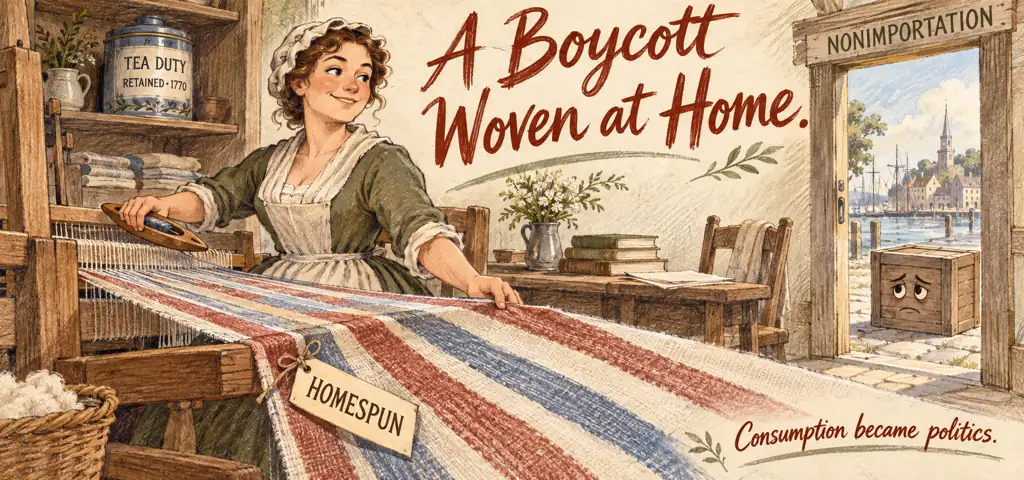
Lesson 5.4 of Chapter 5 of the U.S. History to 1877 study guide on Effortless Math covers CLEP U.S. History I 025: Townshend Duties, Boston, and Nonimportation: the key terms, the core ideas, and worked examples showing how this topic is tested on the exam.
U.S. History to 1877 | Chapter 5 | Lesson 5.4
In 1767, the Townshend Acts placed duties on imported glass, lead, paint, paper, and tea. Charles Townshend hoped an “external” duty would avoid objections to the Stamp Act, but revenue would help pay royal officials, potentially freeing them from assembly control. Colonists therefore focused on purpose: a trade duty intended to raise revenue could threaten self-government as much as an internal tax.
John Dickinson’s Letters from a Farmer in Pennsylvania argued that Parliament could regulate commerce but not impose duties for revenue without consent. Massachusetts circulated a letter encouraging coordinated protest. British officials sent troops to Boston in 1768 after resistance and customs conflict. Their presence created daily friction over jobs, housing, discipline, and public space.
Nonimportation turned consumption into politics. Merchants agreed not to order British goods. Households promoted homespun cloth. Women organized production and purchasing choices. These campaigns made political participation possible without voting. They also involved pressure and unequal sacrifice. Wealthy consumers could postpone luxuries, while artisans and dockworkers faced different economic effects.
On March 5, 1770, British soldiers fired into a hostile Boston crowd, killing five people in what patriots called the Boston Massacre. Paul Revere’s widely circulated engraving shaped memory by depicting deliberate slaughter, though the confused confrontation was more complicated. Parliament repealed most Townshend duties but kept the tea duty to maintain principle. Once again, a partial retreat preserved the dispute.
A focused video lesson
Tom Richey traces the people and chronology behind this lesson. Listen for the evidence that sharpens the written account, then try the questions below.
Video: Parliament Taxes the Colonies (Sugar Act, Stamp Act, Townshend Acts), Tom Richey.
Check your understanding
- Colonists objected that Townshend revenue might make officials independent of
- customs commissioners in London
- crown ministers who appointed them
- merchants who paid import duties
- colonial assemblies
- Parliament’s statutory authority
- Homespun cloth became
- a visible symbol of nonimportation and voluntary political sacrifice
- a substitute for agricultural exports promoted by British customs officials
- a textile standard required under enforcement provisions of the Townshend Acts
- a sign of loyal consumer preference for goods imported through Britain
- evidence that spinning bees had ended colonial dependence on imported textiles
- Select all that apply. Boston tension involved
- colonial independence already achieved
- customs enforcement
- job competition
- crowd protest
- troops
- Explain why a propaganda image may still be valuable historical evidence.
Write a brief response using a named fact from the lesson.
Open the answers and reasoning
Independent preparation. CLEP is a registered trademark of the College Board, which does not endorse this lesson.

Related to This Article
More math articles
- The Best Grade 4 Math Book for Idaho Students
- Double Consciousness and Intersectionality
- Rounding & Significant Figures Calculator
- How Presidential Power Has Expanded
- GACE Mathematics Flashcards
- Rounding Numbers
- Essential Spelling Rules
- How to Use the Quadratic Formula: Every Case for 2026
- Top 10 Tips to Create an ATI TEAS 7 Math Study Plan
- Unlock Your Potential: “HiSET Math for Beginners” Comprehensive Guide
















What people say about "Townshend Duties, Boston and Nonimportation"?
No one replied yet.