CLEP U.S. History I 021: Colonial Government and Salutary Neglect
Lesson 4.6 of Chapter 4 of the U.S. History to 1877 study guide on Effortless Math covers CLEP U.S. History I 021: Colonial Government and Salutary Neglect: the key terms, the core ideas, and worked examples showing how this topic is tested on the exam.
U.S. History to 1877 | Chapter 4 | Lesson 4.6
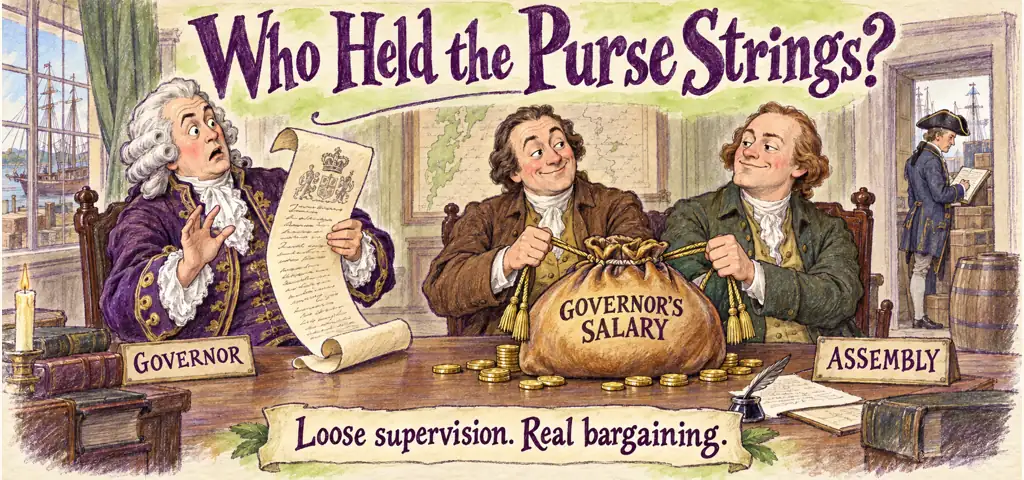
British colonies possessed varied charters and political structures. Royal colonies had crown-appointed governors. Proprietary colonies were granted to individuals or families. Charter colonies such as Rhode Island enjoyed unusual local control. Most developed elected lower assemblies that claimed authority over taxation and spending. Governors possessed vetoes, appointments, and imperial instructions, but their salaries often depended on assemblies. Bargaining became ordinary government.
The phrase “salutary neglect” describes Britain’s loose and inconsistent supervision before 1763, especially in commercial enforcement. It was never complete neglect. Customs officials operated, imperial courts heard cases, Parliament passed laws, and the crown sometimes revoked charters. Still, distance, European wars, local knowledge, and political priorities allowed colonists to exercise considerable discretion.
Voting was more common among free white men in the colonies than in Britain, partly because landownership was broader. Yet property requirements, race, gender, religion, and status excluded most adults. Elections could be competitive, but deference to wealthy local families remained powerful. Colonial assemblies defended their privileges as the rights of Englishmen, not as a demand for equal democracy.
This system produced a constitutional ambiguity. Imperial leaders viewed colonial legislatures as subordinate bodies. Colonists increasingly compared them to Parliament within their own jurisdictions. Both accepted the empire while enforcement remained flexible. After the Seven Years’ War, British officials tried to collect revenue and clarify authority. Colonists interpreted the new rigor against decades of customary self-taxation. Salutary neglect therefore mattered because it created expectations, not because it made colonies independent.
A focused video lesson
Use this lesson from Jocz Productions to review the period and its central historical problem. Pause when the video reaches the turning point named above.
Video: Mercantilism, Navigation Acts, & Salutary Neglect APUSH Review, Jocz Productions.
Check your understanding
- Colonial assemblies’ strongest practical influence over governors often came from control of
- appointment of all imperial customs officers
- succession to the British throne
- final review of parliamentary statutes
- command of imperial military forces
- salaries and revenue
- Salutary neglect refers to
- colonial refusal to recognize any imperial authority
- formal legal independence before 1763
- inconsistent imperial supervision
- parliamentary repeal of all trade regulations
- equal enforcement of every customs statute
- Select all that apply. Colonial participation was limited by
- universal suffrage
- gender
- race
- religious rules in some colonies
- property
- Explain how practice under salutary neglect shaped colonists’ later view of taxation.
Write a brief response using a named fact from the lesson.
Open the answers and reasoning
Independent preparation. CLEP is a registered trademark of the College Board, which does not endorse this lesson.

Related to This Article
More math articles
- Civic duty
- What Does the STAAR Test Stand For?
- CLEP U.S. History I 016: Atlantic Trade, Mercantilism, and the Navigation Acts
- TExES Core Subjects EC-6 Math Flashcards
- FREE 7th Grade Common Core Math Practice Test
- Social Interaction, Groups, and Organizations
- Best Calculator for ACT Aspire Math Test
- 10 Most Common 5th Grade Common Core Math Questions
- The Best Grade 4 Math Book for South Carolina Students
- How to Support Grade 5 Reading at Home: 12 Smart Strategies That Build Independence











What people say about "Colonial Government and Salutary Neglect"?
No one replied yet.