What a Baccarat Scoreboard Actually Knows About the Next Hand
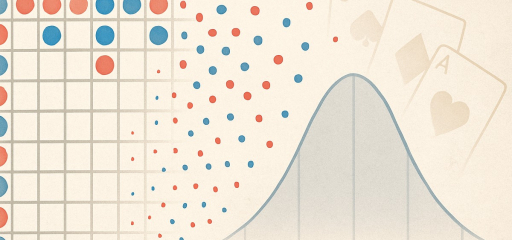
Walk into a baccarat room, whether it’s the velvet-rope high-stakes floor or the glowing livestream lobby, and you’ll see them: baccarat scoreboards filled with red and blue dots crawling across the grid like Tetris pieces. They’re beautiful, in a way. Mathematical. Serious. Players stare at them like they’re decoding prophecy. One’s waiting for Banker to repeat. Another’s convinced Player is “due” to correct the sequence. The board looks so formal, so intentional, that it’s almost impossible not to believe something predictive lives inside it.
Here’s the uncomfortable part: a baccarat scoreboard usually can’t tell you what will happen next. It’s brilliant at describing what already happened. Excellent at making patterns visible. But excellent at prediction? That’s not what it does. In a fairly dealt game, the next hand lives by the drawing rules and the cards still in the shoe, not by the colored circles on the screen.
I’m not here to mock pattern players. Pattern recognition is one of humanity’s best tools. It’s how we learn language, compose music, solve algebra problems, recognize faces. But the same mental machinery that makes us brilliant at those things gets expensive in casino gambling, where we’re watching an intentionally random process. Baccarat happens to be one of the clearest classrooms for that lesson: the difference between spotting a real pattern and mistaking structure for randomness.
What Pattern Betting Actually Is
Let’s start with the basics. Pattern betting in baccarat means you’re using previous Banker, Player, or Tie results to decide your next bet. You might follow streaks. You might bet against them. You could switch sides after two outcomes. Chase the “chop” (alternating sides). Wait until two or three road maps seem to line up and agree. The specifics vary wildly, but the underlying logic’s always the same: you’re reading the recent visual pattern as a signal.
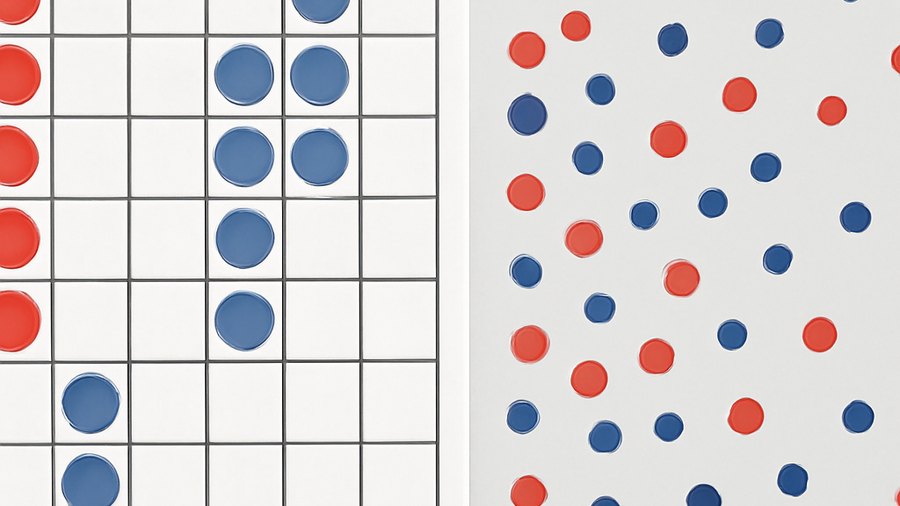
A baccarat scoreboard makes this tempting because it feels formal. The Big Road tracks streaks in an organized grid. The bead plate records each outcome in sequence. Secondary roads, derived from the main results, layer additional visual patterns on top. On a screen, especially, these look like technical trading charts. They carry weight. Credibility. Nobody stares at a random bead plate like it’s nonsense.
And that’s the first trap. A chart can be elegant, precise, and completely non-predictive at the same time. A weather radar displays real data about storm movement and uses physics to forecast. A baccarat road map displays real data about past outcomes, from a system deliberately designed to resist useful prediction. Both are charts. Neither is weather forecasting.
The Independence Problem (and Why It Matters)
The most important probability concept here is independence. When events are independent, one outcome doesn’t change the probability of the next one. MIT OpenCourseWare uses roulette to explain the gambler’s fallacy: after black hits several times, red isn’t suddenly “due.” Roulette wheels don’t carry grudges, or run a tab for past spins.
Baccarat’s slightly more complicated, and this matters, because cards are leaving the shoe. Each dealt hand removes cards from the deck, so in the strictest textbook sense, outcomes aren’t perfectly independent from first card to last. But here’s the key: that distinction almost never helps a pattern bettor. The visible Banker/Player sequences don’t usually tell you enough about the remaining shoe to overcome the house edge. Knowing “Banker won three in a row” doesn’t give you the card-counting advantage you’d need.
Let me be direct. “The game uses cards” does not equal “the baccarat scoreboard can predict the next hand.” To build an actual edge from card composition, you’d need detailed counting, favorable table rules, deep deck penetration, and the ability to bet only when an edge exists. A colored grid showing three Banker wins isn’t that.
Why Random Sequences Always Look Meaningful
Players watching a baccarat scoreboard often say: “But I can see the pattern.” They’re right. They can. That’s exactly the problem.
Random sequences create visible patterns constantly. Flip a fair coin a hundred times. You won’t get perfect alternation: heads, tails, heads, tails. You’ll get streaks. Clusters. Maybe six heads in a row. Those sequences look meaningful because humans expect randomness to distribute more evenly than it actually does. We’re pattern-spotting animals encountering actual statistical noise.
This is where theoretical and empirical probability comes in. The theoretical probability of heads on a fair coin is exactly 1/2. But empirical results, what you actually see in a small sample, can look lopsided. The mistake? Treating that small sample’s shape as if it changes what happens on the next flip.
Baccarat scoreboards live in tiny sample windows. A shoe might last fifty or a hundred hands, sure. But players usually focus on the last five, ten, maybe fifteen outcomes. That’s a micro-sample. In micro-samples, randomness is theatrical. It creates streaks that feel like signals. Reversals that feel like corrections. The board shows real data, the outcome actually happened. But real data from random sources looks like meaningful patterns all the time.
How to Test a Pattern Claim
Here’s a useful question to ask when someone claims they’ve found a pattern: what actually changed?
Let’s say they tell you: “After Banker wins three times, Player is due to even out.” Ask them directly: Did the payout suddenly improve? Did the drawing rule shift? Does the player now have perfect knowledge of the remaining cards? Is the casino paying Player at better odds? If the answer to each of those is no, then they’re sharing psychology, not math. Their expectation of balance is emotional, not analytical.
Now flip it. Someone else says: “Banker won three straight, so Banker is hot. I’m betting it to continue.” Same problem, opposite direction. They’re not explaining the pattern; they’re just telling two different stories about it. One version expects correction. The other expects momentum. Both are narratives draped over the same data.
Here’s where those claims actually collide with reality:
| What the Player Claims | What They’re Really Assuming | What the Math Says |
|---|---|---|
| Player is “due” after Banker streaks | Randomness corrects itself quickly | Past outcomes don’t force short-term balance |
| Banker is “hot” after multiple wins | Momentum exists in the shoe | A streak alone isn’t proof the probability changed |
| The road map pattern confirms the next side | Visual agreement means predictive power | Showing the same data three different ways doesn’t make it predictive |
The House Edge Doesn’t Take a Break During a Pattern
Wizard of Odds’ analysis of eight-deck baccarat shows the house maintains roughly 1.06% on Banker and 1.24% on Player bets under standard rules. That’s the long-run baseline.
Pattern betting has to do more than feel right. It has to overcome those numbers. It has to prove, repeatedly and measurably, that the pattern system wins more often or larger than flat betting would. If your pattern can’t show a genuine improvement in win probability that beats the payout disadvantage, it’s not an edge. It’s just a story.
This is where expected value enters the conversation. EV tells you what you’ll earn or lose over time. A baccarat pattern system has to improve your expected value, not just create a few dramatic wins you’ll remember forever.
Most systems don’t. They create selective memory instead. You remember the hand where the road map “called” it perfectly, lights up your brain, and you win big. You forget the quiet misses, the times the pattern failed, the nights when you followed the board and lost steadily. The scoreboard’s always available for interpretation after the fact. It can be made to look wiser than it actually is.
Backtesting Systems Is Harder Than It Looks
Some players try to verify their pattern system by replaying old shoes, reviewing historical hands and seeing how the system would’ve performed. That’s better than relying on memory alone, but it’s full of hidden traps.
You can tweak a system after seeing the data (overfitting). A rule can crush one sample and tank on the next. You might count skipped hands differently from played hands. Bet sizing can hide the true hit rate. Stopping after a win makes a session look profitable while your actual long-run EV stays underwater.
A rigorous test would need:
- Fixed rules defined before testing starts (no adjustments mid-way)
- A large sample size (one shoe isn’t enough)
- Clear rules for skipped hands
- Realistic table limits and commissions
- Comparison against a baseline (flat betting Banker, for instance)
Most casual pattern systems collapse under that scrutiny. And this isn’t unique to gambling. Data scientists know that if you test enough models against historical data, you’ll find patterns in pure noise. The responsible move is asking whether the pattern predicts new data, not whether it explains old data beautifully.
What a Baccarat Scoreboard Actually Does Well
This doesn’t mean scoreboards are worthless. They’re not. They can help you follow the game. They give you a written record of what happened during your session. They can slow down impulsive betting if you use them as a log instead of an oracle. They’re genuinely interesting as a tool for visualizing randomness.
The key is category. A scoreboard is a record, not a forecast. It’s closer to a diary than a weather model. If you enjoy watching it for entertainment, and you’re only risking money you can afford to lose. That’s a completely different proposition from believing the baccarat scoreboard defeats the house.
For anyone learning probability, scoreboards offer a useful comparison point. Stack a baccarat board next to records of coin flips, dice rolls, or random number sequences. You’ll see the exact same kind of visual patterns in all of them. Math worksheets built around probability let you practice spotting and testing these patterns without real money on the line.
Questions You Probably Have
Are consecutive baccarat hands actually independent?
Not perfectly, because cards leave the shoe. But in practical terms, ordinary betting patterns don’t reveal enough information to create an edge. The next hand won’t be predictable just because you saw the previous visual sequence on a colored grid.
Can a long streak be completely real but still not predictive?
Absolutely. History is real. A ten-hand Banker streak actually happened. But past reality doesn’t predict future reality. A fair coin lands heads six times in a row sometimes. It doesn’t make the seventh flip any more or less likely to be tails. Real streaks and non-predictive patterns aren’t contradictions.
What’s the smartest way to use a baccarat road map?
Treat it as a log, not an engine. If it helps you slow down, organize your decisions, or stick to a budget, it’s harmless. If it pushes you to increase bets because something feels “due,” then it’s probably increasing risk, not insight.
What the Scoreboard Really Shows
A baccarat scoreboard is persuasive because it gives randomness a visible shape. Red. Blue. Patterns. The board looks intelligent. The streak feels alive. The next hand seems like it should belong to the story you’re watching unfold.
But mathematics is less romantic than that. Unless the pattern changes the probability, the payout, or the drawing rules, it doesn’t change expected value. And expected value is what matters over time.
The real conclusion isn’t that every pattern player is foolish. It’s that pattern recognition, in baccarat, needs evidence. Serious, repeatable, measurable evidence. In most cases, the pattern you see on a baccarat scoreboard is a record of variance, not a map to profit. It’s history, not prophecy.
Sources

Related to This Article
More math articles
- Everything You Need to Know to Choose the Right Laptop
- TSI Math FREE Sample Practice Questions
- Loyalty Programs, HUAC, McCarthyism, and Civil Liberties
- Free Grade 8 English Worksheets for Hawaii Students
- Full-Length 8th Grade MCAS Math Practice Test-Answers and Explanations
- Taft-Hartley, the Fair Deal, and the Election of 1948
- NCLEX Delegation Questions: Right Person vs. Right Direction (2027 Prep)
- The Best Grade 8 ELA Practice Tests for New Hampshire Students
- What Are the Applications of the Law of Cosines?
- Biological Indicators and Process Challenge Devices










What people say about "What a Baccarat Scoreboard Actually Knows About the Next Hand - Effortless Math"?
No one replied yet.