Oscar’s Grind: Why a ‘Smart’ Progression Still Loses
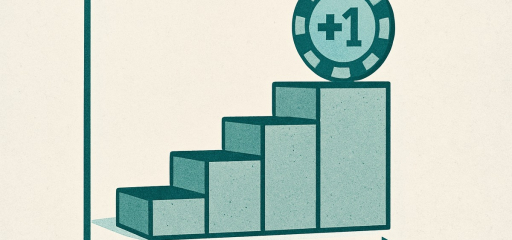
Oscar’s Grind sells itself as the polite progression. No doubling, no scary leaps, no panic. You raise one unit after a win, hold flat after a loss, and walk away as soon as the cycle is one unit ahead. It feels like the betting system grown-ups use, the one that finally got the math right. But the oscar’s grind system runs on the same engine as every other progression: a negative-edge game. The bet pattern changes the shape of your wins and losses; it does not change the expected value. This article walks through the rules, the simulation results, and the reason an 80% cycle win rate still leaves your bankroll bleeding.
The Rules of the Oscar’s Grind System
The mechanics are simple enough to scribble on a napkin. You pick a base unit, say $5, and a target: one unit of profit per cycle. From there, four rules carry you through.
- Start each cycle at one unit.
- After a loss, keep the bet the same.
- After a win, raise the bet by one unit.
- Never bet more than what would finish the cycle at exactly +1 unit profit; cap accordingly.
- When the cycle hits +1 unit profit, reset and start a new cycle at one unit.
That last rule matters. Oscar’s Grind is not “press until you blow up.” It is “ratchet up after wins, lock in the small target, start over.” The system was originally documented by a craps player named Oscar in the 1960s, and the appeal has not aged. It feels disciplined. It feels like a plan.
Why “One Unit Per Cycle” Sounds So Achievable
The target is tiny. One unit. On a $5 base, you are trying to walk away $5 ahead before resetting. Compared to Martingale’s “recover everything plus one,” that goal seems modest. Modest goals tend to feel realistic.
And on most cycles, the goal is realistic. A typical cycle on European roulette red ends in profit something like 80% of the time, depending on the random number generator and how often you hit a clean win streak early. Four out of five cycles, you book your unit and reset. You feel like a craftsman.
The problem is what happens on the fifth cycle. The losing cycles are not symmetric to the winners. A winning cycle nets +1 unit. A losing cycle can drag you down by 30, 50, 100 units before you either hit a recovery run or hit the table limit or your own stop-loss. The arithmetic of “small frequent wins, occasional large losses” is the same arithmetic that runs every progression. The shapes differ. The expected value does not.
The High Win Rate Hides Heavy Tail Losses
This is the part that gets glossed over in forum posts. An 80% cycle win rate sounds like an edge. It is not. It is a redistribution.
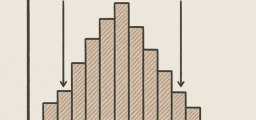
Imagine 100 cycles. About 80 of them close at +1 unit. That is +80 units of green. The remaining 20 cycles each lose, on average, far more than one unit, because Oscar’s Grind only escapes a losing streak when a recovery run arrives. If a losing cycle averages -5 units, you net 80 – 100 = -20 units across 100 cycles. If it averages -10 units, you net 80 – 200 = -120 units. The win rate stays beautiful while the bankroll erodes.
The shape of the loss matters more than the frequency. A handful of brutal cycles can wipe out months of “winning sessions.” Players who run hot for weeks and then give it all back in a single Saturday night are not unlucky; they are running the math.
Expected Value Per Cycle Is Still Negative
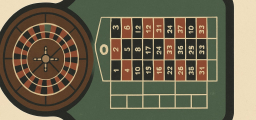
The cleanest way to see why Oscar’s Grind cannot beat a negative-edge game is to look at expected value per dollar wagered, not per cycle. On European roulette, red pays even money but only hits 18 out of 37 spins. The house edge is:
EV per $1 wagered = (18/37)(+1) + (19/37)(-1) = -1/37 ≈ -2.70%
That figure is fixed. It does not care about your bet sequence, your cycle target, your stop-loss, your bankroll, or how many cups of coffee you have had. Every dollar that crosses the felt loses 2.7 cents in expectation. Oscar’s Grind moves more dollars across the felt during losing cycles, because the bets ramp up during the recovery climb. More volume at -2.70% per dollar means more total expected loss, not less.
You can verify this with a back-of-envelope check. If a typical cycle wagers, say, 8 units of total action (some quick, some long), and the average cycle wagers 12 units, your expected loss per cycle is roughly 12 × 0.027 ≈ 0.32 units. To net +1 unit on 80% of cycles, you need the 20% losing tail to give back -7.3 units on average just to hit break-even. In practice the tail is worse than that, which is why long-run results sit below break-even.
What a 1000-Cycle Simulation Shows
If you actually code Oscar’s Grind on European roulette red with a $5 unit and a $500 stop-loss, run it a thousand cycles, and repeat that simulation a few hundred times, a stable pattern emerges. Roughly 78-82% of cycles close profitably. The mean ending bankroll across runs drifts down toward -2.7% of total wagered. Some runs end up; many end down; the distribution is wider than a flat-bet baseline because the progression amplifies streaks.
The table below summarizes typical cycle outcomes grouped by what kind of streak the cycle ran into. Numbers are illustrative averages from common Monte Carlo runs, not guarantees.
| Cycle Pattern | Approx. Frequency | Net Result | Notes |
|---|---|---|---|
| Win on first spin | ~48% | +1 unit | Cleanest possible cycle. |
| Short mixed run, finishes in profit | ~25% | +1 unit | 2-6 spins, bet ramps a little. |
| Long climb, finishes in profit | ~8% | +1 unit | 15-40 spins, bet caps at cycle target. |
| Stuck in losing streak, eventually recovers | ~4% | +1 unit | Can wager 30+ units before recovery. |
| Hits stop-loss before recovery | ~15% | -20 to -100 units | The tail that eats the bankroll. |
Add it up. The four winning categories sum to about 85% of cycles, each contributing +1 unit. That is roughly +85 units across 100 cycles. The losing 15% averages somewhere around -40 to -60 units each. Net result is comfortably negative, which matches what the EV calculation already told us.
A Worked Example: One Ugly Cycle
Walk through a cycle that starts with three losses, then a win, then two more losses, then a win, then a final win that closes the cycle. With a $5 base unit and the standard rules, the bet sequence looks like this. Start at $5. Lose. Stay at $5. Lose. Stay at $5. Lose. Running total -15. Win at $5, raise to $10. Running total -10. Lose at $10. Stay at $10. Running total -20. Win at $10, but raising to $15 would overshoot the +1 unit target, so cap at the amount needed to reach +1 unit. Running total -10. Then win at the capped bet. Running total finally +5, which is the one unit target. Cycle closes.
That cycle used 8 spins and roughly $60 in total action to produce $5 of profit. At -2.70% per dollar wagered, the expected loss on $60 of action is about $1.62. The cycle “won” $5 in the random outcome, but in expectation the same pattern of action gives back $1.62 every time it repeats. Repeat enough cycles and the realized result converges toward the expected one. That is the law of large numbers doing what it always does, quietly, in the background.
Comparison to Martingale and Paroli
Oscar’s Grind is often pitched as the “smart” alternative to Martingale. The comparison is worth making honestly.
- Martingale: double after every loss, reset after a win. Win rate per cycle is very high (often above 95%), but the tail loss is catastrophic and arrives fast. Eight losses in a row on a $5 base means a $1280 bet to recover. Table limits and bankrolls cap this long before infinity.
- Paroli (reverse Martingale): press bets after wins, reset after a loss or after a target streak. Win rate is lower, but losses are bounded because you risk only one base unit per series. It is the gentlest progression and also still loses to the house edge.
- Oscar’s Grind: a middle path. Win rate around 80%, tail loss moderate but not bounded, escalation slower than Martingale. Same EV.
All three are equivalent in expectation. They differ only in how the loss is packaged. Martingale gives you frequent small wins and rare giant losses. Paroli gives you frequent small losses and rare medium wins. Oscar’s Grind sits between them. None of them changes the -2.70% per dollar on red.
When Oscar’s Grind Is Reasonable
There is one honest use case: entertainment with a structure. If you enjoy the pacing of a progression and you want a system that keeps your bet size from spiraling, Oscar’s Grind is less reckless than Martingale and more engaged than flat-betting. The pacing gives you something to track, which can stretch a fixed entertainment budget across more spins than randomly varying bets would.
That is the use case. Not income. Not a side hustle. Not a way to “beat” a wheel with a fixed mechanical edge. If you would not flat-bet your entertainment money on red and expect a paycheck, you should not expect one from a bet sequence that wagers more of that same money. The math homework on probability over at Effortless Math covers the underlying expected value reasoning if you want to work through more examples by hand.
For an independent rundown of how various betting systems perform against fixed house edges, the analysis at Wizard of Odds: Betting Systems is the standard reference. It walks through Oscar’s Grind, Martingale, Labouchere, and others with simulation data and the same conclusion: progressions reshape variance, they do not erase the edge.
Frequently Asked Questions
Q: Does Oscar’s Grind work on blackjack instead of roulette?
A: The house edge on basic-strategy blackjack is lower (around 0.5% with good rules) than on roulette, so the bleed is slower. The system still loses in expectation. It is not a counting system; it cannot find an edge that is not there.
Q: What stop-loss should I use?
A: Any number you can lose without it ruining your week. The point of a stop-loss with Oscar’s Grind is not to win more; it is to cap the tail loss so a single bad night does not erase a month. Smaller stop-losses raise the frequency of losing cycles but cap their size.
Q: Can I improve Oscar’s Grind by combining it with other systems?
A: Combining negative-expectation systems produces another negative-expectation system. The combined EV is a weighted average of the parts. There is no arrangement of bet sizes on a fixed-edge game that turns a -2.70% edge into a positive one.
Q: Why does it feel like it works for the first hour?
A: Because 80% of cycles close profitably and many sessions end before the tail shows up. You are sampling from the winning side of the distribution. The losing cycles exist, are larger, and arrive on their own schedule.
Q: Is there any version of Oscar’s Grind that does better?
A: Variants tweak the reset rules or cap escalation differently. They shift the distribution slightly but never the mean. The mean is locked by the game, not by the bet rule.
Gambling outcomes are uncertain; no strategy guarantees profit.

Related to This Article
More math articles
- Best Calculators for High School Algebra I
- ACCUPLACER Math Practice Test Questions
- Recognizing Other Viewpoints
- DAT Quantitative Reasoning Math Practice Test Questions
- Craps Proposition Bets: A Probability Anatomy of the 16.67% House Edge
- Mexican American and Asian American Citizenship and Resistance
- The Best Grade 7 ELA Practice Tests for Hawaii Students
- A Comprehensive Collection of Free TABE Math Practice Tests
- Free Grade 2 English Worksheets for Michigan Second Graders
- The Best Algebra 1 Book for Illinois Students






What people say about "Oscar’s Grind: Why a ‘Smart’ Progression Still Loses - Effortless Math"?
No one replied yet.