Craps Proposition Bets: A Probability Anatomy of the 16.67% House Edge
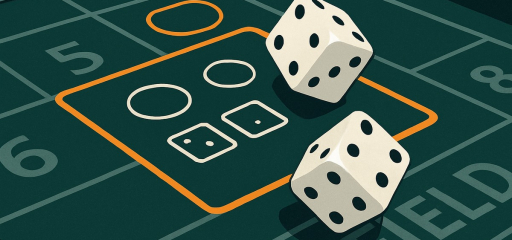
Walk up to a busy craps table and you will hear the loudest cheers coming from the middle of the layout, where the proposition bets live. Those tiny boxes with pictures of dice and big payout numbers look like little lottery tickets glued onto the felt. They are also, mathematically, where the worst bets in the entire casino quietly sit. This guide is a probability anatomy of craps proposition bets math: where the 16.67% house edge actually comes from, why hardways aren’t as bad as Any Seven, and how the Field bet sneaks in at a much friendlier 5.56% while still costing you money. We will keep the math honest, the language plain, and the conclusions practical.
What the prop area on a craps table actually is
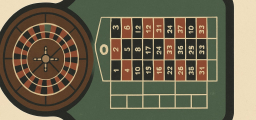
The center of a craps layout is shared by both ends of the table and run by the stickman. That middle region holds the one-roll bets (resolved on the very next throw) and the multi-roll hardways. Common entries you will see there: Any Seven, Any Craps, Yo (11), Three, Two, Twelve, the Hop bets, the Horn, the World, and the four hardways (Hard 4, 6, 8, 10). The Field bet is usually printed in a long strip along the player’s side, not in the center, but it behaves like a one-roll prop too.
The dealer’s pitch is simple: a single roll, a big payout, instant resolution. The math underneath is also simple, and that is what makes it powerful. With two six-sided dice there are only 36 equally likely outcomes. Once you write those 36 out, every prop bet’s edge falls out of arithmetic that a middle schooler can do. Casinos rely on the fact that you don’t do it.
Any Seven: the cleanest 16.67% in the building
Any Seven (sometimes called Big Red) wins if the next roll is a 7 and loses on anything else. Out of 36 outcomes, six of them total 7: (1,6), (2,5), (3,4), (4,3), (5,2), (6,1). So P(win) = 6/36 = 1/6 ≈ 0.1667. True odds against winning are 30 to 6, which is 5 to 1. A fair payout would be 5:1. The casino pays 4:1.
Expected value per $1 bet:
EV = (1/6)(+4) + (5/6)(−1) = 4/6 − 5/6 = −1/6 ≈ −0.1667.
That is a house edge of 16.67%. There is no easier prop to analyze and no clearer example of how shaving one unit off a fair payout becomes the entire profit margin. Any Seven is the worst common bet on the table.
Hardways: 11.11% on Hard 4 and 10, 9.09% on Hard 6 and 8
Hardways are multi-roll bets, not one-roll bets. A “hard” total is one rolled as a double: hard 4 = (2,2), hard 6 = (3,3), hard 8 = (4,4), hard 10 = (5,5). The bet wins when the hard version of the number is rolled. It loses when the number is rolled the “easy” way (any other combination summing to that total) or when any 7 is rolled. Other numbers don’t resolve the bet.
Because the bet only resolves on hard hits, easy hits, or any seven, the right probability to use is conditional on resolution. For Hard 4:
- Ways to roll hard 4: 1 (just (2,2)).
- Ways to roll easy 4: 2, (1,3) and (3,1).
- Ways to roll a 7: 6.
- Total resolving rolls: 1 + 2 + 6 = 9.
So P(win | resolution) = 1/9 and P(lose | resolution) = 8/9. The casino pays 7:1. Expected value per $1:
EV = (1/9)(+7) + (8/9)(−1) = 7/9 − 8/9 = −1/9 ≈ −0.1111.
That is an 11.11% edge. Hard 10 has the same arithmetic, so its edge is identical.
For Hard 6 and Hard 8, the easy ways are more numerous. Hard 6 wins only on (3,3); easy 6 happens on (1,5), (2,4), (4,2), (5,1), four ways. Plus six ways to roll a 7. That’s 1 + 4 + 6 = 11 resolving rolls. The casino pays 9:1:
EV = (1/11)(+9) + (10/11)(−1) = 9/11 − 10/11 = −1/11 ≈ −0.0909.
So Hard 6 and Hard 8 sit at 9.09%. Better than Any Seven, but still several times worse than the line bets out on the rails.
Yo (11) and Three: the lopsided twins
Yo is a one-roll bet on 11. There are exactly 2 ways out of 36 to roll an 11: (5,6) and (6,5). P(win) = 2/36 = 1/18. True odds against are 34 to 2, which is 17 to 1. Standard payout is 15:1.
EV = (1/18)(+15) + (17/18)(−1) = 15/18 − 17/18 = −2/18 = −1/9 ≈ −0.1111.
Three (also called Ace-Deuce) is the mirror image. Two ways to roll a 3: (1,2) and (2,1). Same probability, same 15:1 payout, same 11.11% house edge. The casino doesn’t care whether you bet high or low on the rare singletons; the math is symmetric.
Any Craps: the catch-all that sounds friendlier than it is
Any Craps wins if the next roll is 2, 3, or 12. Combined ways: 1 + 2 + 1 = 4 out of 36. P(win) = 4/36 = 1/9. True odds against are 32 to 4, which is 8 to 1. The casino pays 7:1.
EV = (1/9)(+7) + (8/9)(−1) = 7/9 − 8/9 = −1/9 ≈ −0.1111.
Another 11.11% bet. Notice a pattern: many of the one-roll center props converge on either 11.11% or 16.67%. That isn’t a coincidence. It’s the casino paying “one unit short of fair” on bets where the fair payout has a clean denominator.
Hop bets and the 13.89% / 11.11% trap
A Hop bet is a one-roll wager that the next roll will be a specific combination. “Hopping” 5 to 3 means the next dice show a 5 and a 3 in either order. Two-way hops (e.g., 5 to 3, which can land as (5,3) or (3,5)) have 2 ways out of 36; one-way hops (e.g., hopping 4 to 4) have only 1 way out of 36 because there is no other arrangement.
Typical payouts: 15:1 on two-way hops and 30:1 on one-way hops. Run the EV:
- Two-way hop (2/36): EV = (2/36)(15) + (34/36)(−1) = 30/36 − 34/36 = −4/36 ≈ −11.11%.
- One-way hop (1/36): EV = (1/36)(30) + (35/36)(−1) = 30/36 − 35/36 = −5/36 ≈ −13.89%.
So hopping a hard number (a “hop hardway”) is actually worse than the standing hardway bet on the same total, because the multi-roll resolution structure of the standard hardway gives it a smaller effective edge.
The Field bet: sneakier at 5.56%
The Field is a one-roll bet that the next total will be 2, 3, 4, 9, 10, 11, or 12. Look at the layout and you’ll see seven numbers listed against only four that lose (5, 6, 7, 8). It feels like you should be a favorite. You’re not.
Counting the 36 outcomes: winning totals contribute 1 + 2 + 3 + 4 + 3 + 2 + 1 = 16 ways. Losing totals (5, 6, 7, 8) contribute 4 + 5 + 6 + 5 = 20 ways. The Field pays 1:1 on most numbers, 2:1 on the 2, and (in the most common modern paytable) 3:1 on the 12. Working in 36ths:
EV per $1 = (14/36)(+1) + (1/36)(+2) + (1/36)(+3) + (20/36)(−1) = (14 + 2 + 3 − 20)/36 = −1/36 ≈ −0.0278.
Hmm. That arithmetic gives 2.78%, which is the friendliest Field paytable (triple on both 2 and 12). The more common version pays 2:1 on 2 and 2:1 on 12, giving:
EV = (14/36)(+1) + (1/36)(+2) + (1/36)(+2) + (20/36)(−1) = (14 + 2 + 2 − 20)/36 = −2/36 ≈ −5.56%.
So a “single-double” Field is 5.56%, while a “triple on the 12” Field drops to 2.78%. Always check what the 2 and 12 actually pay before betting the Field. The number on the felt matters more than the slogan.
The full prop bet table
| Bet | Ways to win (of 36) | P(win) | Casino payout | True odds | House edge |
|---|---|---|---|---|---|
| Any Seven | 6 | 16.67% | 4:1 | 5:1 | 16.67% |
| Any Craps (2, 3, 12) | 4 | 11.11% | 7:1 | 8:1 | 11.11% |
| Yo (11) | 2 | 5.56% | 15:1 | 17:1 | 11.11% |
| Three | 2 | 5.56% | 15:1 | 17:1 | 11.11% |
| Two | 1 | 2.78% | 30:1 | 35:1 | 13.89% |
| Twelve | 1 | 2.78% | 30:1 | 35:1 | 13.89% |
| Hard 4 (resolving rolls) | 1 of 9 | 11.11% | 7:1 | 8:1 | 11.11% |
| Hard 10 (resolving rolls) | 1 of 9 | 11.11% | 7:1 | 8:1 | 11.11% |
| Hard 6 (resolving rolls) | 1 of 11 | 9.09% | 9:1 | 10:1 | 9.09% |
| Hard 8 (resolving rolls) | 1 of 11 | 9.09% | 9:1 | 10:1 | 9.09% |
| Two-way Hop | 2 | 5.56% | 15:1 | 17:1 | 11.11% |
| One-way Hop | 1 | 2.78% | 30:1 | 35:1 | 13.89% |
| Field (2:1 on 2 and 12) | 16 | 44.44% | 1:1 / 2:1 | , | 5.56% |
| Field (3:1 on 12) | 16 | 44.44% | 1:1 / 2:1 / 3:1 | , | 2.78% |
Why props feel “fun” despite being terrible
Probability alone doesn’t explain why people keep betting these. A few human factors do most of the work:
- Fast resolution. Most props decide on the next roll. The brain treats each roll as a fresh chance, not as a slow grind.
- Big payout numbers. “30 to 1” feels meaningful even when it should be 35 to 1.
- Cheap entry. Minimums are often $1. Losing $1 thirty times in a row doesn’t feel like losing $30.
- Loud wins. When a hard 8 hits, the stickman calls it out and the table reacts. The win is socially amplified.
- Pattern fiction. Players believe a number is “due.” Dice have no memory; the previous 50 rolls don’t change the next one.
This is the same pattern you see in lotteries and slot bonus features: salience replaces math. The bet looks like a story, not a number.
Long-run expected losses per hour
To translate edges into dollars, you need bets per hour. A typical craps table resolves roughly 100 rolls per hour. If you put $5 on Any Seven every roll, your hourly action is $500. Expected loss = $500 × 16.67% ≈ $83 per hour. Compare that to a Pass Line bet with full odds: a $5 Pass Line resolved about every 3.4 rolls is ~30 resolutions per hour, $150 of action, edge 1.41%, expected loss ~$2.12.
The same player at the same table can have an hourly burn rate that differs by a factor of 40 depending on whether the chips go on the line or the prop box. That is the practical meaning of “house edge.” For a sanity check on the table and bet structure, the overview at Wizard of Odds and the encyclopedic summary at Britannica are both worth a look.
Stretch this across a four-hour session and the picture sharpens. A $5 Any Seven bettor faces an expected loss near $330 for the night. A $5 Pass-Line-with-odds bettor faces an expected loss closer to $8 for the same four hours. Variance is what you feel; edge is what you pay. The prop area is where the gap between the two becomes invisible: thrilling roll-by-roll, ruinous month-by-month.
If you’d rather strengthen the probability skills behind these calculations than memorize a felt, there are clean primers on counting outcomes and expected value at Effortless Math.
FAQ
Q: Is the Any Seven bet ever a good bet?
A: No. It is the worst common bet on the craps table at a flat 16.67% house edge. There is no paytable variation, side rule, or comp structure that changes this in your favor.
Q: Are hardways better than hopping the same number?
A: Yes, slightly. Hard 6 is 9.09% and Hard 8 is 9.09%, but hopping 3 to 3 or 4 to 4 (a one-way hop) pays 30:1 on a 1/36 event, which is 13.89%. The multi-roll structure of a standard hardway gives it a smaller effective edge.
Q: Is the Field bet actually a “good” bet?
A: Better than the center props, but still negative. 5.56% on the standard paytable and 2.78% if your house pays 3:1 on the 12. Compare to Pass Line at 1.41% or Don’t Pass at 1.36%, and the Field is still 2 to 4 times worse.
Q: Does a hot shooter change prop bet odds?
A: No. Each roll of two fair dice is independent. Streaks are real as outcomes but invisible as causes. The 36-outcome sample space resets every throw.
Q: Why do casinos let players bet props at all if they are so bad?
A: Exactly because they are so bad. Props are high-margin, high-volume, fast-resolving bets that subsidize lower-edge bets like the Pass Line. The casino doesn’t need to forbid them; the math does the work.
Gambling outcomes are uncertain; no strategy guarantees profit.

Related to This Article
More math articles
- 4th Grade PSSA Math FREE Sample Practice Questions
- Full-Length 8th Grade SBAC Math Practice Test-Answers and Explanations
- Top 10 Tips to Overcome SSAT Math Anxiety
- How to Do Percentage Calculations? (+FREE Worksheet!)
- The Best Grade 5 ELA Practice Tests for Tennessee Students
- The Fluid Mosaic Membrane
- FREE 5th Grade Georgia Milestones Assessment System Math Practice Test
- Minnesota Algebra 1 Free Worksheets: Printable Algebra 1 Practice You Can Download Free
- Rounding Decimals for 5th Grade: Nearest Tenth and Hundredth
- How to Study for a Math Test in 7 Easy Steps



What people say about "Craps Proposition Bets: A Probability Anatomy of the 16.67% House Edge - Effortless Math"?
No one replied yet.