The Near-Miss Illusion: How Slot Math Engineers Tease Brains
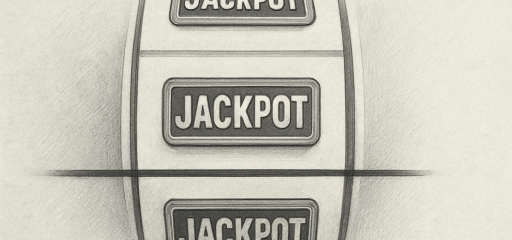
You hit spin. The first reel locks in a jackpot symbol. The second reel locks in another. Your pulse jumps. The third reel slows, slows, and stops one stop short of the jackpot line. So close. You play again. The near miss slot moment you just lived through isn’t a coincidence, and it isn’t bad luck either. It’s engineering. The math that decides where those reels stop has been tuned, audited, and in many cases legally constrained, all because designers figured out decades ago that a miss landing right next to a win keeps players spinning longer than a clean loss does.
What a Near Miss Actually Looks Like on the Reels
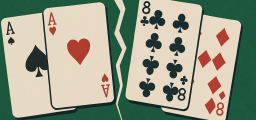
Take a classic three-reel slot. The payline runs across the middle of the window. A near miss shows two jackpot symbols on reels one and two sitting on the payline, with the third reel stopping so the jackpot symbol is one position above or below the line, visible but useless. The eye catches the symbol. The brain catches the symbol. The payout table does not.
That visual matters. A reel that stops with the jackpot symbol nowhere in the window reads as a generic loss. A reel that parks the jackpot symbol one stop off the payline reads as “I was right there.” Same outcome on the credit meter. Very different feeling in the chair.
Virtual Reels: The Math Behind the Tease
Old electromechanical slots had real spinning reels with a fixed number of physical stops, usually 22. If you wanted a jackpot symbol to land 1 in 22 times on each reel, you put one jackpot symbol on the strip. With three reels that gave roughly 1 in 10,648 odds on the top prize, which capped how big the jackpot could be without bankrupting the house.
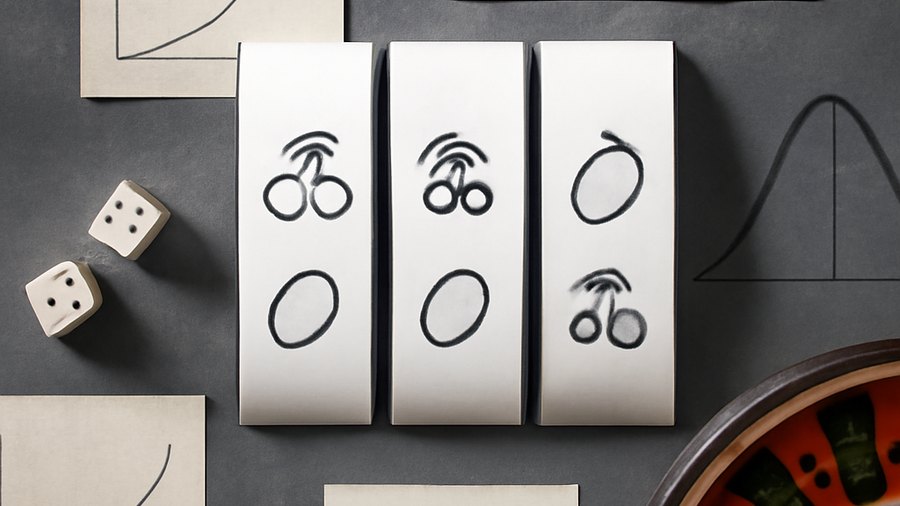
Then a patent filed by Inge Telnaes in 1984 changed everything. The virtual reel. Behind the physical reel the player sees, the computer keeps a longer list, say 64 entries, and maps each entry to one of the 22 physical stops. Multiple virtual entries can point to the same physical stop. The computer rolls a random number from 1 to 64, looks up the physical stop, and tells the reel motor where to park.
This is where the tease lives. You can map only 2 of the 64 virtual entries to the jackpot stop while mapping 12 of them to the two physical stops directly above and below the jackpot. The jackpot becomes rarer than the player guesses by looking at the strip, and the “almost jackpot” cluster becomes more common than chance would suggest.
| Stop on physical reel | Symbol shown | Virtual stops mapped here | Probability per spin |
|---|---|---|---|
| Stop 11 (one above payline) | Blank / cherry | 6 | 6/64 = 9.4% |
| Stop 12 (payline) | Jackpot 7 | 2 | 2/64 ≈ 3.1% |
| Stop 13 (one below payline) | Bar | 6 | 6/64 = 9.4% |
| All other 19 stops | Mix of bars, bells, blanks | 50 (avg 2.6 each) | 50/64 ≈ 78.1% |
| Totals | — | 64 | 100% |
If the strip were honest, you would expect 1/22 ≈ 4.5% for each physical stop, so 2/22 ≈ 9.1% for the “jackpot or its neighbor” cluster on any one reel. Under the virtual mapping above, the neighbor cluster alone runs 12/64 ≈ 18.75%, more than double what the visible strip suggests, while the jackpot itself sits at 3.1%. The reel looks fair. The math is not symmetric.
Why the Brain Falls for It: The Skinner Box Angle
B.F. Skinner ran pigeons through variable-ratio reinforcement schedules in the 1950s and found something useful for casino design: animals trained on unpredictable reward schedules pecked longer and resisted extinction harder than animals trained on fixed schedules. A slot machine is a variable-ratio schedule with sound effects.
Near misses add a twist on top of that. Functional MRI studies, notably work by Luke Clark at Cambridge and follow-ups since, found that near-miss outcomes light up parts of the reward system that overlap with what real wins activate, even though the player gets paid nothing. The brain partially treats the near miss as progress. Progress nudges the next spin.
- Variable-ratio reinforcement: rewards arrive on no fixed schedule, which maximizes time-on-device.
- Partial reward signal: near misses activate striatal regions that respond to actual wins.
- Illusion of control: players report feeling “closer” to a jackpot after a near miss even though spins are independent.
- Loss-chasing: the near-miss effect correlates with longer sessions and bigger total wagers.
- Sound and light layering: celebratory audio on small wins (and near misses) reinforces the same loop.
Regulator Pushback and Nevada’s Rules
Engineers built the virtual reel, players reacted to it, and regulators eventually noticed. Nevada Gaming Control Board Regulation 14 and accompanying Technical Standards spell out that slot machines must not be designed to deliberately misrepresent the probability of any outcome. After a 1988-89 controversy over Universal Distributing slots that allegedly stacked near misses well past the virtual-reel norm, Nevada explicitly banned secondary decision algorithms that pick a “near miss” stop after a losing outcome has already been determined. The probability still has to come from the virtual reel mapping itself, not from a separate cosmetic layer.
Other jurisdictions wrote similar language. The UK Gambling Commission’s technical standards require that the outcome shown on screen reflect the random number generator result, not a post-hoc display choice. Australia’s national standard caps the ratio of certain symbol weightings on a per-reel basis. None of these rules ban near misses outright. They constrain how the math can produce them.
Modern HTML5 Slots and Digital Near-Miss Engineering
Online slots dropped the physical reel entirely. A modern HTML5 video slot can have any number of virtual symbols per reel, mystery stacks, expanding wilds, cascading symbols, and bonus trigger logic that runs across the whole grid. The near miss did not disappear. It moved.
Two common digital flavors:
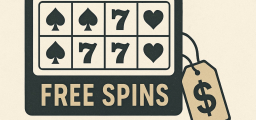
- Bonus-trigger teases: games that need three scatter symbols to launch a free-spins round often weight the reel strips so two scatters land far more frequently than statistical independence would predict. You see “2 of 3” land all the time. The third one lands a lot less.
- High-volatility big-symbol drops: a stacked wild reel that lands one position off the screen, or a Megaways game that drops a top-symbol cluster on four of six reels, both function as near misses for the headline payout.
Regulated markets still require the displayed outcome to come straight from the RNG, but reel-strip composition is the designer’s lever, and that lever can produce a lot of teasing without crossing a legal line.
How to Spot the Tease While You Play
You cannot reverse-engineer a virtual reel from the chair, but you can notice the symptoms.
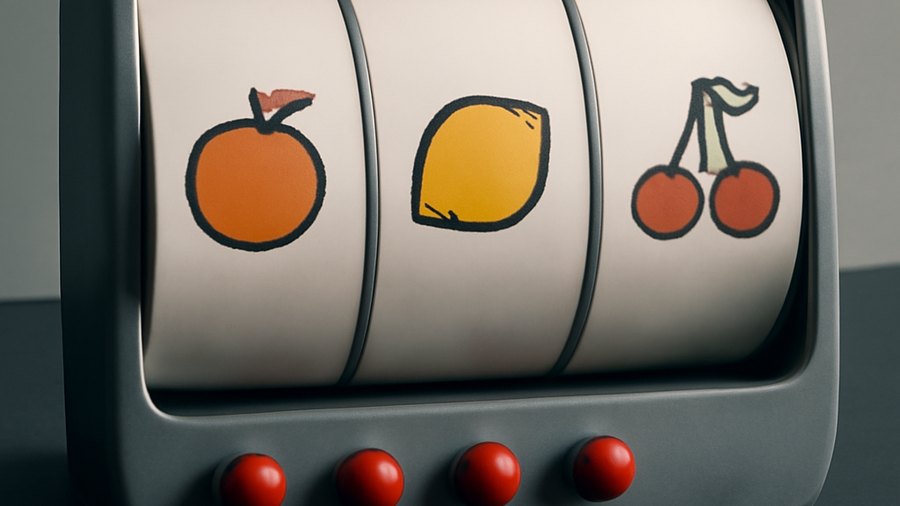
- Count how often the jackpot or top symbol lands one row off the payline versus how often it lands elsewhere. If “one row off” feels constant and “anywhere on screen” feels rare, the reel strip is doing its job.
- Watch bonus scatters. Two scatters with the third teasing in and out of the window is a near-miss signature.
- Listen to the sound design. Games that play a rising-tension cue when a reel is about to stop are leaning into the effect on purpose.
- Check the paytable’s listed return to player. A published RTP is the long-run truth. The on-screen drama is not.
A Worked Example: Three Reels, One Top Prize
Run the numbers on a three-reel game using the virtual mapping above. Probability of three jackpot symbols on the payline equals (2/64) cubed, which is 8/262,144, or about 1 in 32,768. Probability that at least one reel produces a “jackpot or neighbor” hit (12 of 64 entries weighted to that band, plus the 2 jackpot entries themselves, giving 14/64 ≈ 21.9% per reel) is 1 − (1 − 0.219) cubed ≈ 52.5%. So on more than half of all spins, at least one reel will park a jackpot or its neighbor in the window even though only about 1 spin in 32,000 actually pays the top prize. The gap between “felt close” and “was close” is huge, and it is entirely produced by the weighting table, not by anything mystical about the spin.
What This Means for Players
The near-miss effect does not change the math of any single spin. Each spin is independent. The RNG does not remember the last result. What near misses do change is how long you stay, how much total you wager, and how confident you feel that the next spin is the one. Over a session, those three things matter more than any single outcome.
If you enjoy slots as entertainment, set a session budget and a time limit before you sit down, and treat the budget as the cost of the entertainment. If a near miss is making you feel like you are owed a win, that is the tell that the design is working on you, not the tell that the machine is about to pay. Resources like the National Council on Problem Gambling exist for exactly this reason, and the Wizard of Odds slot section walks through the underlying math in more depth if you want to dig further.
For readers who like the puzzle-math side of all this, the probability and ratio drills at Effortless Math are a friendlier way to spend an evening than chasing a third seven.
Frequently Asked Questions
Q: Are near misses on slot machines random or are they programmed?
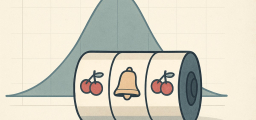
Both, in a sense. The reel stop is selected by a random number generator, but the mapping from RNG output to displayed symbol is designed. That mapping concentrates near-miss outcomes near the top-paying symbols on purpose, so near misses are random events drawn from a deliberately weighted distribution.
Q: Does a near miss mean a jackpot is coming soon?
No. Each spin is independent. A reel landing one stop short of the jackpot tells you nothing about the next spin’s outcome. The “due” feeling is a cognitive illusion that the near-miss effect is designed to trigger.
Q: Is virtual reel mapping legal?
Yes, in every major regulated market. What is restricted is layering a separate “near miss” choice on top of an already-determined losing outcome. Nevada specifically prohibits that secondary manipulation. The base virtual reel weighting is permitted as long as the paytable and RTP are accurately disclosed.
Q: Why do online slots feel like they tease me more than older machines?
Modern HTML5 slots have more reels, more rows, more bonus features, and more chances to almost trigger something. More almost-triggers per minute is more teases per minute. The underlying psychology is the same as a 1980s three-reel game; the surface area is larger.
Q: Can I avoid the near-miss effect entirely?
Not if you are playing slots, because it is baked into the reel design. You can blunt its impact by setting hard limits on time and budget before you start, by avoiding playing while tired or after a loss, and by choosing games with simpler reel structures where the math is easier to read.
Gambling outcomes are uncertain; no strategy guarantees profit.

Related to This Article
More math articles
- The Ultimate SBAC Algebra 1 Course (+FREE Worksheets)
- Best Back-to-School Math Apps for Students
- How to Understand Cost of Credit and Loans? (+FREE Worksheet!)
- Free Grade 8 English Worksheets for South Carolina Students
- Simple & Compound Interest Calculator (Free)
- How to Ace AP Calculus AB in 2026: Self-Study or Classroom Playbook
- Arizona Grade 2 Math Worksheets — Free Printable PDFs
- The Best Grade 5 Math Book for Colorado Students
- The Best Grade 5 ELA Practice Tests for Georgia Students
- 8 Ways to Get Your Kids To Love Math



What people say about "The Near-Miss Illusion: How Slot Math Engineers Tease Brains - Effortless Math"?
No one replied yet.