Free Spins Math: Pricing the Bonus Round Yourself
Every casino email I’ve gotten this month has dangled “50 free spins” like it’s a winning lottery ticket someone forgot to claim. The headline reads great, until you actually try to put a dollar figure on what those spins are worth to you. Most players never bother, and that’s exactly why operators love the offer. So let’s run the free spins value math ourselves and see what’s really sitting in the envelope. I’ll walk through the arithmetic with realistic numbers, point out where the small print quietly eats your edge, and give you a way to compare any spin promo against a plain old deposit match.
What a “free spin” actually is
A free spin is a spin on a slot where the casino, not you, pays the stake. That’s it. The reels spin at a fixed bet level the operator picked (usually $0.10, $0.20, or sometimes $0.50), and any winnings get credited to your account under whatever terms the promotion specifies. You don’t risk cash on the spin itself, but you also don’t get to choose the bet size, the volatility, or sometimes even the game. I’ve seen offers locked to a single title nobody plays voluntarily, and there’s a reason for that.
The reason matters: a free spin’s worth depends on three things, the stake the casino assigns, the slot’s RTP, and the wagering conditions attached to anything you win. Strip out any one of those and you’re not pricing the offer, you’re just hoping.
Pricing free spins with no wagering attached
The cleanest case first. You’re handed 50 free spins at $0.20 each, on a slot with a 96% return-to-player figure, and there’s no playthrough requirement on the winnings. Total wagered on your behalf: 50 × $0.20 = $10. Expected return at 96% RTP: $10 × 0.96 = $9.60.
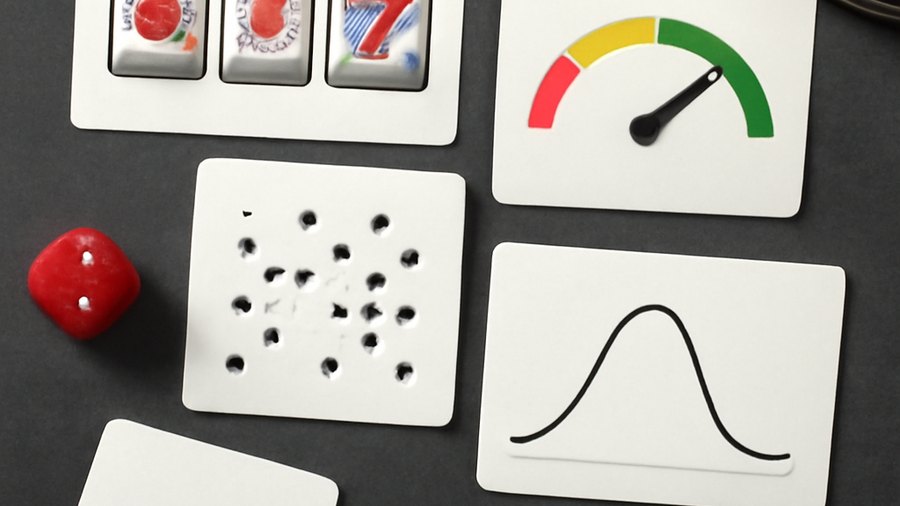
That $9.60 is your expected value before variance. You won’t hit exactly $9.60, slots are spiky, and you could walk away with $0 or $80 depending on how the random number generator feels, but over enough offers of this type, $9.60 per fifty-spin bundle is what the long-run average converges to. No-wagering free spins are genuinely the closest thing to free money the casino industry offers, which is why they’re rare and usually capped at small spin counts.
Pricing free spins with wagering requirements attached
Here’s where it gets messy. The standard structure is 30x wagering on winnings, sometimes 35x or 40x. The math still starts the same way, 50 spins × $0.20 × 96% RTP gives an expected $9.60 in winnings, but you can’t just walk away with it. You have to wager those winnings 30 times before any of it converts to withdrawable cash.
Say you end up with $3 in winnings, somewhere in the middle of a typical distribution. A 30x wagering requirement means you’ve got to put $90 through the slots before cashing out. At 96% RTP, expected loss on $90 of turnover is $90 × 0.04 = $3.60. You started with $3 and the expected loss to clear it is $3.60, your expected net is negative. Welcome to the part of the brochure that’s printed at the bottom in gray.
If your winnings come in higher, around $2-$3 on average across all outcomes, the turnover requirement runs $60 to $90 and your expected loss to clear is $2.40 to $3.60. Combine that with the original $9.60 in expected gross winnings and you’re looking at a net EV roughly between $6 and $7. Better than nothing, but a long way from “$10 free!”
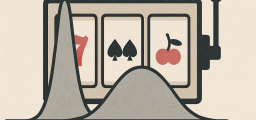
One thing worth flagging here, the expected-value figure averages across all outcomes, including the ones where you win nothing and the 30x requirement becomes moot. In practice, the distribution is bimodal-ish: a fat chunk of sessions end at zero balance before you even start the clearing process, and the remaining sessions cluster around small-to-moderate wins. The mean smooths over that, but if you’re playing one offer once, you’re sampling from a lumpy curve. Don’t budget around the average; budget around the realistic worst case, which is $0.
“Free spins” vs “bonus spins on winnings”
Operators play fast and loose with the terminology, and the distinction is worth real money. A genuine free spin pays out cash (subject to whatever terms apply). A bonus spin on winnings pays out bonus credit, which itself has to be wagered through before becoming withdrawable. You’re effectively getting two layers of wagering requirement, one for completing the spin promotion, another on whatever you win from it.
I once spent twenty minutes on a help-chat trying to figure out which type a particular promo was, and the rep kept dodging. That was the answer. If the support team won’t tell you in plain text whether winnings are cash or bonus funds, assume bonus funds and price it down accordingly. Bonus-funds wins typically lose another 30-50% of their nominal value to the clearing process, so a $9.60 expected win on bonus terms is really worth somewhere around $4.50-$6.50.
Max-cashout caps
The other quiet killer. Many free-spin offers cap the maximum withdrawal at $50, $100, or some multiple of your “deposit” (even when there’s no deposit). If you happen to hit a $500 bonus round during your fifty spins, yes, it happens, the casino keeps everything above the cap. That’s not a tail risk on their end; that’s a tail trim on yours.
How much does a cap cost you in EV terms? Depends on the slot’s volatility. For a low-volatility game, a $100 cap on a $10-wagered promo costs you almost nothing because hitting a 1000x payout was vanishingly unlikely anyway. For a high-volatility slot, the kind they usually pick for these promos, the cap can shave 10-20% off the gross EV. It’s the casino’s way of selling you a lottery ticket and then secretly tearing off the jackpot row.
The cap interacts nastily with the wagering requirement, too. If you win $200 on a free spin but the cap’s $50, you’ve still got to wager that $50 through 30x, call it $1,500 of turnover, to actually withdraw it. Expected loss on that turnover at 96% RTP is $60, which is more than the cap itself. The math doesn’t quite work; you’d bust before clearing. Operators know this. The capped, wagering-attached promo is a structure designed to look enormous and pay out almost nothing.
In-game free spins vs promotional free spins
The free spins triggered during base-game play (three scatters, a bonus symbol, whatever) are an entirely different animal and a much friendlier one. They’re priced into the slot’s published RTP, meaning the 96% figure already assumes you’ll trigger bonus rounds at the expected rate. You don’t “win” anything extra by hitting them; you’re just receiving the part of the return the game owes you. They’re internal accounting, not a promotion.
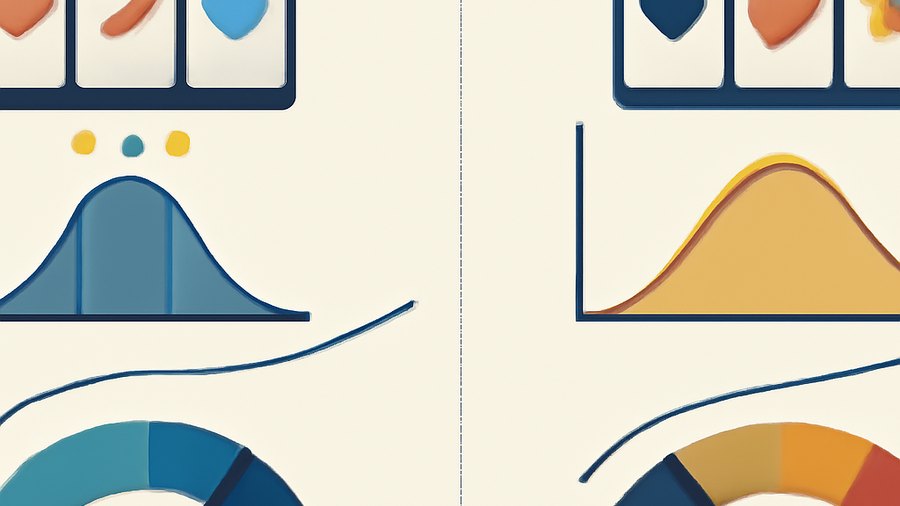
Promotional free spins, by contrast, are an external cash gift wrapped in marketing language. The two get conflated all the time, and I think operators like the confusion because it makes the promotional offer feel more generous than it is. If a casino describes its slot as having “frequent free spins!” they’re describing the base-game feature, not anything they’re handing you.
Free spins vs deposit-match bonuses
A 100% deposit match up to $100 looks bigger on paper, but it comes with its own playthrough, typically 30-40x the bonus amount, sometimes 30-40x the bonus plus deposit. On a $100 match with 35x(deposit+bonus), you’re wagering $7,000 to clear. At 96% RTP, expected loss on that turnover is $280, against a $100 nominal bonus. The bonus dies before it converts.
Free spins with reasonable wagering terms, 30x on winnings only, no max cap, frequently come out ahead of deposit matches on an EV-per-dollar-risked basis, simply because you’re not putting your own cash up front. The flip side: free-spin EVs are small, often in the $5-$15 range, so they don’t move the needle the way a “$500 welcome package” headline suggests.
I’d rather collect a string of small, clearly-positive spin promos than chase one headline-grabbing match bonus that turns negative the moment you read the fine print. The hourly rate on parsing terms-and-conditions is actually not bad once you’ve done it a few times, maybe ten minutes per offer, average $5-$8 in expected value when you find a good one. Compare that to the hourly rate of actually playing through a 35x deposit match (negative, by definition) and the prioritization gets obvious.
A table of typical offers and what they’re really worth
| Offer | Gross Expected Win | Wagering Terms | Estimated Net EV |
|---|---|---|---|
| 20 free spins @ $0.10, 96% RTP, no wagering | $1.92 | None | ~$1.92 |
| 50 free spins @ $0.20, 96% RTP, no wagering | $9.60 | None | ~$9.60 |
| 50 free spins @ $0.20, 96% RTP, 30x on winnings | $9.60 | 30x winnings | ~$6-$7 |
| 50 free spins, 30x winnings, $100 max cashout | $9.60 | 30x + cap | ~$5-$6 |
| 100 spins @ $0.20, 35x on winnings, bonus funds | $19.20 | 35x bonus | ~$8-$11 |
| “Free play” credit $20, 40x wagering | $20 nominal | 40x | ~$2-$4 |
| 100% deposit match up to $100, 35x(D+B) | $100 nominal | 35x deposit+bonus | often negative |
What to check before clicking “claim”
- Stake per spin (and whether the game lets you change it, usually not).
- RTP of the specific slot the spins are locked to. Some “free spins” titles run as low as 92%.
- Whether winnings are paid as cash or as bonus credit.
- Wagering multiplier and what it applies to (winnings only, or winnings + something else).
- Max-cashout cap, and how it’s calculated.
- Time limit. A 7-day clearing window on a 30x requirement is much harsher than 30 days.
- Game restrictions during the wagering period, many slots are excluded or contribute less than 100%.
If the offer fails any of those checks loudly, the EV drops fast. I usually walk away if I can’t get plain-text answers to all seven inside two minutes of reading. There’s always another promo. For more on bonus structures and the broader patterns operators use, the breakdown at Wizard of Odds is one of the more honest references I’ve found, and if you’re brushing up on the probability and percentage math underneath all this, Effortless Math has accessible refreshers worth bookmarking.
FAQ
Q: If the EV is positive, should I always claim free spins?
A: Generally yes, if the terms are clear and you’d already planned to deposit or play. But “positive EV” doesn’t mean “guaranteed profit”, variance can hand you a $0 outcome on any individual offer. Don’t deposit money you weren’t going to deposit anyway just to chase a $6 expected gain.
Q: Why do casinos offer free spins at all if they’re +EV for the player?
A: Because most players don’t stop at the free spins. They deposit, they play more, and the lifetime value far exceeds the $6-$10 promo cost. Free spins are a customer acquisition expense, not a charity. You can take the +EV and leave, most won’t.
Q: Are higher-RTP slots in free spin promos a sign of a generous casino?
A: It’s a signal, not proof. Some operators run honest promos on 96-97% slots; others advertise high RTP but lock the spins to a game running 92%. Check the actual game’s published RTP before believing the headline.
Q: How do wagering requirements interact with volatility?
A: High-volatility slots make the wagering requirement harder to clear because most spins return nothing. You bust your balance before completing turnover. Lower-volatility games clear wagering more reliably but with smaller upside. For clearing bonuses, low-to-medium volatility usually wins.
Q: What’s the worst free spins term I should watch for?
A: A combination of bonus-credit winnings, high wagering multiplier (40x+), a tight time window, and a low max-cashout cap. Hit three of those four and the offer is decorative, looks good in the inbox, worth almost nothing in cash terms.
Gambling outcomes are uncertain; no strategy guarantees profit.

Related to This Article
More math articles
- Migration, Direction, Selection, and Policy
- Preparing For SAT Math? DON’T Make These Big Mistakes!
- The Ultimate 7th Grade FSA Math Course (+FREE Worksheets)
- Parallel Structure
- Unlocking the Mystery of Inscribed Angles: A Complete Guide
- Best Calculator for College Algebra
- FREE 5th Grade MEAP Math Practice Test
- Wisconsin Algebra 1 Free Worksheets: Free Printable PDFs Covering Every Algebra 1 Skill
- Work, Energy, and Power
- Formal Organizations, Bureaucracy, and Concentrated Power



What people say about "Free Spins Math: Pricing the Bonus Round Yourself - Effortless Math"?
No one replied yet.