Multi-Line Slots: When 25 Paylines Cost More Than They Pay
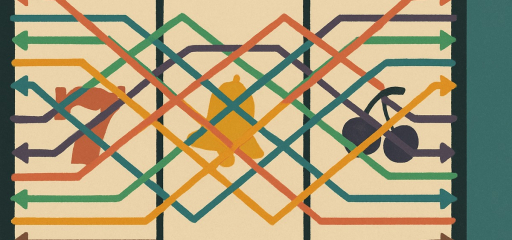
Walk past a bank of modern slot machines and you will see the same scene repeated: reels flashing, coins clinking through the speakers, and the word “WIN” lighting up nearly every spin. The player looks happy. The bankroll, somehow, keeps shrinking. That gap between feeling like a winner and actually being one is the whole story of multi line slots math, and it lives almost entirely inside the payline count printed at the bottom of the screen.
What a Payline Actually Is
A payline is a predefined path across the reels that the machine checks after every spin. On a classic three-reel slot, there was one path: straight across the middle. On a modern five-reel video slot, paylines zig-zag, V-shape, and bounce across rows in patterns the manual prints in tiny diagrams nobody reads. Each payline is an independent combination of symbol positions, and the machine evaluates each one separately to decide if you hit anything.
The important word is “independent.” A 25-line slot isn’t one game checked 25 ways. It’s closer to 25 small bets that happen to share the same set of spinning reels. Each line has its own stake, its own paytable lookup, and its own outcome. The visual is unified; the accounting is not.
Activating 25 Lines Means 25 Simultaneous Bets
This is where the wallet gets quiet. If the line stake is set to $0.20, then activating one payline costs $0.20 per spin. Activating all 25 costs $0.20 × 25, or $5 per spin. The handle pull is the same. The animation is the same. The cost is twenty-five times higher.
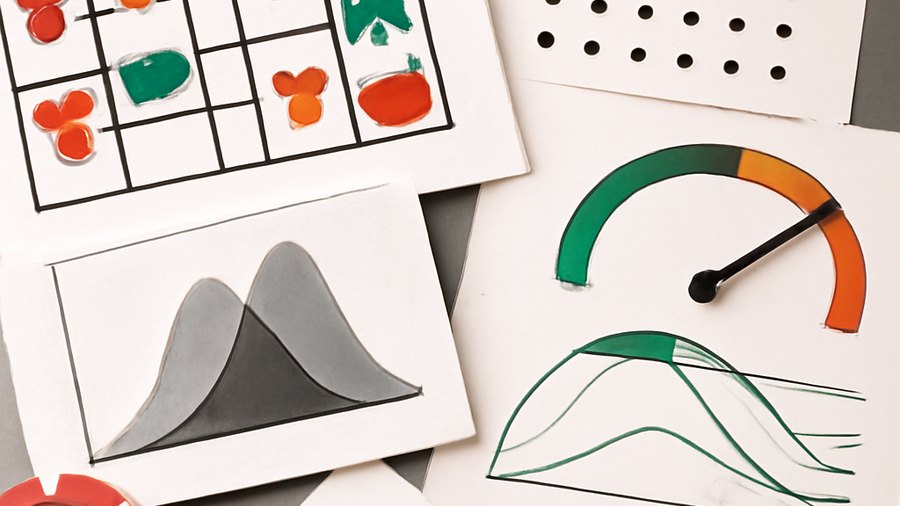
Players almost never describe their bet this way. They say “I’m playing twenty cent slots.” Technically true at the line level. Functionally misleading at the spin level. The machine is happy to let the confusion ride, because the screen prominently shows the line denomination and tucks the total bet into a smaller field nearby.
Hit Frequency Rises, Average Payout Per Hit Falls
Here is the trick that makes multi-line slots feel generous. With 25 active lines, the chance that at least one line lands a paying combination on any given spin is much higher than with a single line. Industry hit frequencies tend to land roughly here:
- 1-line classic slot: about 5% to 8% of spins return anything.
- 9-line video slot: roughly 18% to 25% of spins hit something.
- 25-line video slot: commonly 35% to 45% of spins light up a win.
That sounds like a massive upgrade. It is not. The average payout per hit drops in lockstep, because most of those hits are small symbol combinations on a single line worth less than the total spin bet. The machine records a “win,” plays the win jingle, animates the coins, and still hands back less than $5 on a $5 spin. The player saw a win. The bankroll saw a loss.
The Line Stake Confusion
The single biggest source of misread risk on a multi-line slot is the difference between the line bet and the total bet. Consider the math:
| Active Paylines | Line Stake | Total Bet Per Spin | Typical Hit Frequency | RTP | Expected Loss Per Spin | Expected Loss Per 100 Spins |
|---|---|---|---|---|---|---|
| 1 | $0.20 | $0.20 | ~6% | 96% | $0.008 | $0.80 |
| 9 | $0.20 | $1.80 | ~22% | 96% | $0.072 | $7.20 |
| 25 | $0.20 | $5.00 | ~40% | 96% | $0.20 | $20.00 |
Notice the bottom row. Forty percent of spins “win something,” and the player still bleeds twenty cents on average every single pull. Over 100 spins, which takes maybe ten minutes on a fast modern cabinet, that is a $20 expected loss. The 25-line version isn’t a better deal. It’s the same deal at twenty-five times the volume.
RTP Is Unaffected by Line Count
This is the part regulators care about and most players miss. Return to Player is set at the machine’s design level, usually somewhere between 92% and 97% for video slots. It does not change based on how many lines you activate. A 25-line slot with a 96% RTP returns 96% whether you play one line or all 25.
What does change is the volume of money flowing through the machine. RTP is a percentage. Multiplying the bet by 25 multiplies the expected loss by 25. The slot does not become friendlier with more lines; it just becomes faster at extracting the same fixed percentage. Players who want to verify how RTP is defined and audited can look at independent breakdowns at Wizard of Odds slots reference.
Some Slots Require All Lines for the Bonus
Here is where the design gets a little aggressive. On many modern slots, the headline feature, the free spins round, the progressive jackpot, the pick-a-prize bonus, only triggers if all paylines are active. Play one line to save money, and you are statistically locked out of the feature the marketing was built around.
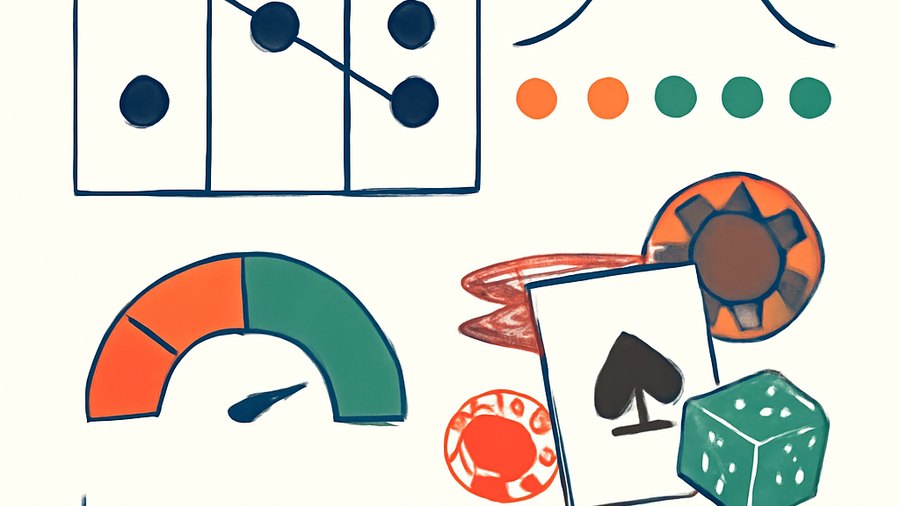
This pressures the player into max-line mode whether they wanted to be there or not. That isn’t a bug. It’s a design choice that pushes total bet per spin up by a factor of 25 in exchange for eligibility, not for better odds on the base game.
Paylines vs Ways-to-Win Mechanics
Newer cabinets often replace fixed paylines with a “ways-to-win” structure, sometimes advertised as 243 ways, 1024 ways, or higher. Instead of evaluating specific paths, the machine counts any matching symbols on adjacent reels from left to right. The hit frequency goes up again, the per-hit average drops again, and the RTP stays parked at the same design value.
The math underneath is the same. More evaluation paths produce more frequent small wins, more “winning” animations, and the same long-run loss rate. Whether the cabinet calls them lines, ways, or clusters, the player’s expected outcome over thousands of spins is governed by the RTP and the total amount wagered, not by how the wins are sliced up.
Why the Brain Falls for the Hit Frequency Trick
There is a behavioral piece sitting underneath all of this math, and it explains why a 40% hit rate feels so much better than a 6% hit rate even when the bankroll outcomes are identical. Humans weigh frequency of feedback heavily, and slot designers know it. A near-constant drip of small wins triggers the same reward response as occasional larger wins, sometimes more so, because the reinforcement schedule is unpredictable but dense.
The industry term for a “win” that returns less than the total bet is a “loss disguised as a win,” and it is exactly what 25-line slots produce by the dozen. The machine plays the celebratory animation regardless of whether the return was $0.40 or $40, and the player’s memory tends to encode the celebrations rather than the net cash change. Researchers studying problem-gambling cues have flagged this specific mechanic as one of the most predictive features of session-length and overspend, more so than jackpot size or volatility class.
Knowing this does not make the effect go away. Even players who can recite the math will report feeling luckier on a high-line slot than on a single-line one. The fix is not to fight the perception but to anchor decisions on total bet per spin and number of spins per hour, because those two numbers, multiplied by the house edge, determine the entire financial outcome regardless of how the wins are dressed up.
Walking Through a 25-Line Slot Example
Take a typical five-reel, 25-line video slot with a 96% RTP and a 40% hit frequency. You sit down with $200 and set the line stake to $0.20. You activate all 25 lines because the bonus round requires it. Total bet: $5 per spin.
Over the next 100 spins, here is roughly what happens:
- About 40 spins return something. The win light flashes, the sound plays, and your balance ticks up.
- Most of those 40 hits return less than your $5 spin cost, perhaps $0.40, $1.20, or $2.00. They feel like wins. They are partial refunds.
- About 5 of those 40 hits return more than $5, including maybe one larger hit in the $20 to $50 range.
- The remaining 60 spins return zero.
- Expected total wagered: $500. Expected total returned: $480. Expected net loss: $20.
You leave the machine remembering the bigger hit and the constant flashing. The slip in your bankroll feels smaller than $20 because the wins were spread across so many spins. That perception gap is the entire commercial logic of modern slot design, and once you see it, it is hard to unsee. If you want to brush up on the basic percentage arithmetic underneath these calculations, Effortless Math has clear walkthroughs.
FAQ
Q: If RTP does not change, why not just play one line and save money?
A: You can, and your expected loss per spin will drop proportionally. The catch is the bonus features and many top-paying combinations are usually only reachable on a fully activated bet. You save money and trade away the part of the game most players come for.
Q: Are 25-line slots looser than 1-line slots because they hit more often?
A: No. Hit frequency and looseness are different. A slot is “loose” in the player’s favor when its RTP is high. Hit frequency just controls how that fixed RTP is distributed, many small wins or a few big ones. Same long-run loss either way.
Q: Is the line stake the total cost of a spin?
A: Not on a multi-line slot. The line stake is what you bet per active line. Multiply by active lines to get total bet per spin. A $0.20 line stake on 25 lines is a $5 spin, not a $0.20 spin.
Q: Why do I feel like I won more often on the 25-line version even though I lost faster?
A: Because most of those wins paid less than the total spin cost. The machine still announces them as wins. Your eyes track the celebrations; your bankroll tracks the difference between bet and return. The two diverge on purpose.
Q: Does it ever make sense to play max lines?
A: It makes sense if you specifically want bonus-round eligibility and you have sized your bankroll around the higher per-spin cost. It does not make sense as a strategy to win more often; that part is an illusion driven by hit frequency, not by RTP.
Q: How fast can a 25-line slot drain a $200 bankroll on average?
A: At $5 per spin and a 4% house edge, the expected loss is $0.20 per spin. A typical cabinet runs 500 to 700 spins per hour. That puts the expected hourly loss in the $100 to $140 range, meaning a $200 bankroll lasts somewhere between an hour and two on average, with wide variance in either direction.
Q: Are penny slots actually cheap?
A: Only if you play one line. A penny slot with 50 lines at a $0.50 line stake is a $25 spin, which is more expensive than most table games. The denomination on the cabinet is the line unit, not the spin cost.
Gambling outcomes are uncertain; no strategy guarantees profit.

Related to This Article
More math articles
- Positive externalities create underconsumption or underproduction
- Brown v. Board of Education
- Common Core Algebra 1 Free Worksheets: 64 Free Printable PDFs Aligned to CCSS Algebra 1
- The Best Grade 4 Math Book for Texas Students
- Calculus: Navigating the Pathways of Particles
- 3rd Grade Georgia Milestones Assessment System Math FREE Sample Practice Questions
- The Best Grade 3 ELA Practice Tests for Washington Students
- Types of Sequences and Series: Examples, Formulas & Practice
- The Best Grade 7 ELA Practice Tests for Washington Students
- How to Solve Point-Slope Form of Equations?





What people say about "Multi-Line Slots: When 25 Paylines Cost More Than They Pay - Effortless Math"?
No one replied yet.